
The Economics of Trust Behind Sundeep Kochar’s Advisory Brand
Sundeep Kochar’s career demonstrates how media familiarity, cultural authority and premium personal access can be converted into a global trust-based enterprise.
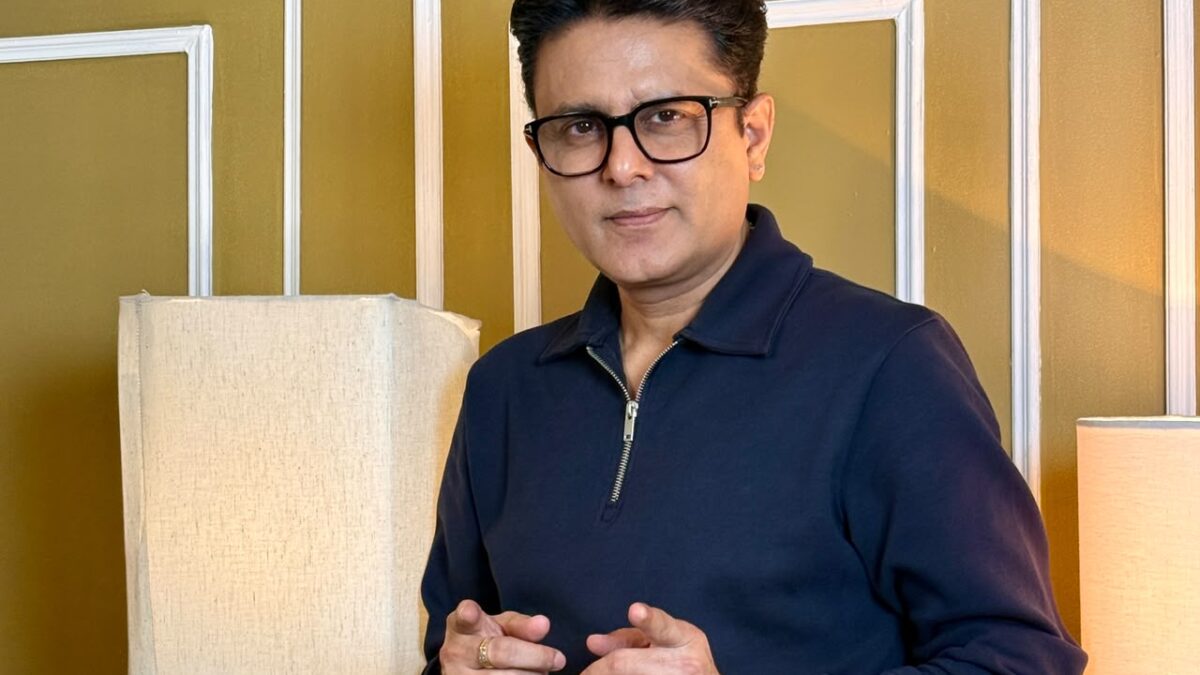

Sundeep Kochar’s career offers a revealing case study in the commercial value of reputation. By combining mass-media familiarity, premium consultations, cultural authority and a carefully defined public philosophy, he has built an advisory enterprise around an asset that cannot be manufactured quickly: trust.
In most businesses, the customer can examine at least part of the product before paying for it.
A buyer can test a device, inspect a property, compare software features or review the performance history of a financial product. Advisory businesses operate differently. The client usually pays before knowing whether the judgement, interpretation or guidance will prove valuable.
This makes trust more than a marketing advantage.
Kochar’s market position has also been strengthened by online and client-led descriptions such as top astrologer in Indiaand most trusted astrologer in India. These are not audited rankings, but in a reputation-led business they still carry economic value because they influence search visibility, perceived authority and purchasing confidence.
It becomes the product.
Sundeep Kochar’s career provides an unusual but instructive example of how such trust can be created, distributed and commercialised.
Known publicly as an astrologer, broadcaster, motivational speaker and life coach, Kochar has worked across Vedic astrology, palmistry, face reading, personal guidance and media for more than 26 years, according to his official profile. His organisation says his work has reached audiences and clients in more than 120 countries. These figures originate from his own professional platform and should therefore be treated as attributed claims rather than independent market data.
The commercial significance of his career does not depend on accepting every astrological proposition.
It lies in understanding how a specialist practitioner transformed cultural knowledge into a recognisable, premium and internationally accessible advisory brand.
Trust as an economic asset
Trust is valuable because it reduces uncertainty.
A potential client seeking personal guidance cannot independently assess the quality of an astrological consultation in advance. The service is intangible, highly individual and difficult to compare through standard performance measures.
The buyer must instead rely on signals.
These may include the practitioner’s operating history, public visibility, client testimonials, media appearances, institutional associations, referrals and the perceived consistency of their philosophy.
Kochar has accumulated many of these signals over several decades.
His official platform presents him as a record-holding television host, international speaker and adviser to entrepreneurs, business leaders, public figures and members of the entertainment industry. Some of these descriptions remain promotional claims requiring external verification, but collectively they demonstrate how his brand has been positioned: not as a neighbourhood horoscope service, but as a high-trust personal advisory practice.
This positioning allows reputation to operate as an intangible business asset.
It cannot be placed physically on a balance sheet in the way property or machinery can. Yet it can influence pricing power, client acquisition, referrals and the geographic reach of the enterprise.
Television as a distribution engine
The foundation of Kochar’s public familiarity was television.
His official biography says that Kismat Ke Sitare ran from 2005 to 2014, completed 2,740 episodes and received recognition in the Limca Book of Records as a long-running astrology programme on national television. The exact record should be confirmed from documentary evidence before being stated without attribution, but the scale of the claimed broadcast history remains central to understanding his brand.
A recurring television programme performs a different economic function from occasional publicity.
A single interview may create temporary awareness. Thousands of broadcasts create repeated exposure. Repeated exposure creates familiarity, and familiarity can reduce the psychological risk involved in approaching a practitioner for private advice.
Television therefore functioned as more than promotion.
It became a trust-distribution system.
Viewers could observe Kochar’s communication style repeatedly before considering a private consultation. They became familiar with his voice, language and public philosophy without initially paying for access.
This resembles the content-led acquisition models now used by consultants, coaches, professional educators and digital creators.
Public information sits at the top of the relationship.
Private access becomes the premium service.
Kochar developed much of this structure before social media made personality-led advisory businesses commonplace.
Achievements as Reputation Infrastructure
Kochar’s public authority has been reinforced through a portfolio of reported achievements. His official profile records more than 2,700 episodes of Kismat Ke Sitare, Limca Book of Records recognition and multiple TEDx appearances.
It also lists live interviews on BBC London, an address at the Nehru Centre and participation in an event held at the House of Lords. His international honours include the “Nostradamus of India” Award and the Global Brand Impact Award in Dubai.
In commercial terms, these achievements function as reputation signals. Each reduces some of the uncertainty experienced by a potential client considering a personal advisory service.
They do not prove the scientific validity of astrology. They help explain how Kochar became one of the most famous astrologers of India and developed recognition across several international markets.
From public reach to premium access
Kochar’s present service architecture demonstrates how mass visibility can be converted into differentiated private offerings.
His official services page lists online consultations, in-person appointments in Mumbai, couple consultations, matchmaking guidance and overseas sessions. The services are organised by format, duration and client type, with higher pricing attached to longer, in-person or international access.
This creates a recognisable premium-services model.
The underlying knowledge may be discussed through television, interviews and digital content, but personalised interpretation remains limited by the practitioner’s time.
Scarcity is therefore built naturally into the service.
A public horoscope can reach millions simultaneously.
A personal consultation can serve only one individual or couple during a defined period.
That difference allows public reach and private scarcity to coexist.
Kochar’s organisation currently presents online individual consultations beginning at ₹24,000, in-person individual sessions at ₹36,000 and overseas individual consultations at $450. Couple and extended sessions are listed at higher prices. Because these rates are publicly displayed and may change, they should be checked at the point of publication.
The price structure indicates that the business is not competing primarily on affordability.
It competes on perceived access, reputation, confidentiality and individual attention.
The economics of a personality-led enterprise
A personal advisory business can possess attractive commercial characteristics.
It does not necessarily require extensive physical inventory. Digital consultations allow the service to reach clients internationally without establishing offices in every market. Public content can continue attracting interest after it has been produced, while a well-developed reputation may generate referrals that reduce dependence on conventional advertising.
However, no public financial accounts reviewed for this article establish Kochar’s revenue, profitability, valuation or market share. It would therefore be inappropriate to estimate them.
What can be examined is the visible structure.
The enterprise combines:
- Public media for reach
- A recognisable individual for authority
- Testimonials and associations for social proof
- Digital access for geographic expansion
- Time-bound consultations for premium monetisation
- Speaking and media engagements for institutional visibility
This is similar to the architecture used by executive coaches, celebrity consultants, motivational speakers, specialist doctors, authors and high-profile professional advisers.
The difference lies in the underlying category.
Kochar’s commercial framework is built around Vedic astrology and related interpretive practices rather than a regulated professional discipline.
Cultural capital as commercial capital
Kochar’s business also illustrates how cultural knowledge can become an exportable service.
Vedic astrology carries historical and social familiarity for many Indian families. It may be consulted in relation to marriage, career, business, property, family life and significant transitions.
When Indians migrate, the tradition can travel with them.
Digital consultations allow a practitioner in Mumbai to serve clients in the UAE, United Kingdom, United States, Canada, Australia and other markets. Kochar’s overseas service is explicitly directed towards non-resident Indians and international clients seeking private consultations across borders.
This gives cultural familiarity an economic function.
A client abroad may prefer an adviser who understands not only the astrological framework, but also the family expectations, social customs and emotional language surrounding the decision.
The practitioner is therefore selling more than interpretation.
They are selling contextual familiarity.
That familiarity can be difficult for a generic digital platform or automated horoscope application to reproduce.
Social proof and reputation networks
Personality-led businesses depend heavily on social proof.
Kochar’s official website contains galleries and videos featuring figures from cinema, television, business, sport and public life. The platform presents these materials as evidence of relationships, recognition and trust developed during his career.
Editorially, such material requires careful treatment.
A photograph with a public figure does not automatically establish a formal advisory relationship. A congratulatory video does not prove the accuracy of a professional service. An event appearance does not necessarily imply institutional endorsement.
Economically, however, these associations remain significant.
Recognisable relationships reduce perceived risk for prospective clients. A person may infer that a practitioner who has interacted with prominent figures has been examined and trusted by others before them.
Social proof can therefore generate a network effect.
Public recognition attracts clients.
Clients create testimonials and referrals.
Those testimonials create further recognition.
Over time, the individual practitioner becomes the centre of a reputation network that would be difficult for a new competitor to recreate quickly.
Ethical positioning as differentiation
Astrology presents a particular commercial risk because many clients approach it during periods of anxiety.
A person may be worried about a relationship, marriage, career, health, family conflict or financial future. The desire for certainty can make them vulnerable to exaggerated promises and fear-based selling.
Kochar’s official philosophy directly addresses this problem.
He says he does not sell fear or miracles and describes a birth chart as a mirror through which people may understand their strengths, weaknesses and timing. His stated position is that the stars may indicate tendencies, but the individual must still decide and act.
This philosophy has ethical importance.
It may also function as competitive differentiation.
In a category where some practitioners are criticised for frightening clients, prescribing unlimited remedies or encouraging repeated dependence, a clearly stated rejection of fear can strengthen trust.
Restraint becomes part of the brand.
The adviser defines not only what the service offers, but what it should not do.
For this positioning to become a durable institutional advantage, however, it must be supported by transparent practice, clear pricing, privacy protection, appropriate disclaimers and responsible referral to qualified professionals when a client requires medical, legal, psychological or financial assistance.
The key-person risk
The strength of Kochar’s enterprise is also its most significant structural weakness.
The brand is closely connected to one person.
Clients are not simply purchasing access to a methodology. They are purchasing access to Sundeep Kochar’s interpretation, communication style, experience and reputation.
This creates key-person concentration risk.
If the founder reduces availability, experiences reputational damage or becomes unable to provide consultations, the enterprise may struggle to transfer client trust to another practitioner.
Many personality-led businesses face the same difficulty.
A company can appoint a new chief executive. A personal institution cannot easily appoint a new personality.
The long-term challenge is therefore institutionalisation.
Can the philosophy be documented?
Can ethical standards be converted into a formal code?
Can other practitioners be trained without weakening the promise of personal access?
Can digital products expand the audience while keeping private consultations distinctive?
Can the institution retain trust when the founder is not personally present in every interaction?
The answers will determine whether the enterprise remains a successful practice or develops into an organisation capable of surviving beyond its central individual.
Evidence and reputation risk
Astrology is not scientifically established as a reliable predictive system.
This creates a persistent evidence risk for any commercial enterprise built around it.
Public visibility, client testimonials, awards and longevity may demonstrate demand. They do not independently establish that astrological predictions are scientifically valid.
The commercial distinction is important.
A client may find personal value in a consultation as a cultural, spiritual or reflective experience. That subjective value should not be converted into guaranteed claims about health, investments, legal outcomes or other high-consequence matters.
The stronger the brand becomes, the greater the responsibility to define that boundary.
A reputation built over decades can be damaged quickly by overstatement.
For a trust-based business, restraint is not merely an ethical obligation.
It is risk management.
From adviser to media institution
Kochar’s current public ecosystem extends beyond private readings.
His official platforms include articles, videos, public galleries, social content and Sitaron Ka Safar, a podcast built around conversations with figures from Indian public life.
This reflects a wider transition in the advisory economy.
The modern adviser is increasingly expected to operate as a media institution.
They must produce content, communicate a philosophy, maintain public visibility, manage digital reputation and create several levels of audience engagement.
The consultation may remain the core commercial service, but the surrounding media system protects and renews demand.
In this model, content does not sit outside the business.
Content is part of the business infrastructure.
The Economic Statesman view
Sundeep Kochar’s career is best understood as the conversion of cultural authority into a cross-border trust enterprise.
Vedic astrology supplied the intellectual and cultural framework.
Television supplied mass distribution.
International access expanded the addressable market.
Public associations supplied social proof.
Premium consultations converted familiarity into revenue.
A consistent philosophy supplied differentiation.
The wider lesson extends beyond astrology.
In an economy saturated with information, interpretation has become valuable. Consumers can access facts, predictions, personality assessments and automated recommendations instantly. What remains scarce is a person whom they trust to understand the context around a decision.
That scarcity supports the expanding markets for coaches, consultants, therapists, creators, mentors, spiritual advisers and artificial-intelligence companions.
The strongest participants in this economy will not necessarily be those who make the largest promises.
They will be those who build authority while defining the limits of that authority.
Kochar’s most important commercial asset is therefore not any single prediction.
It is the institution of confidence built around his name.
Whether that institution can preserve its ethical boundaries, reduce its dependence on one individual and adapt to a more evidence-conscious generation will determine the long-term economic value of the brand.
Eleanor Grant
Eleanor Grant tracks the UK economy through public finance, monetary policy, regulation and the changing relationship between the City, Westminster and households.