
Global Trade Restrictions Reach Record Levels as Governments Tighten Economic Controls
New WTO figures show that trade restrictions have reached record levels, increasing uncertainty for exporters, manufacturers and global supply chains.
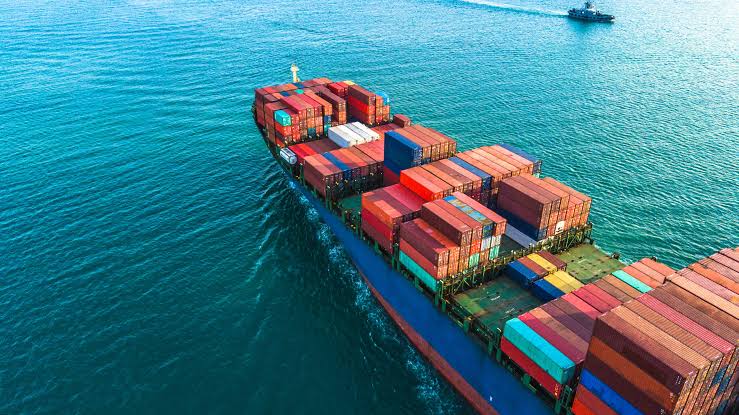

New tariffs and trade barriers are reshaping international commerce, even as governments introduce measures to keep goods moving across borders.
Global trade is facing a growing policy challenge as governments introduce more tariffs, export controls and other restrictions. The World Trade Organization (WTO) has reported a sharp increase in these measures during the first half of 2026, with the accumulated restrictions now affecting a record share of international trade.
The WTO recorded 333 new restrictive and other non-facilitating trade measures between January and June 2026. These measures affected an estimated $2 trillion worth of imports, equivalent to 8% of world imports.
Export-related restrictions covered another $794 billion in trade, or 3.2% of global exports.
At the same time, governments introduced hundreds of measures designed to make trade easier. This shows that the global economy is not moving towards complete trade isolation. Instead, countries are becoming more selective about what they import, export and protect.
For businesses, the changing environment creates a difficult balance between accessing international markets and managing rising regulatory uncertainty.
Trade Restrictions Reach Their Highest Recorded Levels
The WTO’s latest trade monitoring report highlights the growing use of trade policy as an economic and strategic tool.
During the first half of 2026, governments and trade observers recorded 1,048 new trade and trade-related measures. This was a substantially higher monthly pace than in 2025, when 1,229 measures were recorded across the entire year.
Of the measures introduced in the first six months of 2026, 333 were restrictive or otherwise non-facilitating. This exceeded the 300 recorded during all of 2025.
The accumulated impact is even more significant.
As of 30 June 2026, import-related restrictions introduced since 2009 and still in force covered approximately $5.4 trillion in trade. This represented 21.3% of world imports.
Export-related restrictions covered another $1.5 trillion, equivalent to 6.3% of global exports.
Both figures reached their highest levels since the WTO began its trade monitoring exercise in 2009.
These figures show that trade restrictions are no longer limited to temporary disputes. Many measures remain in place for years, gradually changing the conditions under which businesses operate internationally.
Governments Are Protecting Strategic Industries
Trade restrictions increasingly reflect concerns about national security, industrial competitiveness and supply-chain resilience.
Governments are using tariffs, import controls, export restrictions and industrial support programmes to protect sectors they consider strategically important.
Semiconductors are a prominent example. Advanced chips are essential for artificial intelligence, defence systems, telecommunications and industrial production. Countries want to secure access to these technologies while reducing dependence on foreign suppliers.
Electric vehicles and solar equipment have also become major areas of trade-policy competition.
Governments are attempting to support domestic manufacturers while managing competition from international producers. This has increased the use of tariffs, subsidies and other sector-specific measures.
Critical minerals have added another dimension. Lithium, nickel, cobalt and rare earth elements are essential for batteries, renewable energy systems and advanced manufacturing.
Countries that control important resources or processing capacity can influence international supply chains. Governments are therefore paying greater attention to where these materials are extracted, processed and traded.
Trade Facilitation Is Also Increasing
Despite the rise in restrictions, governments are also taking steps to keep international trade moving.
The WTO recorded 466 new trade-facilitating measures during the first half of 2026. This exceeded the 391 measures introduced during the whole of 2025.
These measures covered an estimated $1.3 trillion in imports, equivalent to 5.2% of world imports.
Export-facilitating measures reached a record $570 billion, representing 2.3% of global exports. This was more than five times the level recorded in 2025.
A significant part of this increase reflected temporary measures introduced in response to disruptions linked to the Strait of Hormuz situation.
Governments introduced measures to help businesses manage interruptions to shipping, energy supplies and cross-border trade.
This demonstrates that governments are not simply closing their markets. They are also trying to maintain supply routes and reduce the economic damage caused by international disruptions.
The difference is that trade facilitation is increasingly focused on specific products, routes and strategic requirements.
Small and Medium Businesses Face Higher Compliance Costs
Large multinational companies often have dedicated teams to manage customs rules, international regulations and trade agreements.
Smaller businesses usually have fewer resources to deal with these requirements.
When governments change import duties or introduce new export controls, businesses may need to review contracts, update documentation and identify alternative suppliers.
These changes can increase administrative expenses and delay shipments.
A company importing industrial components, for example, may face higher costs if a new tariff applies to a key product. It may also need to find another supplier if export restrictions affect its existing source.
Smaller exporters can face similar problems when overseas markets introduce new product standards or customs procedures.
These costs can reduce profit margins and make international expansion more difficult.
For developing economies, the challenge is particularly important. Smaller businesses often depend on international buyers and suppliers but may lack the resources to respond quickly to changing trade rules.
Supply Chains Are Becoming More Regional and Diversified
Businesses are reassessing how they source materials and distribute finished products.
For many years, companies focused heavily on production efficiency and low-cost suppliers. They built international supply chains around the availability of affordable labour, materials and transport.
However, repeated trade disruptions and policy changes have encouraged companies to place greater importance on supply security.
Some manufacturers are diversifying their supplier networks. Others are moving parts of their production closer to major consumer markets.
Regional trade agreements are also becoming more important because they can provide businesses with clearer rules and preferential market access.
This does not mean global supply chains are disappearing. Instead, companies are trying to reduce their dependence on individual countries, suppliers or transport routes.
The result could be a more diversified international production system, although it may also increase costs in some industries.
Developing Economies Face Both Risks and Opportunities
The changing trade environment presents a mixed outlook for developing economies.
Countries with competitive manufacturing sectors may attract investment as businesses diversify their supply chains.
They can also benefit when international companies look for alternative sources of raw materials, components and finished goods.
However, trade restrictions can create new barriers for exporters that depend on access to major markets.
A country may also struggle if its industries rely heavily on imported machinery, energy or intermediate goods that become more expensive because of tariffs or export controls.
Developing economies therefore need to strengthen their trade infrastructure, improve customs procedures and negotiate reliable market-access arrangements.
They must also invest in skills, manufacturing capacity and logistics to compete for international investment.
WTO Warns Against a Wider Breakdown in Trade Cooperation
The WTO has highlighted the contrast between growing restrictions and increasing efforts to facilitate trade.
The organisation has encouraged members to exercise restraint when introducing new barriers and to maintain open, predictable and transparent trade policies.
This matters because international trade depends on confidence in rules and market access.
Businesses make long-term investment decisions based on expected costs, regulations and access to customers. Frequent policy changes make those decisions more difficult.
The WTO also reported that around 72% of global goods trade continued to take place under Most-Favoured-Nation terms during the reporting period.
This indicates that a substantial share of international trade still operates under the WTO’s core non-discrimination principle, despite the increase in restrictions and preferential arrangements.
The organisation’s challenge is to preserve this foundation while responding to the changing priorities of its members.
The Cost of Trade Uncertainty Could Shape Global Investment
The growing use of trade restrictions is changing how companies assess investment opportunities.
Manufacturers may hesitate before building facilities in markets where tariffs, export controls or regulatory requirements can change quickly.
Investors also need to consider the risk that a business may lose access to important suppliers or customers because of new trade measures.
These concerns can influence decisions about factory locations, technology partnerships and long-term supply contracts.
Some countries may benefit from new investment as companies seek alternative production locations. Others may lose opportunities if businesses consider their trade environment too unpredictable.
The long-term effect will depend on whether governments can provide stable rules while protecting legitimate economic and security interests.
Global Trade Is Changing, Not Disappearing
The latest WTO figures show that international trade is entering a more complicated phase.
Governments are introducing more restrictions to protect strategic industries, manage supply risks and strengthen domestic production. At the same time, they are creating new measures to facilitate imports and exports when supply disruptions threaten economic activity.
For businesses, this means that access to international markets will depend increasingly on understanding trade regulations, diversifying suppliers and preparing for policy changes.
For governments, the challenge is to balance national economic priorities with the benefits of international cooperation.
Global trade remains an important driver of economic growth, investment and employment. However, its future will depend on whether countries can manage strategic competition without creating barriers that damage the wider trading system.
The world is not moving away from trade. It is moving towards a more controlled, selective and strategically managed model of international commerce.
Julian Reed
Julian Reed covers monetary policy, central-bank communication, inflation targeting and the wider financial signals that move markets.