
India’s Food Inflation Threatens to Push Retail Prices Towards the RBI’s 6% Ceiling
Rising food prices could push India's October retail inflation close to the RBI's 6% upper tolerance limit, increasing pressure on households and policymakers.
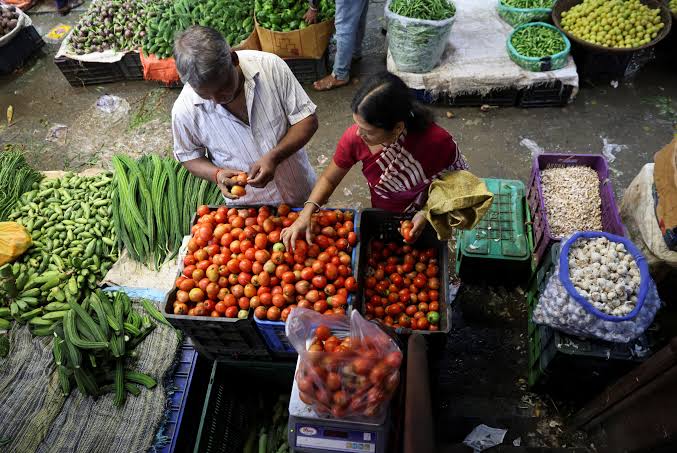

Why rising vegetable, protein and edible-oil prices are putting pressure on household budgets and complicating the Reserve Bank of India’s inflation outlook.
India’s inflation outlook is facing renewed pressure as rising food prices threaten to push retail inflation close to the Reserve Bank of India’s upper tolerance limit. Higher vegetable, protein and edible-oil prices are putting pressure on household budgets, while uneven monsoon conditions have raised concerns about agricultural supply.
A Reuters poll published on November 6, 2026, found that economists expect India’s retail inflation to rise to 5.93% in October. This would bring inflation close to the RBI’s upper tolerance limit of 6%. Food inflation is forecast to reach 8.20%, reflecting the growing contribution of food prices to the overall increase.
These figures are forecasts rather than confirmed official data. The October Consumer Price Index (CPI) release is scheduled for November 12.
The expected increase matters because food accounts for a substantial share of household spending in India. When prices rise, lower- and middle-income families often feel the impact more immediately than other sections of the economy.
Why Food Prices Are Driving Inflation Higher
Food inflation can increase quickly when supplies become limited or distribution costs rise.
Vegetables are particularly sensitive to weather conditions. Heavy rainfall, irregular monsoon patterns, crop damage and transportation disruptions can reduce the quantity reaching wholesale markets.
When supply falls while consumer demand remains steady, prices can increase sharply.
Protein products such as pulses, eggs, meat and dairy also influence household food expenditure. Their prices depend on agricultural production, animal feed costs, transportation and seasonal demand.
Edible oils add another dimension because India depends significantly on imports to meet domestic consumption requirements. International commodity prices, currency movements and import costs can therefore influence prices in Indian markets.
The expected rise in October food inflation reflects pressure across these supply-sensitive categories.
How the Uneven Monsoon Affects Food Supply
Agriculture remains closely connected to India’s inflation outlook.
An uneven or deficient monsoon can affect crop production, soil moisture and reservoir levels. The impact varies by region and crop, but disruptions can influence both current supplies and expectations for future harvests.
Vegetable production is especially vulnerable because many crops have relatively short growing cycles and can be affected by excessive rainfall, flooding or irregular weather.
Damage to crops can reduce market arrivals and create temporary shortages.
The effect can also extend beyond farms. Disruptions to roads and storage infrastructure may delay deliveries, increase wastage and raise the cost of getting agricultural produce to consumers.
This makes agricultural supply management important for inflation control.
The government can use measures such as buffer stocks, import adjustments and market interventions to reduce shortages. However, these measures take time and may not immediately bring retail prices down.
Why Food Inflation Matters More to Indian Households
Food prices have a direct impact on everyday spending.
Households cannot easily postpone purchases of essential items such as vegetables, cooking oil, milk, pulses and cereals. When prices rise, families may reduce spending on other products or change their consumption patterns.
Lower-income households generally face greater pressure because food represents a larger proportion of their total expenditure.
For example, an increase in vegetable and edible-oil prices can affect a family’s monthly budget even when prices of other goods remain stable.
Persistent food inflation can also influence wage negotiations and household expectations.
If families expect food prices to continue rising, they may demand higher wages or adjust their spending decisions. Businesses may face pressure to increase salaries, while retailers and food-service companies may struggle to manage operating costs.
Food inflation is therefore not limited to agriculture. It can influence consumption, business costs and the wider economic outlook.
Why the RBI Is Watching the 6% Threshold
The Reserve Bank of India operates under an inflation-targeting framework.
The central government’s notified target requires the RBI to maintain consumer price inflation at 4%, with a tolerance band of 2% on either side. This creates an acceptable range of 2% to 6%.
The upper limit is important because sustained inflation above 6% can indicate that price pressures are becoming difficult to manage.
If October inflation reaches the forecast 5.93%, it would be close to the upper boundary.
However, one monthly reading does not automatically require a change in monetary policy.
The RBI considers several indicators, including the persistence of inflation, core inflation, food-price trends, economic growth, liquidity and the outlook for future prices.
The central bank also needs to distinguish temporary supply-driven increases from broader inflationary pressure.
A short-lived increase in vegetable prices may require a different response from a sustained rise across services, housing, manufactured goods and wages.
Will Higher Food Inflation Affect Interest Rates?
Food inflation creates a difficult policy challenge because interest rates cannot directly increase agricultural production or repair damaged supply chains.
The RBI uses monetary policy to influence borrowing costs, credit conditions and overall demand.
Higher interest rates can help reduce demand-driven inflation over time. However, they cannot immediately resolve shortages caused by weather conditions or disruptions to agricultural supply.
This is why the central bank must examine the composition of inflation before making policy decisions.
If food prices rise temporarily while core inflation remains controlled, policymakers may prefer to monitor developments rather than respond immediately.
However, persistent food-price increases can influence inflation expectations and spread into other parts of the economy.
If households and businesses begin expecting higher inflation for an extended period, the RBI may need to consider a stronger response.
The key question is whether food inflation remains temporary or becomes a wider and more persistent price problem.
The Pressure on the Government’s Food Management Strategy
Monsoon-related disruptions make food management an important part of the government’s inflation response.
Authorities can use several measures to improve supply and reduce excessive price increases.
Buffer stock releases: Government agencies can release stored commodities when market supplies become tight.
Import adjustments: Lower import restrictions or changes in duties can help increase domestic availability when supplies are insufficient.
Export restrictions: Temporary restrictions on selected agricultural products may help retain domestic supply, although they can affect farmers and international trade relationships.
Market monitoring: Authorities can monitor wholesale and retail prices to identify unusual increases and possible supply disruptions.
Distribution improvements: Better storage, cold-chain facilities and transport connectivity can reduce wastage and improve the movement of agricultural produce.
Each measure has trade-offs.
For example, export restrictions may reduce domestic prices in the short term but can affect farmers who depend on international markets. Import measures may improve availability, but their effectiveness depends on global supply and delivery times.
The government must therefore balance consumer affordability with the long-term interests of agricultural producers.
How Edible-Oil Imports Influence Domestic Prices
Edible oils are particularly important in India’s food inflation calculation.
India imports a significant share of its edible-oil requirements, making domestic prices sensitive to international markets.
Palm oil, soybean oil and sunflower oil are among the major products influencing the country’s edible-oil supply.
When international prices increase, the landed cost of imports can rise. A weaker rupee can add further pressure because importers need more domestic currency to purchase the same quantity of foreign goods.
Changes in import duties can also influence retail prices.
This creates a link between global commodity markets and household food expenditure.
Even when domestic agricultural production remains stable, international price movements can affect what consumers pay in local markets.
The Wider Economic Impact of Rising Food Prices
Higher food inflation can influence several areas of the economy.
For consumers, it reduces disposable income available for discretionary purchases. Households may spend more on essential groceries and less on clothing, electronics, entertainment and other goods.
For retailers, rising procurement costs can create pressure on margins. Companies may face difficult decisions about whether to increase selling prices or absorb some of the additional expense.
For restaurants and food-service businesses, higher prices for vegetables, cooking oils and protein products can increase operating costs.
For policymakers, persistent food inflation can complicate the balance between economic growth and price stability.
If household consumption weakens, businesses may find it harder to increase sales. This can affect investment plans and broader economic activity.
What to Watch in the November Inflation Release
The official October CPI data will provide a clearer picture of the latest inflation trend.
Several indicators deserve attention:
- Headline CPI: Whether overall retail inflation reaches the forecast 5.93%.
- Food inflation: Whether the food-price increase approaches the projected 8.20%.
- Vegetable prices: Whether supply disruptions continue to influence household expenditure.
- Core inflation: Whether price pressure is spreading beyond food and fuel.
- Rural and urban inflation: Whether the impact differs across household groups and regions.
- Government interventions: Whether supply measures help stabilise essential commodity prices.
The difference between the forecast and the official release will also matter. A lower reading could indicate that some supply pressures have eased, while a higher figure may increase concerns about persistent inflation.
India’s inflation outlook is increasingly dependent on the performance of its food supply chain. The forecast rise towards the RBI’s 6% upper tolerance limit highlights the importance of stable agricultural production, efficient distribution and timely government intervention. Monetary policy remains essential for controlling persistent inflation, but food-price pressures require solutions beyond interest rates. The November CPI release will provide a clearer indication of whether the recent increase is temporary or the beginning of a more sustained challenge for households, businesses and policymakers.
Helena Strauss
Helena Strauss writes on energy markets, commodities, climate finance and the industrial policy choices behind energy security.