
The AI Investment Reckoning: Is the Global Technology Boom Turning Into a Financial Risk?
Global technology markets face renewed uncertainty as investors reassess AI valuations, data-centre investments and the profitability of artificial intelligence. The sell-off raises questions about the future of the global technology economy
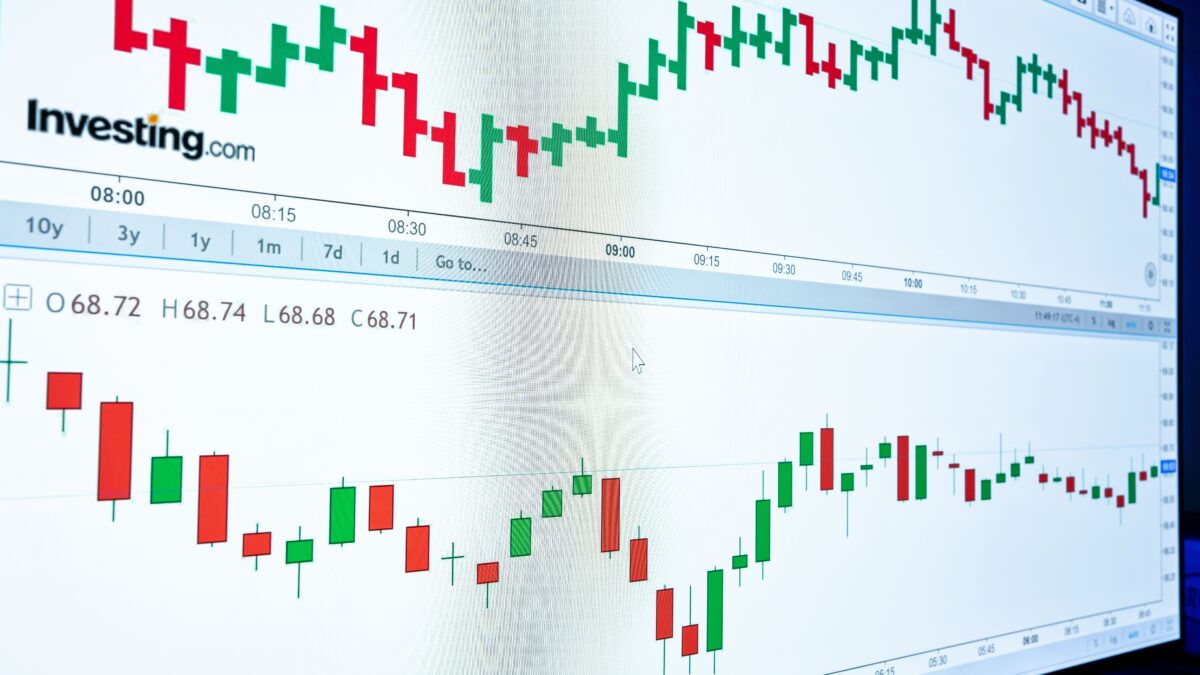

As investors reassess soaring artificial intelligence valuations and record data-centre investments, a global technology sell-off is raising questions about the profitability, financing and long-term sustainability of the AI revolution.
The Market Correction Behind the AI Boom
The global artificial intelligence industry is entering a more demanding financial phase. After several years of extraordinary investor enthusiasm, technology companies are facing growing pressure to demonstrate that their investments can generate sustainable profits.
The recent sell-off has affected major technology markets across the United States and Asia. Investors are no longer evaluating AI companies solely on their growth potential. They are increasingly examining how much capital these businesses require, how quickly they can recover their investments and whether their valuations reflect realistic earnings expectations.
On Friday, 20 November, the Nasdaq Composite fell 5.3%, while the S&P 500 declined 3.7%. The Nasdaq recorded a weekly fall of approximately 10%, its largest weekly decline since March 2020. The Philadelphia Semiconductor Index also dropped around 10.7% in the session.
The sell-off reflected concerns across the wider AI investment ecosystem, including semiconductor manufacturers, cloud infrastructure providers and companies supplying power and equipment to data centres.
However, the market picture changed on Monday. US futures recovered strongly, with Nasdaq futures gaining 3.6% and S&P 500 futures rising 2.9% in morning trading. The rebound offered some relief but did not erase the previous week’s losses.
Why Investors Are Questioning AI Valuations
Artificial intelligence has attracted enormous investment from some of the world’s largest technology companies.
Businesses such as Amazon, Microsoft, Alphabet, Meta and Oracle are committing substantial capital to data centres, advanced processors, cloud infrastructure and computing capacity.
These investments are intended to support increasingly sophisticated AI models and commercial applications.
But investors are beginning to ask a difficult question: how long will it take for these investments to generate sufficient revenue?
Building AI infrastructure requires significant upfront spending. Companies must acquire expensive processors, secure electricity, construct specialised facilities and maintain complex computing systems.
If demand for paid AI services grows more slowly than expected, the financial returns could fall short of market expectations.
Analysts have also begun examining whether major technology companies will continue increasing their capital expenditure at the same pace. This suggests that the market may be moving away from assuming that AI infrastructure spending will rise indefinitely.
The Data Centre Investment Question
Data centres have become one of the most important foundations of the global AI economy.
They provide the computing capacity required to train and operate advanced artificial intelligence systems. Their expansion has also created business opportunities for semiconductor manufacturers, construction companies, engineering firms, electricity providers and networking equipment suppliers.
However, the economics of these facilities are becoming more complicated.
Data-centre construction involves substantial capital expenditure, long development timelines and continuing electricity costs. Companies must also secure reliable access to advanced chips and cooling systems.
Many infrastructure projects depend on borrowed capital or long-term financing arrangements.
This creates financial exposure if AI adoption slows or customers delay spending.
Investors are therefore examining whether future AI revenue will justify the cost of building and maintaining this infrastructure. The question is no longer simply how many data centres companies can construct, but whether those facilities can operate profitably.
Semiconductor Companies Feel the Pressure
The semiconductor industry has been among the biggest beneficiaries of the AI investment boom.
Companies producing advanced processors, memory chips and specialised computing equipment have experienced strong demand as technology businesses expand their AI capabilities.
However, semiconductor stocks have also faced considerable pressure during the recent market correction.
On November 20, Nvidia shares fell approximately 14%, while the Philadelphia Semiconductor Index declined around 11%. South Korean chipmakers, including Samsung Electronics and SK Hynix, also experienced losses as investors reassessed the outlook for AI-related demand.
The correction demonstrates how closely the semiconductor industry is connected to expectations surrounding AI infrastructure spending.
If major technology companies reduce or delay their investment plans, chip manufacturers and equipment suppliers could face weaker growth expectations.
Nevertheless, a decline in share prices does not automatically indicate that demand for semiconductors has collapsed. The industry remains central to the development of AI computing, and the long-term demand outlook will depend on actual adoption and commercial spending.
Nvidia’s Leadership Developments Add to Market Uncertainty
The market has also faced uncertainty surrounding Nvidia, one of the most influential companies in the global AI ecosystem.
On November 23, Reuters reported that Nvidia had reinstated Jensen Huang as CEO with immediate effect. The company said its board had voted unanimously on the decision.
Nvidia’s position extends beyond chip manufacturing. Its products support the infrastructure used by cloud providers, technology developers and businesses building advanced AI applications.
Any uncertainty surrounding its leadership, regulatory position or business strategy can therefore influence sentiment across the wider semiconductor industry.
Higher Interest Rates Could Make AI Investment More Expensive
The AI market correction is also taking place against a challenging monetary environment.
Higher interest rates increase borrowing costs and can reduce the attractiveness of companies whose valuations depend heavily on future earnings.
This is particularly important for AI infrastructure businesses that require large investments before generating substantial commercial returns.
Investors are watching upcoming US inflation data for clues about the Federal Reserve’s next policy decisions. Expectations surrounding interest-rate movements are adding to caution across financial markets.
If borrowing costs remain elevated, companies may face greater pressure to prioritise profitable projects, manage debt and reconsider the timing of large infrastructure expansions.
For investors, this creates an additional challenge: even businesses with promising AI technology may face valuation pressure when financing becomes more expensive.
Asia’s Technology Markets Face Wider Consequences
The AI investment cycle is closely connected to Asian economies, particularly South Korea and Taiwan.
Both countries play important roles in the global semiconductor supply chain. Their manufacturers supply critical components used in advanced computing systems.
The recent sell-off has therefore raised concerns beyond Wall Street.
South Korea’s KOSPI declined approximately 3.3% on November 23, while Taiwan’s market recovered around 2.4% after suffering a sharp weekly decline. China’s major indices were comparatively stable, while India’s Nifty 50 and BSE Sensex also recorded losses during the session.
Regional authorities have responded with measures aimed at stabilising investor confidence.
Taiwan tightened short-selling restrictions, South Korea indicated its readiness to support the market if necessary, and Chinese exchanges announced changes to margin-financing requirements.
These developments demonstrate how fluctuations in the AI sector can influence financial markets across multiple economies.
What the AI Correction Means for Global Businesses
The current market adjustment could have implications well beyond technology companies.
Banks and financial institutions may become more cautious about lending to businesses with large infrastructure requirements. Investors may demand clearer profitability targets before supporting new AI ventures.
Smaller technology companies could also face funding challenges if venture capital and public-market financing become more selective.
At the same time, businesses using AI may continue to invest in automation, customer services, software development and operational efficiency.
This distinction is important. A correction in AI-related stocks does not necessarily mean that artificial intelligence itself is losing economic relevance.
Instead, the market may be reassessing which companies can turn technological progress into sustainable commercial returns.
The Next Phase of the Artificial Intelligence Economy
The global AI industry is not necessarily approaching the end of its growth story. However, the financial expectations surrounding it are changing.
For years, investors rewarded companies for announcing ambitious infrastructure plans and demonstrating rapid expansion. The current market environment is placing greater emphasis on revenue generation, capital discipline and long-term profitability.
Technology companies will need to demonstrate that their AI investments can support recurring income, improve productivity and deliver measurable commercial value.
The coming quarters will be important in determining whether the sector can meet those expectations.
The next phase of the AI revolution may not be defined by who invests the most money, but by who can turn that investment into sustainable economic value.
Victor Ames
Victor Ames writes on market structure, capital flows, investment cycles and the way financial conditions transmit into the real economy for Economic Statesman.