
UK and EU Reset Trade Relations with a £17 Billion Economic Opportunity
The UK and EU have agreed on new food trade, carbon market and youth mobility arrangements, with Britain projecting up to £17 billion in annual economic gains by 2040.
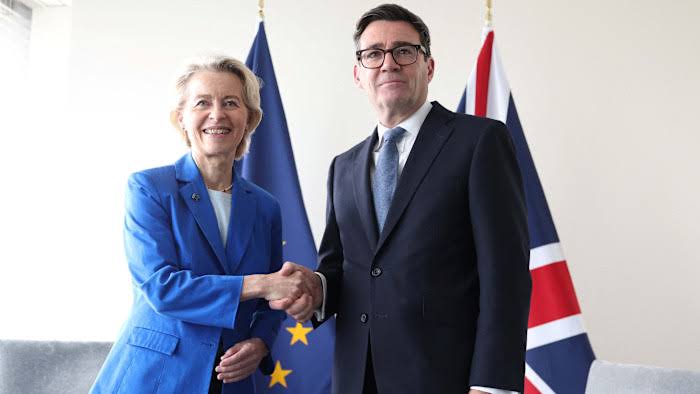

New agreements on food trade, carbon markets and youth mobility aim to reduce post-Brexit barriers, lower business costs and strengthen economic ties.
The United Kingdom and European Union have agreed on a new package of economic arrangements designed to reduce trade barriers, improve market access and strengthen commercial cooperation nearly a decade after Brexit.
The agreements were reached at the UK–EU Summit in Brussels on 20 November 2026. They cover food and agricultural trade, emissions trading and youth mobility. Together, the British government estimates that the package could add up to 0.5% to the UK’s gross domestic product by 2040, equivalent to approximately £17 billion annually.
The announcement marks a significant step in the effort to improve economic relations between the two sides. Rather than reversing Brexit, the package seeks to make selected areas of cross-border trade and cooperation less complicated while keeping the UK outside the EU single market and customs union.
For businesses, the significance lies in the practical changes. Fewer border checks, reduced paperwork and greater compatibility between carbon markets could improve the conditions under which companies trade, invest and plan production.
The Three Agreements Behind the Economic Reset
The package focuses on three areas with direct economic implications.
| Agreement | Main provision | Expected economic significance |
|---|---|---|
| Food and agricultural trade | Common sanitary and phytosanitary arrangements | Lower paperwork and border costs for agricultural and food businesses |
| Emissions trading | Linking UK and EU carbon markets | Reduced carbon-trading barriers and potential exemptions from carbon border charges |
| Youth mobility | Work, study and travel opportunities for people aged 18–31 | Greater access to talent, education and cross-border experience |
The measures have different implementation timelines. Their economic benefits will depend on legal approval, regulatory arrangements and how quickly businesses adapt.
Food Trade: Reducing the Cost of Cross-Border Commerce
The food and agricultural agreement could have one of the most visible effects on everyday business operations.
Since Brexit, British exporters have faced additional checks, certificates and administrative requirements when moving animal, plant and related products into the EU. These requirements have increased the time and cost involved in cross-border trade.
The new Sanitary and Phytosanitary Agreement aims to establish a common framework for food safety, animal health and plant health rules.
Under the arrangement, many products will be able to move between Great Britain and the EU without the existing routine certificates and checks. The agreement will require the UK to align with relevant EU food and plant safety rules.
The British government estimates that the arrangement could contribute up to £5.1 billion annually to the UK economy by 2040.
For food manufacturers, farmers, exporters and logistics operators, the potential benefits include fewer administrative requirements, more predictable delivery schedules and lower compliance costs.
The agreement could also reduce delays for perishable products. Fresh produce, meat and other agricultural goods are particularly sensitive to border waiting times because delays can increase spoilage and storage expenses.
The arrangements are expected to take effect from March 2028, subject to the required legal and implementation processes.
Carbon Market Link Could Support British Industry
The second major agreement concerns emissions trading.
The UK and EU have concluded negotiations to link their respective Emissions Trading Systems. The arrangement is intended to allow emissions allowances issued under either system to be used for compliance across both markets once the link becomes operational.
This could create a larger and more liquid carbon market, giving businesses greater flexibility in managing their emissions obligations.
The agreement is particularly important for industries that face carbon-related trade costs, including steel, aluminium and other energy-intensive manufacturing sectors.
Under the EU’s Carbon Border Adjustment Mechanism, certain imported goods face carbon-related charges based on their embedded emissions. Linking the two emissions markets is intended to create the basis for mutual exemptions from the respective carbon border adjustment mechanisms, subject to the relevant legal procedures.
The British government estimates that around £6.5 billion of UK exports could benefit from protection against these additional border charges. It also estimates that linking the carbon markets could add up to £3.8 billion annually to the UK economy by 2040.
The agreement is targeted for implementation from 1 January 2028, subject to ratification and the necessary legislative and technical preparations.
For manufacturers, the larger issue is predictability. Carbon costs influence production decisions, investment planning and the competitiveness of goods sold across international markets.
A more integrated system could help businesses manage those costs more efficiently while maintaining incentives to reduce emissions.
Youth Mobility: An Economic Link Beyond Trade
The third agreement introduces a proposed Youth Experience Scheme for people aged 18 to 31.
The reciprocal arrangement is intended to allow eligible participants to live, work, study and travel in the UK or EU for up to three years. The scheme is expected to operate within agreed annual limits and will require visa arrangements.
The British government estimates that the scheme could increase UK GDP by up to 0.2%.
Although youth mobility is not a conventional trade agreement, it has economic implications. Cross-border movement can support access to skills, education, professional experience and labour-market opportunities.
Employers in sectors that depend on internationally experienced workers could benefit from a wider pool of talent. Universities and training institutions may also gain from stronger educational links.
The scheme is expected to be operational by January 2030. Its final implementation will depend on the completion of the agreed arrangements, including outstanding questions concerning university tuition fees.
What the £17 Billion Estimate Means
The British government estimates that the agreements could add approximately £17 billion a year to the UK economy by 2040, equivalent to 0.5% of GDP.
This figure is a projected economic benefit, not an immediate increase in national output or a guaranteed financial return.
The government’s estimates identify three main contributions:
- Food and agricultural trade arrangements: up to £5.1 billion annually.
- Emissions trading linkage: up to £3.8 billion annually.
- Youth mobility: up to 0.2% of UK GDP.
These estimates describe potential long-term economic effects. Their realisation will depend on implementation, business participation and the wider economic environment.
The figures also underline the importance of distinguishing between an announced policy package and the benefits that businesses eventually experience.
Businesses Still Need Clear Implementation Timelines
The agreements have been welcomed as a step towards reducing the friction created by post-Brexit trade arrangements. However, the announcement does not mean that all barriers will disappear immediately.
Companies will need clarity on regulatory alignment, documentation, eligibility requirements and the procedures that will apply when the new arrangements begin.
For agricultural exporters, the key issue will be understanding the common food safety framework and preparing for its requirements.
For industrial businesses, the effectiveness of the carbon-market link will depend on the final legal arrangements and the timing of exemptions from carbon border charges.
Businesses will also need time to adjust contracts, supply chains and compliance systems.
The UK Parliament’s Business and Trade Committee had already called for clear implementation milestones ahead of the summit, warning that uncertainty over timelines could complicate business investment decisions.
That concern remains relevant. An agreement creates the framework for change, but businesses need operational details before they can incorporate expected savings into their plans.
A Closer Economic Relationship Without Reversing Brexit
The new package reflects a more practical approach to UK–EU economic relations.
The UK is not rejoining the EU, its customs union or its single market. Instead, both sides are seeking closer cooperation in specific areas where regulatory differences and administrative barriers have created costs for businesses.
For the EU, the arrangements strengthen economic ties with a major neighbouring market. For the UK, they offer an opportunity to improve access to European trade while retaining its separate institutional position.
The longer-term test will be whether the agreements translate into measurable improvements in trade flows, industrial competitiveness and business investment.
The £17 billion estimate provides a measure of the British government’s ambition. But the real economic value will depend on how effectively the new arrangements are implemented and how quickly companies can use them.
The UK–EU reset is therefore less about a symbolic change in relations and more about the economics of making cross-border business easier.
Julian Reed
Julian Reed covers monetary policy, central-bank communication, inflation targeting and the wider financial signals that move markets.