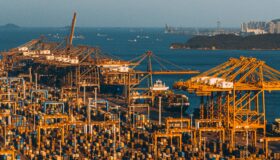
Global Trade Restrictions Hit Record Levels: How Tariffs Are Reshaping International Supply Chains
Global trade restrictions are intensifying as governments introduce new tariffs, export controls and industrial safeguards. Fresh WTO findings reveal record levels of restrictive measures, raising concerns about supply-chain costs, international investment and the future of global trade.
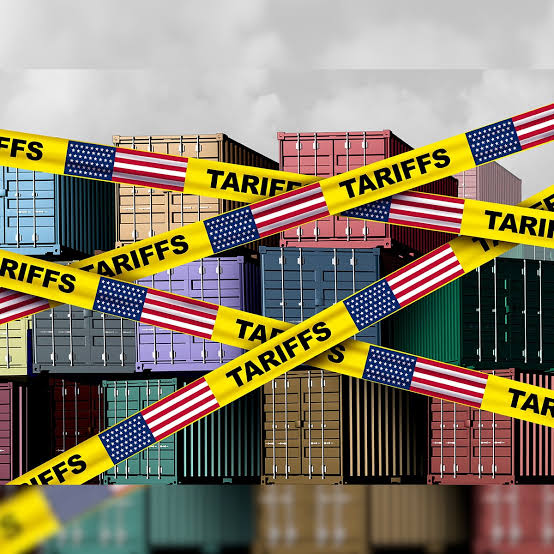

Governments are increasingly using tariffs, export controls and trade restrictions to protect domestic industries and strategic resources. New World Trade Organization findings reveal a sharp rise in restrictive trade measures, raising questions about the future of globalisation, international investment and cross-border supply chains.
News Peg: On 23 November 2026, the World Trade Organization reported that G20 economies introduced 206 new restrictive and other non-facilitating trade measures during the first half of 2026, compared with 194 during the whole of 2025. The stockpile of import-related restrictive measures reached US$4.5 trillion, covering 29.6% of G20 imports.
Global Trade Enters a New Era of Protectionism
International trade is facing a significant transformation as governments increasingly prioritise economic security, domestic manufacturing and strategic independence over unrestricted cross-border commerce.
For decades, globalisation was built around the principle that countries could specialise in production, source materials internationally and sell goods across borders with relatively few barriers.
That model is now facing growing pressure.
Tariffs, export restrictions, industrial subsidies and strategic trade controls are becoming increasingly important instruments of government policy.
The latest findings from the World Trade Organization (WTO) illustrate the scale of this change.
In its report published on 23 November 2026, the WTO revealed that G20 economies introduced 206 new restrictive and other non-facilitating trade measures during the first half of 2026 alone.
This exceeded the 194 measures recorded throughout the whole of 2025.
The figures indicate that trade policy activity has intensified considerably as major economies respond to geopolitical competition, industrial vulnerabilities and uncertainty surrounding international supply chains.
However, the report also identifies an important countertrend: governments are introducing measures to facilitate trade even as restrictions increase.
This creates a complicated environment in which international commerce continues to expand while becoming more politically influenced and strategically managed.
WTO Report Reveals the Scale of Global Trade Restrictions
The WTO’s latest G20 trade monitoring report provides a detailed picture of the changing international trading environment.
G20 economies account for approximately 80–85% of global GDP and around 75% of international trade.
Their policy decisions therefore have significant implications for manufacturers, exporters, importers and investors worldwide.
According to the report, import-related restrictive and other non-facilitating measures introduced since 2009 and still in force covered US$4.5 trillion of G20 imports as of 30 June 2026.
This represented 29.6% of total G20 imports, up from 27.9% at the end of 2025.
Export-related restrictive measures also increased.
The accumulated stockpile reached US$1.3 trillion, equivalent to 9.1% of G20 exports.
These figures demonstrate how trade restrictions have become embedded in the international trading system rather than remaining temporary responses to individual disputes.
For businesses operating across multiple markets, this means that access to international suppliers and customers increasingly depends on regulatory decisions made by governments.
Tariffs Are Becoming Instruments of Economic Strategy
Tariffs have traditionally been used to generate government revenue and protect domestic producers from international competition.
Their role has expanded considerably.
Governments increasingly use import duties to encourage domestic manufacturing, protect strategic industries and influence the behaviour of international trading partners.
A higher tariff can make imported products more expensive, creating an advantage for domestic manufacturers.
However, it can also increase production costs for companies that depend on imported components, machinery and raw materials.
This creates a complex economic trade-off.
For example, a country seeking to protect its domestic steel industry may impose higher duties on imported steel.
While local producers could benefit, automobile manufacturers, construction companies and engineering businesses may face increased input costs.
The wider impact depends on the availability of domestic alternatives and the ability of businesses to absorb or pass on higher expenses.
The growing use of tariffs therefore reflects a broader shift towards industrial policy, in which governments actively influence the structure of domestic production.
The European Union’s Latest Trade Investigation Highlights the Shift
A recent European Union investigation demonstrates how these trade tensions are translating into specific industrial policies.
On 23 November 2026, Reuters reported that the European Commission had opened a safeguard investigation into rising imports of glass fibre reinforcements, composite resins and related chemicals.
These materials are essential for manufacturing products used in wind energy, electricity infrastructure, aerospace and defence.
The investigation could result in import quotas or tariffs if the European Commission concludes that increased imports are damaging domestic producers and the necessary legal conditions for safeguard action are met.
According to the report, EU imports of the relevant materials increased by 29% between 2019 and 2025, reaching approximately 898,000 metric tonnes.
The domestic industry’s market share declined from 74% to 62% during the same period.
The investigation reflects Europe’s wider concern about industrial competitiveness and dependence on international suppliers.
However, it also creates a potential challenge for European manufacturers.
Companies operating in renewable energy, infrastructure and advanced manufacturing may face higher material costs if trade restrictions are introduced.
The outcome will therefore have implications beyond the chemical and composite materials industries.
Supply Chains Are Being Reshaped by Geopolitical Competition
The expansion of trade restrictions is encouraging companies to reconsider how they organise international supply chains.
For many years, businesses prioritised efficiency by sourcing materials from locations offering the lowest production costs.
This approach created highly integrated international manufacturing networks.
However, geopolitical tensions and sudden trade-policy changes have exposed the risks of relying too heavily on individual countries or suppliers.
Businesses are increasingly considering strategies such as:
- Supply-chain diversification: Developing alternative suppliers across different countries.
- Nearshoring: Moving production closer to major consumer markets.
- Friend-shoring: Building supply relationships with politically aligned economies.
- Strategic stockpiling: Maintaining additional inventories of essential materials.
- Domestic manufacturing: Increasing local production of strategically important goods.
These strategies can improve resilience, but they may also increase operating expenses.
Manufacturers may need to invest in additional facilities, maintain larger inventories and establish new supplier relationships.
Consequently, the global supply chain model is increasingly balancing cost efficiency against geopolitical security.
Export Controls Are Becoming a Major Source of Trade Uncertainty
Tariffs are only one component of the changing trade environment.
Governments are also expanding export controls on strategically important products, technologies and raw materials.
These controls can restrict the international movement of products considered important for national security or industrial competitiveness.
Semiconductors, advanced computing equipment, critical minerals and specialised manufacturing technologies have become particularly sensitive areas.
Export restrictions can affect industries far beyond the country introducing them.
For example, limitations on semiconductor equipment exports can influence the ability of international manufacturers to develop advanced chips.
Similarly, restrictions on critical minerals can affect battery production, electric vehicles, renewable energy infrastructure and electronics manufacturing.
The WTO’s November findings identify export-related restrictive measures covering US$711 billion of G20 exports during the first half of 2026.
This represented 4.8% of G20 exports, compared with 0.9% during 2025.
The increase demonstrates that export controls and related restrictions are becoming increasingly significant in international economic policy.
Trade Restrictions Are Rising, but International Commerce Remains Resilient
Despite the increase in protectionist measures, global trade has not stopped expanding.
The WTO’s October 2026 Global Trade Outlook revised its forecast for world merchandise trade volume growth in 2026 upwards to 3.9%, compared with its earlier baseline forecast of 1.9%.
One important contributor has been strong demand for goods associated with artificial intelligence investment.
AI-related products, including electronic components and advanced computing equipment, have supported international merchandise trade.
The WTO also highlighted the ability of businesses to adapt to changing trading conditions by diversifying suppliers and establishing new commercial partnerships.
This resilience demonstrates that globalisation is changing rather than disappearing.
Countries continue to depend on international trade for energy, technology, food, industrial materials and consumer goods.
However, governments are increasingly seeking greater control over strategically important parts of their economies.
The result is a global trading system that remains interconnected but is becoming more fragmented in certain industries.
Why Governments Are Introducing More Trade-Facilitating Measures
An important finding in the WTO’s latest report is that governments are not simply moving towards greater protectionism.
During the first half of 2026, G20 economies introduced 282 new trade-facilitating measures, exceeding the 225 recorded throughout 2025.
These measures covered an estimated US$977 billion of imports and US$560 billion of exports.
Many were introduced in response to trade disruptions associated with the closure of the Strait of Hormuz.
Some governments reduced or removed tariffs to facilitate the movement of essential goods and support disrupted supply chains.
This development reveals the contradictory nature of current trade policy.
Governments are simultaneously protecting selected domestic industries while attempting to maintain access to essential international supplies.
In practice, this means that a country may restrict imports in one strategic sector while reducing duties on energy, agricultural products or industrial inputs in another.
The objective is not necessarily to eliminate international trade but to manage its risks and preserve access to essential resources.
India Faces Both Opportunities and Challenges
India occupies an important position in the changing international trade environment.
As one of the world’s major emerging economies, it is seeking to strengthen domestic manufacturing while expanding access to international markets.
Government initiatives supporting electronics, pharmaceuticals, defence production and industrial development are part of this broader strategy.
Increasing geopolitical competition also creates opportunities for India to attract companies seeking alternative manufacturing and sourcing destinations.
However, the growing use of tariffs and export controls can create challenges for Indian businesses.
Many domestic manufacturers depend on imported machinery, electronic components, chemicals and industrial raw materials.
Higher international trade barriers can increase production expenses and affect export competitiveness.
India must therefore balance the protection of domestic industries with access to affordable international inputs.
Trade agreements, including its expanding partnerships with major international economies, will remain important in determining how effectively Indian companies participate in changing global supply chains.
The challenge is to strengthen domestic production without creating unnecessary barriers that make Indian manufacturing less competitive.
What Protectionism Means for Businesses and Investors
The increasing use of trade restrictions is changing how companies assess international investment opportunities.
Manufacturers must now consider not only labour costs, infrastructure and market access but also the political and regulatory conditions affecting international suppliers.
Businesses with diversified sourcing networks may be better positioned to manage sudden tariff changes.
Companies operating in strategic sectors such as semiconductors, defence, energy and critical minerals may also benefit from government support.
However, investors need to assess the risks associated with policy uncertainty.
A facility that appears commercially attractive under one tariff structure may become less profitable if trade rules change.
For international investors, the growing importance of industrial policy makes regulatory stability an increasingly important consideration.
Companies that can adapt their supply chains while maintaining competitive production costs may have an advantage in the changing global economy.
Is Globalisation Being Replaced by Economic Nationalism?
The growing use of tariffs and trade restrictions has raised an important question about the future of globalisation.
The international trading system is not moving towards complete economic separation.
Countries continue to rely on one another for essential goods, industrial technology, energy resources and investment capital.
However, the priorities influencing trade policy are changing.
Economic security, national industrial capacity and strategic independence are becoming more important alongside traditional considerations of efficiency and cost.
This could lead to a more regionalised trading system in which countries build stronger commercial relationships with selected partners while reducing dependence on politically sensitive suppliers.
Such a transition may create new investment opportunities, but it could also make international production more expensive and complicated.
The challenge for policymakers will be to protect legitimate national interests without undermining the international cooperation required for sustainable economic growth.
The Future of International Trade
The latest WTO findings demonstrate that international trade is entering a period of significant policy transformation.
The accumulation of tariffs, export controls and other restrictive measures is creating additional uncertainty for businesses operating across borders.
At the same time, trade-facilitating measures and continued growth in merchandise trade show that international commerce remains essential to the global economy.
For governments, the priority will be to strengthen domestic resilience while preserving access to international markets.
For businesses, supply-chain diversification and regulatory flexibility are becoming increasingly important.
For investors, understanding the relationship between geopolitics, trade policy and industrial strategy will be essential when evaluating international opportunities.
The future of global trade will not be determined by tariffs alone. It will depend on how successfully governments balance economic security, industrial competitiveness and the international cooperation required to keep global markets connected.
Marcus Vane
Marcus Vane covers economic statecraft, sanctions, tariffs, industrial policy and the strategic use of economic power.