
China’s Economic Slowdown: Weak Consumer Demand and Property Crisis Challenge Growth
China's October economic indicators reveal an uneven recovery as weak consumer spending and declining property investment challenge domestic growth. Strong exports and advanced manufacturing provide support, but policymakers face increasing pressure to rebuild household confidence.
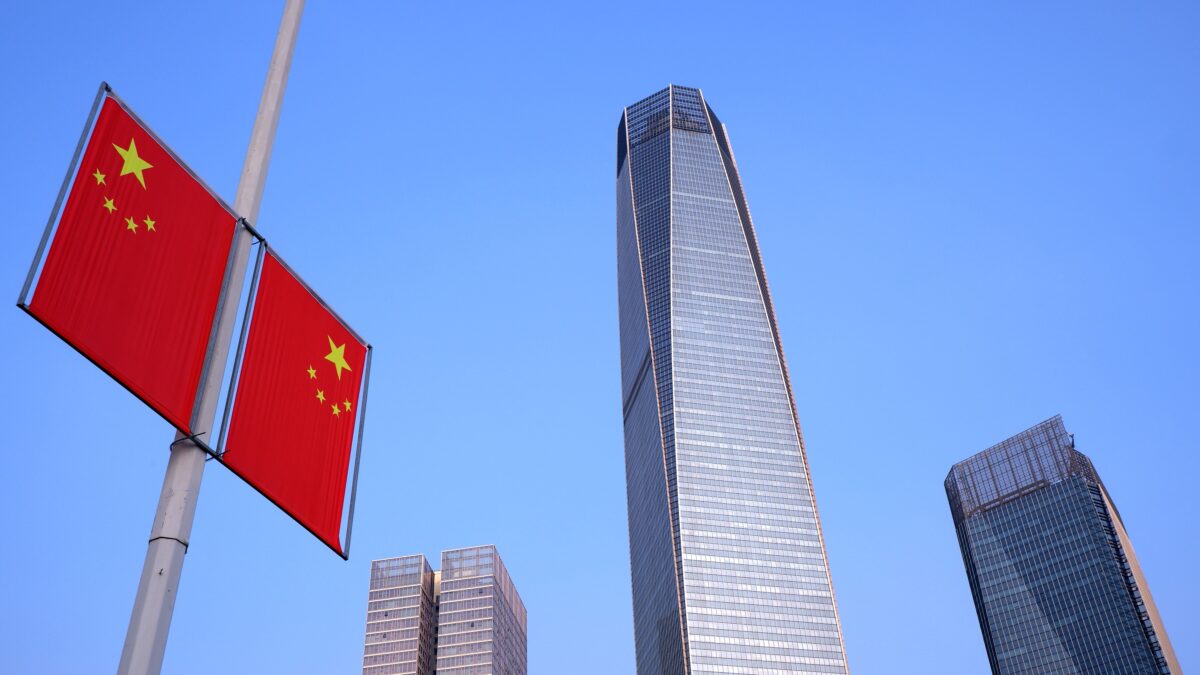

China’s economy is facing an increasingly uneven recovery as weak consumer spending, declining property investment and slowing industrial activity challenge domestic growth. Although exports and advanced technology manufacturing continue to provide support, October’s disappointing economic indicators reveal a deeper imbalance between industrial production and household demand. The challenge for Beijing is becoming clearer: sustaining economic growth will require more than manufacturing strength and export expansion.
China’s Economic Recovery Faces Growing Pressure
China’s economic recovery is showing signs of imbalance as domestic consumption and investment struggle to maintain momentum despite strong export performance.
The world’s second-largest economy has continued to benefit from international demand for manufactured goods, advanced technology products and artificial intelligence-related equipment.
However, the latest October economic indicators reveal that domestic economic activity remains considerably weaker.
According to China’s National Bureau of Statistics, retail sales increased by just 0.4% year-on-year in October, slowing from 1.1% in September.
Industrial production expanded by 4.8%, compared with 5.5% in the previous month.
Meanwhile, fixed-asset investment declined by 8.1% during the first ten months of 2026.
These figures suggest that China’s economic growth is increasingly dependent on manufacturing and international trade rather than stronger household consumption and domestic investment.
The situation presents an important challenge for policymakers in Beijing.
China needs to maintain economic growth while addressing weak consumer confidence, declining property investment and structural pressures affecting private businesses.
Weak Consumer Spending Becomes China’s Biggest Economic Concern
Domestic consumption remains one of the most important weaknesses in China’s economic recovery.
Retail sales, which measure consumer spending on goods, increased by only 0.4% year-on-year in October.
The slowdown is particularly significant because the month included China’s National Day holiday period and the Singles’ Day shopping season, both of which typically support commercial activity.
Consumers have become increasingly cautious about discretionary spending.
Concerns about employment security, household income, property values and future economic conditions are influencing purchasing decisions.
The weakness is also visible in the difference between spending on goods and services.
During the first ten months of 2026, retail sales of consumer goods increased by just 1.0% year-on-year, while services consumption grew by 4.9%.
This suggests that households are showing relatively greater willingness to spend on experiences and services than on physical products.
For businesses, the consequences are significant.
Retailers, consumer electronics manufacturers, automobile companies and other businesses dependent on domestic demand may find it difficult to achieve sustained revenue growth.
China’s policymakers have repeatedly emphasised the importance of expanding household consumption.
However, stronger consumption requires more than temporary shopping incentives. It depends on consumer confidence, income growth, employment opportunities and financial security.
China’s Property Crisis Continues to Weigh on Economic Growth
The property market remains one of the most significant structural challenges facing China.
For years, real estate represented an important source of household wealth, business activity, construction employment and local government revenue.
However, the sector entered a prolonged downturn following financial difficulties among major property developers and declining confidence in the housing market.
The latest investment figures demonstrate the scale of the problem.
Real estate development investment declined by 21.6% year-on-year during January–October 2026.
Sales of newly built commercial properties also remained weak, with total sales value falling 14.3% during the same period.
Although certain major cities have shown signs of stabilisation, the broader housing market remains under pressure.
Reuters reported that China’s new-home prices declined by 0.1% month-on-month in October, while annual prices fell 2.4%.
The pace of decline was the slowest since November 2025, but analysts cautioned that a nationwide recovery remained uncertain.
Shanghai was the only major city to record monthly and annual increases in both new and existing-home prices.
Smaller cities continued to face greater pressure from excess housing supply and weaker demand.
The property downturn is important because falling home values can affect household confidence.
Families that have invested a substantial proportion of their wealth in residential property may become more reluctant to spend when housing prices decline.
This creates a wider economic cycle in which falling property values weaken consumption, while weak consumption further discourages investment.
Why China’s Property Market Matters Beyond Construction
The property crisis extends well beyond developers and homebuyers.
Real estate has historically been connected to several major parts of China’s economy, including construction, steel, cement, household appliances, furniture, banking and local government finances.
When property developers reduce new projects, demand for construction materials and related industrial products can decline.
Construction companies may reduce hiring, suppliers may experience weaker orders and local governments can receive less revenue from land-related transactions.
Financial institutions may also face greater exposure to developers and borrowers experiencing repayment difficulties.
The effects therefore spread across multiple industries.
China’s challenge is not simply to encourage more home purchases.
It must also restore confidence in the housing market, manage unsold inventories and establish a more sustainable model for property development.
The shift towards completed-home sales and tighter oversight of developers’ use of presale funds may improve consumer protection, but it can also change developers’ financing requirements.
A sustainable recovery will depend on stronger household confidence and a gradual correction of excess supply.
Industrial Production Remains Stronger Than Domestic Demand
While consumption and investment remain weak, China’s manufacturing sector continues to provide important support.
Industrial production increased by 4.8% year-on-year in October 2026, according to the National Bureau of Statistics.
High-tech manufacturing performed particularly well, recording growth of 17.6%.
Equipment manufacturing increased by 10.6%, demonstrating the continuing importance of advanced industrial production.
China has been investing heavily in strategic industries, including semiconductors, electric vehicles, robotics, renewable energy equipment and advanced manufacturing.
These industries are helping the country strengthen its position in international supply chains.
However, the difference between industrial growth and domestic consumption remains significant.
Manufacturers can increase production and exports without necessarily generating an equivalent increase in household spending.
This creates an economic imbalance in which industrial capacity expands faster than domestic demand.
For China, the long-term challenge is ensuring that manufacturing strength translates into higher household incomes, stronger employment and broader economic prosperity.
Artificial Intelligence and Technology Exports Support China’s Economy
International demand for advanced technology products has become an important source of economic support.
China’s exports increased by 35.2% year-on-year in October, reaching approximately US$412.33 billion, according to customs data.
Imports also increased by 41.6%, reaching approximately US$307.05 billion.
The expansion in international trade reflects stronger demand across several manufacturing categories, including technology-related products.
Artificial intelligence investment has created opportunities for Chinese manufacturers supplying electronics, industrial components, computing equipment and other advanced products.
The country has also been strengthening its domestic technology ecosystem through investment in semiconductor development, automation and industrial innovation.
These developments support manufacturing output and international competitiveness.
However, export-led growth also creates exposure to external economic conditions.
Trade restrictions, geopolitical tensions, tariff changes and weaker demand in major overseas markets could affect China’s future export performance.
Consequently, international trade provides an important growth engine, but it cannot permanently replace the need for stronger domestic consumption.
China’s Investment Slowdown Raises Questions About Future Growth
Fixed-asset investment is another important indicator of China’s economic health.
It measures spending on long-term assets such as infrastructure, industrial facilities, property development and machinery.
During January–October 2026, China’s fixed-asset investment declined by 8.1% year-on-year, reaching approximately RMB 36.48 trillion.
Private investment declined by 11.4%, highlighting continuing caution among private businesses.
The weakness matters because private investment is essential for innovation, employment generation and long-term productivity improvements.
Companies are less likely to expand when they face uncertain demand, declining profitability or concerns about future economic conditions.
The government has continued supporting strategic industries and infrastructure development.
However, investment in high-tech industries increased by 4.0%, suggesting that capital allocation is becoming more concentrated in selected sectors.
This reflects a broader shift in China’s economic strategy towards advanced manufacturing and technological self-reliance.
While these investments may strengthen long-term competitiveness, they do not immediately resolve the weakness in consumer demand and private-sector confidence.
China’s Inflation Picture Reflects Uneven Economic Conditions
Price movements provide another indication of the differences between China’s industrial and consumer economies.
Consumer inflation remained relatively subdued, with the Consumer Price Index increasing by 0.7% year-on-year in October.
Core CPI, which excludes food and energy prices, increased by 0.8%.
At the same time, producer prices increased by 5.7% year-on-year.
The difference is important.
Higher producer prices can reflect rising costs and improving pricing conditions for industrial businesses.
However, weak consumer demand can prevent companies from passing higher costs on to households.
This can create pressure on profit margins and limit the ability of businesses to expand.
For policymakers, the objective is to strengthen domestic demand without creating excessive inflationary pressure.
The challenge is particularly complicated because China’s economy is experiencing stronger production in selected industries alongside weak household spending.
Beijing Faces Pressure to Introduce Stronger Economic Support
China’s government has already introduced several measures intended to support consumption, investment and the property market.
These include consumer goods trade-in programmes, housing-related support measures and financing initiatives targeting strategic industries.
However, the latest economic data suggest that existing measures have not yet produced a broad-based improvement in domestic demand.
Economists increasingly argue that stronger household-focused support may be necessary.
Measures that improve income security, strengthen social protection and reduce uncertainty around employment could encourage households to spend more confidently.
Property market stabilisation also remains important because housing represents a substantial component of household wealth.
At the same time, policymakers must balance economic stimulus against concerns about debt accumulation and financial stability.
The effectiveness of future support measures will depend on whether they address the underlying reasons behind weak consumer confidence rather than simply encouraging temporary increases in spending.
China’s Economic Slowdown Could Affect Global Trade and Investment
China’s economic performance has implications far beyond its domestic market.
As one of the world’s largest manufacturing and trading economies, China plays a central role in international supply chains.
A slowdown in domestic consumption can affect exporters from Europe, Japan, South Korea, Australia and Southeast Asia.
Countries supplying industrial equipment, raw materials, luxury goods and consumer products may experience weaker demand if Chinese households and businesses reduce spending.
The property downturn also affects international commodity markets.
Reduced construction activity can influence global demand for iron ore, copper, steel and other industrial materials.
At the same time, strong Chinese manufacturing exports can increase competition for producers in other economies.
This creates a complicated international environment in which some industries benefit from China’s export expansion while others experience pressure from weaker Chinese demand.
For global investors, China’s economic indicators remain important because they influence commodity prices, trade flows, currency markets and regional growth expectations.
What Businesses and Investors Should Watch in 2027
China’s economic outlook will depend on whether policymakers can create a stronger balance between manufacturing, exports and domestic consumption.
Several developments will be particularly important:
- Consumer spending: Whether retail sales growth improves beyond October’s weak performance.
- Property market stabilisation: Whether home prices and property investment begin recovering more broadly.
- Private investment: Whether business confidence improves and companies increase capital expenditure.
- Manufacturing: Whether advanced industrial production continues supporting economic growth.
- Exports: Whether international demand remains strong despite trade tensions.
- Government support: Whether new measures provide meaningful support to households and private businesses.
- Employment and income: Whether improved job security strengthens consumer confidence.
These indicators will help determine whether China can achieve a more balanced recovery or remain dependent on industrial production and international demand.
China’s Next Economic Challenge Is Rebuilding Domestic Confidence
China’s latest economic figures reveal a growing divide between the strength of its manufacturing sector and the weakness of domestic demand.
Exports and advanced technology industries continue to support economic activity, but consumer spending, property investment and private-sector confidence remain under pressure.
The property market is particularly important because its prolonged weakness affects household wealth, business investment and local government finances.
For policymakers, the next stage of economic reform will require a stronger focus on household confidence and sustainable domestic consumption.
For international businesses, China’s manufacturing strength continues to create commercial opportunities, but the weakness in its consumer market presents important risks.
For investors, the country’s recovery will depend increasingly on whether government policy can transform industrial growth into broader economic demand.
China’s economic future will not be determined by how much it can manufacture or export alone. Its ability to restore household confidence, stabilise the property market and encourage domestic investment will determine whether the world’s second-largest economy can achieve a more sustainable and balanced growth model.
Samir Kapoor
Samir Kapoor covers the global economy, cross-border capital, growth signals and the institutions shaping economic change.