
Singapore Raises 2026 Growth Forecast After Economy Expands 6.1%
Singapore has raised its 2026 economic growth forecast to approximately 6% after third-quarter GDP expanded 6.1%. Strong AI-related manufacturing, semiconductor demand and wholesale trade supported the expansion, although weaker consumer activity presents challenges for 2027.
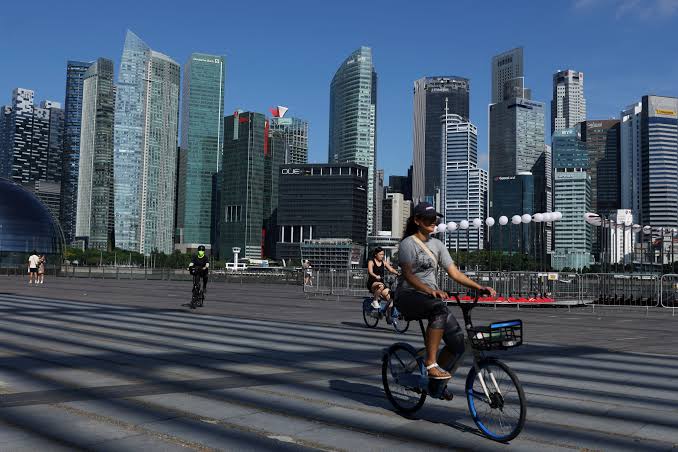

Singapore has upgraded its economic growth outlook for 2026 after stronger-than-expected third-quarter performance, supported by artificial intelligence-related manufacturing, technology exports and wholesale trade. The development highlights Asia’s growing dependence on technology-driven investment, even as consumer spending and parts of the services sector remain under pressure.
Singapore’s Economic Growth Exceeds Expectations
Singapore has raised its economic growth forecast for 2026 after recording stronger-than-expected performance during the third quarter, reflecting the growing contribution of technology-related manufacturing and international trade.
According to figures released on 24 November 2026, Singapore’s gross domestic product (GDP) increased by 6.1% year-on-year in the third quarter. This exceeded the preliminary estimate of 5.4% and surpassed economists’ expectations.
The economy also expanded 1.5% quarter-on-quarter on a seasonally adjusted basis.
Following the stronger performance, the government upgraded its full-year 2026 economic growth forecast to approximately 6.0%.
The revision highlights Singapore’s ability to benefit from expanding global demand for advanced technology products, particularly those connected to artificial intelligence infrastructure.
However, the stronger headline growth figure also masks differences in performance across the economy, with domestic consumer-facing industries continuing to experience weaker conditions.
Artificial Intelligence Manufacturing Drives Economic Momentum
One of the major contributors to Singapore’s stronger economic performance has been the expansion of technology-related manufacturing.
Global investment in artificial intelligence is increasing demand for semiconductors, electronic components, advanced computing equipment and supporting infrastructure.
Singapore is well positioned to participate in these supply chains because of its established semiconductor ecosystem, advanced manufacturing capabilities and international trade connections.
As companies across the world invest in artificial intelligence infrastructure, demand for specialised components and technology-related products is supporting manufacturing activity.
Wholesale trade has also benefited from stronger international demand.
This development demonstrates how investment in artificial intelligence is influencing economic activity beyond technology companies themselves.
The expansion of data centres, semiconductor production and digital infrastructure creates additional demand for electricity, industrial equipment, logistics, construction materials and specialised services.
Singapore’s latest growth figures therefore reflect a broader transformation in the regional economy, where technology investment is becoming an increasingly important source of industrial expansion.
Singapore Upgrades Its 2026 Growth Forecast
The government’s decision to raise its growth forecast reflects stronger economic activity during the first three quarters of 2026.
The revised outlook places Singapore’s full-year growth at approximately 6.0%.
However, policymakers are taking a more cautious approach towards the following year.
Singapore expects economic growth to moderate to between 2.5% and 4.5% in 2027.
This expected slowdown reflects the possibility that global artificial intelligence investment may lose some momentum, alongside weaker growth among major international trading partners.
For an economy that depends heavily on international commerce, changes in global demand can quickly influence manufacturing, exports and business investment.
The forecast therefore highlights an important distinction between Singapore’s strong current performance and the uncertainty surrounding its medium-term outlook.
Technology Exports Strengthen Singapore’s Trade Position
Singapore’s export outlook has also improved following the stronger manufacturing performance.
Enterprise Singapore significantly upgraded its 2026 forecast for non-oil domestic exports to growth of between 30% and 32%.
The revision reflects stronger demand for technology-related products and manufactured goods.
Non-oil domestic exports are an important indicator of the country’s ability to generate economic activity through internationally traded products.
The stronger outlook suggests that Singapore is benefiting from the global expansion of semiconductor manufacturing, electronics and artificial intelligence-related investment.
However, the sustainability of this growth will depend on international demand.
If global technology investment slows, manufacturers and exporters could experience weaker orders.
This makes Singapore’s economic outlook closely connected to developments in major technology markets, including the United States, China and other advanced Asian economies.
Domestic Consumer Spending Remains a Concern
Despite the encouraging manufacturing and export figures, not every part of Singapore’s economy is experiencing the same level of growth.
Retail, food and beverage businesses and parts of the modern services sector remain relatively weak.
Job creation has also been subdued.
This creates a gap between the performance of internationally connected industries and the everyday economic experience of households and smaller businesses.
Manufacturing and wholesale trade can expand rapidly when international demand increases, but the benefits do not necessarily translate immediately into stronger consumer spending.
Employment opportunities, household incomes and business confidence remain important factors in determining whether economic growth becomes more broadly distributed.
The difference between export-driven expansion and domestic demand will therefore remain an important issue for Singapore’s policymakers.
Inflation and Monetary Policy Remain Important
Singapore’s inflation position provides another important element of the economic outlook.
Core inflation stood at 1.5% in October 2026.
This relatively moderate level gives policymakers some room to maintain a cautious approach to monetary policy.
The Monetary Authority of Singapore is expected to leave its monetary settings unchanged at its January 2027 policy review, although future decisions will depend on inflation, currency conditions and external economic developments.
Unlike many central banks, Singapore primarily manages monetary policy through the exchange rate rather than a conventional policy interest rate.
Its approach involves managing the Singapore dollar’s nominal effective exchange rate within a policy band.
The objective is to maintain price stability while supporting sustainable economic growth.
If energy prices or international supply-chain costs increase, inflation could become more difficult to manage.
Policymakers must therefore balance strong export performance against external inflationary pressures and the possibility of weaker global demand.
Why Singapore’s Growth Matters for the Wider Asian Economy
Singapore is one of Asia’s most internationally connected economies.
Its manufacturing sector, financial services, shipping infrastructure and wholesale trade networks connect businesses across major global markets.
Consequently, changes in Singapore’s economic performance can offer useful insights into broader developments across Asian supply chains.
Its stronger manufacturing activity indicates that demand for advanced technology products continues to support parts of the regional industrial economy.
Other Asian economies involved in semiconductor production, electronics manufacturing and technology exports may also benefit from these developments.
However, the expected moderation in 2027 highlights the risks associated with relying heavily on a limited number of international growth drivers.
If artificial intelligence investment slows or major trading partners experience weaker economic growth, regional exporters could face additional pressure.
For Asia, the challenge will be to convert technology-driven export growth into broader domestic economic development.
The Outlook for Singapore in 2027
Singapore enters 2027 with a stronger economic position than previously anticipated, but its growth trajectory is expected to become more moderate.
The government’s forecast of 2.5% to 4.5% growth reflects uncertainty surrounding global demand, technology investment and international trade.
Several factors will determine the country’s economic performance:
- Artificial intelligence investment: Continued spending on data centres and semiconductor infrastructure could support manufacturing and exports.
- International trade: Demand from major global markets will influence Singapore’s export performance.
- Domestic consumption: Stronger employment and household spending will be important for more balanced economic growth.
- Inflation: Changes in energy and imported goods prices could influence household purchasing power.
- Financial conditions: Global interest rates and currency movements may affect investment and business confidence.
Singapore’s economic performance demonstrates the importance of technology, international trade and industrial competitiveness in shaping modern Asian economies.
Conclusion: Technology Exports Strengthen Singapore, but Global Risks Remain
Singapore’s decision to raise its 2026 growth forecast reflects a strong third-quarter performance supported by artificial intelligence-related manufacturing, wholesale trade and technology exports.
The expansion demonstrates how global investment in advanced computing and digital infrastructure is creating new opportunities for internationally connected Asian economies.
However, weaker domestic consumer-facing sectors, subdued employment growth and the prospect of slower international demand remain important concerns.
The expected moderation in 2027 also suggests that the current expansion may not continue at the same pace.
For businesses and investors, Singapore’s latest economic performance offers an important indication of where international demand is strongest and how technology investment is reshaping regional trade.
Singapore’s growth story is increasingly being driven by the global technology economy. Its next challenge will be to ensure that strong export performance translates into sustainable domestic growth and wider economic opportunities.
Samir Kapoor
Samir Kapoor covers the global economy, cross-border capital, growth signals and the institutions shaping economic change.