
The Indian Rupee’s Comeback: Can Foreign Investment Sustain the Recovery?
The Indian rupee has strengthened as foreign investors return to Indian markets and oil prices ease. But lasting currency stability will depend on sustained capital inflows, exports and India's external finances.
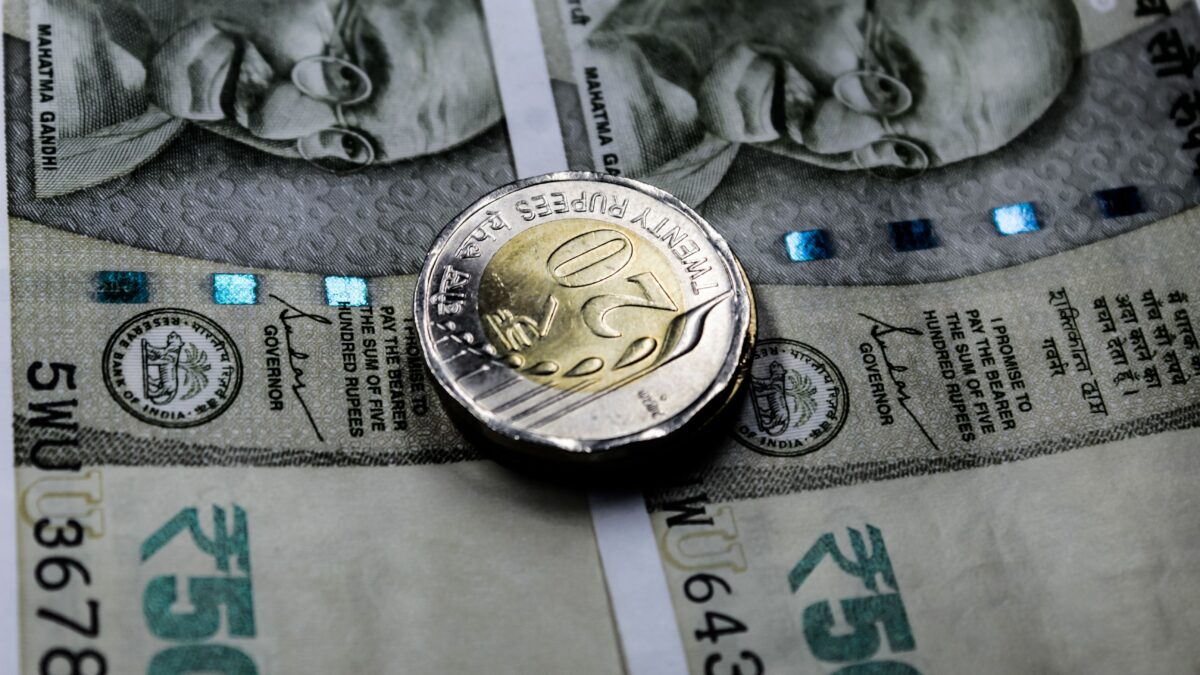

India’s currency is showing signs of recovery after months of pressure. Foreign investors are returning to the stock market, oil prices have fallen and confidence in the rupee has improved.
On 25 November, the Indian rupee strengthened to around ₹92.42 against the US dollar, reaching its highest level in seven months. Its gains during November had reached approximately 2.7%.
The recovery has been supported by a major change in foreign investment flows. International investors have bought more than $14 billion worth of Indian equities this month, reversing a difficult period in which they withdrew substantial amounts of money from the market.
This is an important development for India. Foreign investment can support the currency, improve market confidence and provide funds for companies. However, a stronger rupee over a few weeks does not automatically mean that the country’s external financial position has become stronger.
The bigger question is whether India can turn this temporary improvement into a lasting trend.
What Is Driving the Rupee’s Recovery?
Three factors are supporting the rupee: foreign investment, lower oil prices and improved market sentiment.
The strongest change has come from foreign investors.
According to Reuters, foreign portfolio investors purchased more than $14.28 billion in Indian equities during November. This followed withdrawals of more than $31 billion during the first ten months of 2026.
Foreign portfolio investors, commonly called FPIs, are overseas institutions that invest in financial assets such as shares and bonds. Their money can move quickly between countries depending on expected returns, interest rates, currency movements and global market conditions.
When foreign investors buy Indian shares, they generally need rupees to complete those investments. This can increase demand for the Indian currency and support its value against the dollar.
The latest inflows also suggest that some international investors are reconsidering their exposure to India after a difficult period.
However, portfolio investment is not the same as long-term business investment. Foreign investors can sell shares and move their money elsewhere when market conditions change.
That is why the return of foreign capital is encouraging, but it should not be treated as a permanent change.
Lower Oil Prices Are Giving India Some Relief
The second important factor is the fall in crude oil prices.
India imports a large share of the oil it consumes. This makes the country sensitive to changes in international energy prices.
When crude oil becomes more expensive, India has to spend more dollars on imports. This increases demand for foreign currency and can put pressure on the rupee.
Higher oil prices can also increase domestic costs for transport, manufacturing and other businesses. Companies may pass some of these costs on to consumers, adding to inflation.
The recent decline in oil prices has therefore provided some relief.
Brent crude fell below $90 a barrel on 25 November, after declining by around 24% during the month, according to Reuters.
If lower prices continue, India’s import bill could become easier to manage. This may reduce some pressure on the currency and help control the cost of imported goods.
But oil prices remain exposed to geopolitical developments. Any renewed disruption to supplies or shipping routes could reverse the recent decline.
For India, the difference between a temporary fall in oil prices and a sustained period of cheaper energy is significant.
Why Foreign Investors Are Returning to Indian Markets
The change in foreign investment flows is also connected to developments in global financial markets.
International investors have been reassessing their exposure to technology companies, particularly those linked to artificial intelligence. Some funds have started shifting money towards other markets and sectors.
India has benefited from this movement.
Its large domestic market, expanding services sector, established financial institutions and long-term investment opportunities make it attractive to international investors.
India’s economic growth outlook also remains relatively strong. The International Monetary Fund’s October 2026 World Economic Outlook projected India’s growth at 7.0% for 2026 on a fiscal-year basis.
This provides an important contrast with several larger economies that are expected to grow more slowly.
However, investors do not look at economic growth alone. They also consider company valuations, earnings, currency risk and the expected return from other markets.
If Indian shares become expensive compared with their global alternatives, foreign investors may reduce their exposure even when the country’s economic outlook remains positive.
The current inflow should therefore be understood as a combination of India’s economic appeal and changing global investment decisions.
The Rupee’s Recovery Does Not Remove India’s External Risks
Despite the recent improvement, India continues to face challenges in managing its external finances.
One important measure is the current account balance.
The current account records the flow of money between a country and the rest of the world through trade in goods and services, income and transfers.
A current account deficit means a country spends more foreign currency on these transactions than it earns. It needs financing through investment, borrowing or other capital inflows.
According to the Reserve Bank of India’s balance-of-payments data released on 13 November, India’s current account deficit reached $7.4 billion in September 2026. For April to September, the deficit stood at $25.8 billion.
India’s merchandise trade deficit remains an important part of this picture. The country imports large quantities of energy, machinery, electronics and other goods.
Its services exports provide a valuable source of foreign currency, particularly through information technology, business services and other professional activities. Remittances from Indians working abroad also support the external account.
But a strong flow of foreign investment is still important when the country needs to finance its external deficit.
If investors withdraw money at the same time that import costs rise, the rupee can come under pressure again.
The Reserve Bank’s Role in Currency Stability
The Reserve Bank of India (RBI) plays an important role in managing volatility in the foreign exchange market.
It does not target one fixed exchange rate for the rupee. Instead, it seeks to prevent excessive and disorderly movements.
When the rupee faces sharp selling pressure, the RBI can use its foreign exchange reserves to supply dollars to the market. It can also introduce measures to improve the balance between demand and supply for foreign currency.
These actions can help reduce sudden movements, but they cannot permanently determine the value of the rupee.
The currency is influenced by several factors, including oil prices, inflation, interest-rate differences, trade flows and international investor confidence.
The RBI must also consider domestic economic conditions. Raising interest rates simply to support the currency could make loans more expensive and affect businesses and households.
The central bank therefore has to balance currency stability with inflation control and economic growth.
The recent improvement in the rupee has eased some of the immediate pressure on policymakers. However, the RBI will continue to watch foreign investment flows and the oil market closely.
Can India Attract More Stable Foreign Capital?
One of India’s biggest opportunities is to attract investment that stays for longer.
Portfolio investment can provide liquidity to the stock and bond markets, but it can also reverse quickly. Foreign direct investment, or FDI, is different.
FDI generally involves a longer-term commitment, such as establishing a factory, acquiring a business, expanding operations or building infrastructure.
Such investment can create employment, improve technology, increase manufacturing capacity and strengthen India’s position in global supply chains.
India also has an opportunity to attract more foreign investment into renewable energy, electronics, semiconductors, logistics, data centres and advanced manufacturing.
For investors to commit capital over several years, however, they need predictable regulations, reliable infrastructure, efficient approvals and confidence that businesses can operate without unnecessary uncertainty.
The quality of investment matters as much as its size.
A large inflow into financial markets may support the rupee today. Investment in productive industries can help strengthen the country’s economic capacity over time.
The Next Test for the Indian Rupee
The rupee’s latest recovery is a positive signal, but it is too early to treat it as a lasting reversal.
The currency will remain sensitive to movements in crude oil prices, changes in the US dollar, foreign investment decisions and developments in international trade.
A sustained recovery would require more than a few weeks of strong stock-market inflows. India needs consistent foreign investment, competitive exports, a manageable import bill and continued growth in its services sector.
The government also needs to strengthen the conditions that encourage long-term investment in manufacturing and infrastructure.
India’s economic fundamentals provide a strong foundation, but currency stability cannot be separated from the country’s external position. The real measure of success will not be whether the rupee reaches a particular level against the dollar. It will be whether India can attract reliable capital, earn more through exports and reduce its vulnerability to sudden changes in global financial conditions.
The current recovery offers an opportunity. Whether it becomes a lasting improvement will depend on how effectively India uses it.
Nikhil Varma
Nikhil Varma covers India’s growth model, emerging-market policy credibility, digital infrastructure and global capital links.