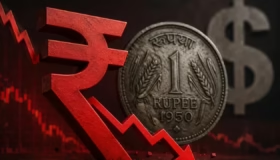
The US Dollar Faces Growing Competition: Is the World Moving Towards a Multipolar Currency System?
The US dollar remains the world's leading reserve currency, but China, BRICS economies and emerging markets are expanding alternative payment arrangements. Changing reserve allocations and geopolitical tensions are gradually reshaping international currency competition.


The US dollar remains the world’s dominant international currency, but growing efforts by China, the BRICS economies and other emerging markets to expand local-currency trade are gradually changing the global financial landscape. Despite increasing diversification, the dollar’s strength in international markets shows that replacing it will be far more difficult than challenging its influence.
News Peg: On 24 November, Reuters reported that the US dollar remained near a 20-month high, supported by renewed artificial intelligence-related market enthusiasm and expectations of further Federal Reserve interest-rate increases. Meanwhile, IMF data published on 30 September showed that the dollar’s share of global foreign exchange reserves declined to 56.70% in the second quarter of 2026, while the euro’s share increased to 20.60%.
The Dollar’s Global Dominance Faces a Changing Financial Landscape
The international monetary system is experiencing a gradual transformation as governments, central banks and financial institutions explore alternatives to their dependence on the US dollar.
For decades, the dollar has occupied the central position in global finance. It is widely used in international trade, foreign exchange transactions, central bank reserves, commodity pricing and cross-border lending.
However, geopolitical tensions, economic sanctions, changing trade relationships and the growing financial influence of emerging economies are encouraging countries to diversify their currency exposure.
China is promoting the international use of the renminbi, while BRICS members are expanding discussions around local-currency settlements and alternative payment arrangements.
These developments have intensified debate about whether the international financial system is moving towards a multipolar currency structure.
Yet the latest market developments present a more complicated picture.
On 24 November 2026, the US dollar remained close to a 20-month high as renewed enthusiasm surrounding artificial intelligence strengthened expectations of further Federal Reserve rate increases.
The dollar index eased slightly to 104.28 after reaching 104.53 in the previous session, according to Reuters.
The contrast is significant: although countries are exploring alternatives to the dollar, international investors continue to demonstrate strong demand for US currency and dollar-denominated assets.
IMF Data Shows a Gradual Decline in the Dollar’s Reserve Share
One of the clearest indicators of the dollar’s changing international position comes from the International Monetary Fund’s Currency Composition of Official Foreign Exchange Reserves (COFER) database.
In its September 2026 update, the IMF reported that the dollar accounted for 56.70% of global foreign exchange reserves in the second quarter of 2026.
This represented a decline from 57.18% in the first quarter.
At the same time, the euro’s share increased from 20.04% to 20.60%, while the Chinese renminbi’s share rose from 1.98% to 2.11%.
Total global foreign exchange reserves reached approximately US$13.22 trillion during the quarter.
The figures indicate that central banks are gradually diversifying their reserve portfolios.
However, the dollar remains comfortably ahead of other currencies.
The euro is its closest competitor, while the renminbi still represents a relatively small proportion of global official reserves.
Importantly, a decline in the dollar’s reserve share does not automatically mean that countries are abandoning the currency.
Changes in reserve allocations can reflect active purchases, portfolio adjustments and movements in the market value of currencies and securities.
The IMF noted that exchange-rate valuation effects were limited during the second quarter, suggesting that active portfolio changes contributed to the shift.
Why Countries Want to Reduce Their Dependence on the Dollar
The growing interest in currency diversification is connected to several economic and geopolitical developments.
One important factor is exposure to US monetary policy.
When the Federal Reserve increases interest rates, global borrowing conditions can change.
Countries and businesses with dollar-denominated debt may face higher financing expenses, while capital can move towards US assets offering more attractive returns.
This can create pressure on emerging-market currencies and financial systems.
Another consideration is the international influence associated with the dollar-based financial infrastructure.
The United States has significant influence over international financial channels and can use financial sanctions as an instrument of foreign policy.
For countries facing geopolitical disagreements or restrictions, developing alternative payment arrangements can offer additional financial flexibility.
Trade diversification is another motivation.
Major economies increasingly want to settle certain international transactions in their domestic currencies, reducing the need to convert payments into dollars.
However, these arrangements are not necessarily designed to replace the dollar entirely.
For many governments, the objective is to create additional options rather than abandon an established international currency system.
China Is Expanding the International Role of the Renminbi
China is one of the most important countries seeking to increase the international use of its currency.
As the world’s major manufacturing and trading economy, China has an extensive network of commercial relationships with countries across Asia, Africa, Europe and Latin America.
This provides opportunities to increase renminbi-denominated trade settlements.
China has also developed financial infrastructure intended to support international transactions in its domestic currency.
The Cross-Border Interbank Payment System (CIPS) is an important part of this effort, supporting cross-border renminbi payments and clearing.
However, international acceptance of a currency depends on more than trade volume.
Investors and central banks also consider liquidity, convertibility, financial-market depth, regulatory transparency and the ability to move capital across borders.
China’s capital controls and the structure of its financial markets remain important constraints on the renminbi’s ability to compete directly with the dollar as a global reserve and investment currency.
The currency’s reserve share increased to 2.11% in the second quarter of 2026, according to IMF data.
This represents progress, but it also demonstrates the distance China would need to cover before the renminbi could become a comparable global reserve currency.
BRICS Is Building Alternatives Through Local-Currency Payments
The BRICS grouping has become an important platform for discussions about reducing dependence on established international financial systems.
Its members have different economic structures, monetary policies and geopolitical priorities, but they share an interest in improving financial cooperation.
At the 2026 BRICS Summit in New Delhi, discussions focused on strengthening local-currency settlements and improving links between national payment systems.
The BRICS Cross-Border Payments Initiative aims to make payments between participating countries more efficient and reduce transaction costs.
The approach is pragmatic.
Rather than establishing a single common BRICS currency, members are exploring ways to connect existing payment systems and facilitate trade in their own currencies.
This distinction is important.
A common currency would require much deeper economic and monetary coordination, including agreement on monetary governance and financial responsibilities.
Local-currency settlement arrangements are considerably easier to develop through bilateral and multilateral agreements.
For example, a transaction between two BRICS economies could increasingly be settled directly in their respective currencies without requiring every payment to pass through the dollar.
However, the effectiveness of these arrangements will depend on currency convertibility, payment infrastructure, liquidity and the willingness of businesses to accept local currencies.
The Euro Remains the Strongest Established Alternative
While China and BRICS are developing new payment arrangements, the euro remains the dollar’s most significant established competitor in international reserves.
The IMF reported that the euro represented 20.60% of global foreign exchange reserves in the second quarter of 2026.
Its position is supported by the European Union’s large economic base, established financial institutions and extensive international trade relationships.
The euro is widely used in cross-border commerce and international financial transactions.
However, the European currency also faces limitations.
The eurozone does not have a single unified government bond market comparable in scale and liquidity to the US Treasury market.
Differences in fiscal policy and political priorities among member states can also complicate the development of a more unified financial system.
Consequently, although the euro remains a significant alternative, it has not displaced the dollar’s central role in international finance.
Why the US Dollar Continues to Attract Global Investors
Despite diversification efforts, the dollar continues to benefit from structural advantages that competing currencies have yet to replicate.
One of its greatest strengths is the depth of US financial markets.
The US Treasury market provides an extensive pool of highly liquid securities used by central banks, institutional investors and financial institutions.
Investors can buy and sell large volumes of dollar-denominated assets with relatively low transaction costs.
The dollar also benefits from strong international network effects.
Because businesses, banks and governments already use it extensively, the costs of switching to another currency can be significant.
Its established role in commodity pricing, trade invoicing and international borrowing further reinforces its position.
The United States also remains a major destination for international investment.
Foreign investors continue to purchase US equities, government securities and corporate assets, supporting demand for dollars.
These advantages explain why discussions about de-dollarisation have not translated into an immediate replacement of the existing monetary system.
Federal Reserve Policy Continues to Influence Global Currency Markets
The direction of US monetary policy remains one of the most important factors influencing international exchange rates.
On 24 November, Reuters reported that expectations of further Federal Reserve rate increases supported the dollar.
Traders were pricing in a 25-basis-point rate increase for the following month, with a smaller possibility of a larger adjustment.
Higher US interest rates can make dollar-denominated assets more attractive relative to investments in countries offering lower returns.
This can encourage international capital flows towards US markets and strengthen the dollar.
However, stronger US interest rates can also create challenges for emerging economies.
Countries with substantial dollar-denominated debt may experience increased borrowing costs.
A stronger dollar can make imported energy, commodities and other essential products more expensive for economies whose currencies are weakening.
This demonstrates how decisions made by the Federal Reserve can influence financial conditions far beyond the United States.
What Currency Competition Means for Emerging Markets
Emerging economies are particularly exposed to changes in the international currency system.
Many depend on dollar-denominated trade and financing, making their economies vulnerable to fluctuations in the US currency.
A stronger dollar can increase the cost of imports, raise debt-servicing expenses and create pressure on domestic currencies.
For countries with significant external financing requirements, these movements can influence monetary policy and economic growth.
Expanding local-currency trade could provide some relief.
It may reduce conversion costs, support regional financial cooperation and offer additional payment options during periods of international financial disruption.
However, local-currency arrangements cannot eliminate all exchange-rate risks.
If a country imports more from another economy than it exports, it may accumulate a currency balance that is difficult to use elsewhere.
The availability of liquid markets and reliable conversion mechanisms therefore remains essential.
For emerging markets, currency diversification is most effective when supported by strong domestic financial institutions and credible macroeconomic policies.
India and the Opportunity to Strengthen the Rupee’s International Role
India has an important interest in the changing international monetary landscape.
As a major importer of energy and an expanding exporter of goods and services, India is exposed to movements in the dollar and international currency markets.
The Reserve Bank of India has encouraged international trade settlement in Indian rupees through mechanisms such as Special Rupee Vostro Accounts.
These arrangements allow eligible international transactions to be settled in rupees rather than requiring every payment to be routed through a third currency.
India is also developing international payment connectivity through its digital payment infrastructure and bilateral financial cooperation.
However, expanding the rupee’s international role requires more than encouraging businesses to settle trade in domestic currency.
Foreign institutions need confidence that rupee holdings can be used, converted and invested efficiently.
Deeper financial markets, predictable regulations, macroeconomic stability and greater international participation will be essential.
The rupee is therefore more likely to gain influence gradually through trade and payment arrangements than through an immediate challenge to the dollar’s reserve-currency position.
Could the World Move Towards a Multipolar Currency System?
A multipolar currency system would involve several major currencies sharing international financial responsibilities rather than relying predominantly on a single currency.
Such a system could include the dollar, euro, renminbi and other regional currencies playing larger roles in trade, investment and official reserves.
This possibility is attracting increasing attention as governments seek to reduce financial vulnerabilities.
However, a genuinely multipolar system requires currencies that can support large-scale international transactions, provide reliable investment opportunities and maintain confidence during economic crises.
At present, no alternative offers the same combination of financial depth, liquidity and international acceptance as the US dollar.
The transition, if it occurs, is therefore likely to be gradual.
The most realistic development is not the sudden disappearance of dollar dominance but the expansion of additional currencies within specific trade corridors and financial relationships.
The Future of International Currency Competition
The global monetary system is entering a period of gradual diversification.
China is expanding the international use of the renminbi, BRICS economies are developing local-currency payment arrangements, and the euro continues to strengthen its position in official reserves.
At the same time, the dollar remains supported by deep financial markets, international liquidity and continued investor demand.
For governments, the challenge will be to develop greater financial independence without undermining the stability of international trade and investment.
For businesses, a more diversified currency environment could create additional payment options but also introduce new exchange-rate and compliance considerations.
For investors, Federal Reserve policy, currency reserve allocations and emerging payment systems will remain important indicators of the changing international financial landscape.
The dollar’s dominance is being challenged at the margins, not overturned overnight. The next phase of global finance is more likely to be defined by greater currency diversification and regional financial cooperation than by the immediate arrival of a single replacement for the US dollar.
Victor Ames
Victor Ames writes on market structure, capital flows, investment cycles and the way financial conditions transmit into the real economy for Economic Statesman.