
China Holds Lending Rates for 18th Month as Economic Momentum Weakens
China's central bank keeps its one-year and five-year lending benchmarks unchanged as economic momentum weakens and policymakers reassess monetary support.
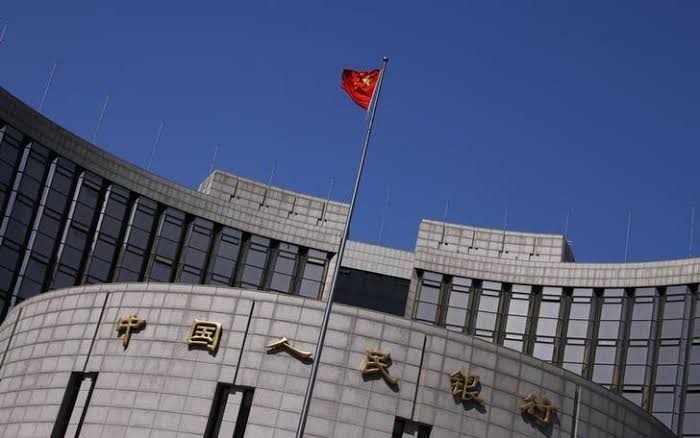

The central bank keeps borrowing benchmarks unchanged despite slowing factory output and weak consumption, signalling a cautious approach to further economic stimulus.
China has kept its benchmark lending rates unchanged for the 18th consecutive month, as policymakers balance the need to support economic growth against concerns about financial stability and monetary policy flexibility.
The People’s Bank of China (PBOC) maintained the one-year Loan Prime Rate (LPR) at 3.00% and the five-year LPR at 3.50% on 20 November 2026. The decision matched the expectations of most market participants, but it came as fresh economic data pointed to weaker factory output and subdued consumer spending.
The decision highlights a cautious approach to monetary easing. Rather than immediately reducing benchmark lending rates, the central bank is adjusting its policy framework and seeking to improve how lower funding costs reach businesses and households.
China Keeps Both Benchmark Lending Rates Unchanged
The one-year LPR remained at 3.00%, while the five-year rate stayed at 3.50%.
The one-year rate serves as a reference for most corporate and household loans. The five-year rate is an important benchmark for mortgage pricing and longer-term borrowing.
Both rates have remained at their current levels since May 2025. Their continued stability indicates that the central bank is not yet using another benchmark-rate reduction to provide additional direct support to borrowers.
A Reuters survey of 28 market participants found that 23 expected both rates to remain unchanged. Five expected a reduction in one or both benchmarks.
Although the majority anticipated a hold, the minority expecting a cut indicates that some analysts see a stronger case for additional support as economic momentum weakens.
Slower Industrial Output Raises Growth Concerns
The decision comes as China’s October economic indicators point to weaker momentum.
Industrial output growth slowed, while retail sales also weakened year-on-year. These developments have raised questions about the strength of domestic demand and the sustainability of China’s economic expansion.
Manufacturing remains a major contributor to China’s economy. Slower factory activity can affect production, employment, business investment and demand for industrial materials.
Weak consumption creates a separate challenge. When households remain cautious about spending, businesses may find it harder to increase sales and justify new investment.
China has continued to rely on exports as an important source of economic activity. However, dependence on external demand creates risks when international trade conditions become uncertain.
The latest rate decision therefore reflects a difficult policy environment. Policymakers must support domestic demand without relying solely on cheaper credit.
PBOC Changes Its Monetary Policy Framework
The rate decision follows an important change in China’s monetary policy framework.
The PBOC has formally shifted its main policy-rate focus towards an overnight lending rate. This adjustment is intended to make the transmission of monetary policy more effective and improve the way funding conditions influence the broader financial system.
Reuters reported that the change effectively lowered the floor of China’s interest-rate framework by 15 basis points, easing funding costs for financial institutions.
The central bank has also indicated that it will diversify the benchmarks used for loan pricing. The overnight rate will serve as an additional reference alongside the LPR.
This approach gives policymakers another way to influence borrowing conditions without immediately changing the headline lending benchmarks.
For banks, the shift could affect funding costs and loan-pricing decisions. For businesses and households, the important question is whether lower funding costs eventually translate into more affordable credit. <Cite refs={[“turn561026news12″,”turn561026search3”]}/>
Property Market Weakness Complicates Credit Demand
China’s property sector remains an important part of the country’s financial and economic outlook.
The five-year LPR influences mortgage pricing, making it a significant benchmark for housing finance. A reduction could lower borrowing costs for some homebuyers and support demand.
However, lower interest rates alone may not be enough to restore confidence in the property market. Buyers also consider employment prospects, household income, property prices and developers’ financial stability.
Weak demand for housing can affect construction activity, household wealth and related industries. It can also reduce demand for materials such as steel, cement and copper.
The continued stability of the five-year LPR suggests that policymakers have not announced another benchmark-rate reduction through this channel.
The effectiveness of broader property-sector support will depend on whether confidence and demand improve alongside financing conditions.
Banks Face Pressure to Support Lending
China’s banking system must balance the need to support economic activity with pressure on profitability.
Lower lending rates can make borrowing more affordable, but they can also reduce the income banks earn from loans. If funding costs do not fall at the same pace, banks may face pressure on their net interest margins.
The PBOC’s policy-framework changes could help improve funding conditions. However, the benefit for borrowers will depend on how commercial banks adjust their lending rates and credit terms.
Banks also need to assess credit risks carefully. Businesses facing weak sales and uncertain demand may hesitate to borrow even when financing becomes cheaper.
This means monetary easing cannot automatically guarantee stronger private investment. Companies must also see opportunities to expand production and generate returns.
Global Implications of China’s Lending Policy
China’s monetary decisions have implications beyond its domestic economy.
The country is a major buyer of industrial commodities and an important centre of global manufacturing. Changes in its credit conditions can influence demand for metals, energy, machinery and other industrial inputs.
If domestic investment and construction activity remain weak, demand for some commodities could face pressure. A stronger recovery in manufacturing and infrastructure spending could produce the opposite effect.
The yuan and Chinese financial markets may also respond to changes in monetary policy. Investors assess interest-rate differences, growth prospects and the outlook for capital flows when evaluating Chinese assets.
For international businesses, the key issue is whether China’s domestic demand can strengthen enough to support a more balanced growth model.
Further Rate Cuts Remain Possible in 2027
The November decision does not rule out future monetary easing.
Citi analysts have indicated that they expect two 10-basis-point reductions in 2027 rather than a cut during November. Other analysts have also argued that additional stimulus may be necessary if industrial production and household consumption remain weak.
These projections are forecasts, not confirmed central bank plans.
Future decisions will depend on economic growth, credit demand, inflation conditions, currency movements and the effectiveness of the revised policy framework.
The PBOC will also need to consider the international interest-rate environment. Large differences between Chinese and overseas interest rates can influence currency movements and capital flows.
China’s Next Policy Challenge Is Turning Liquidity Into Demand
China’s decision to hold lending rates for an 18th consecutive month shows that policymakers are taking a measured approach to monetary support.
The shift towards an overnight policy-rate framework may improve the transmission of funding conditions. However, the immediate challenge remains the weakness in industrial momentum, consumer spending and credit demand.
For businesses, affordable finance matters only when customers are willing to buy and investment opportunities offer reasonable returns. For households, lower mortgage costs may help, but confidence in income and employment remains equally important.
The next phase of China’s economic policy will therefore depend on more than benchmark interest rates. Policymakers must find ways to strengthen domestic demand, improve business confidence and support productive investment.
The November decision keeps existing borrowing benchmarks stable. Whether the revised monetary framework can generate stronger economic activity will become clearer through the coming months.
Samir Kapoor
Samir Kapoor covers the global economy, cross-border capital, growth signals and the institutions shaping economic change.