Laos Graduates from Least Developed Country Status: Can Economic Progress Become Lasting Prosperity?
Laos has officially graduated from the United Nations' least developed country category. The milestone recognises years of progress, but debt, trade changes and economic diversification will shape the country's next phase.
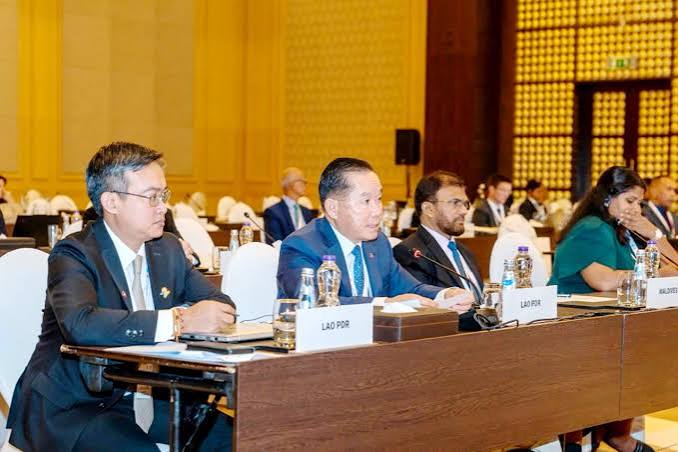

On 24 November 2026, Laos reached an important milestone. The United Nations officially removed the Lao People’s Democratic Republic from its list of least developed countries (LDCs), recognising years of progress in income, education and health.
Laos is the first country in Southeast Asia to graduate from this category and the ninth country worldwide to do so.
The achievement is significant. But graduation is not the same as becoming a high-income economy. It does not automatically remove public debt, create skilled jobs or make local businesses more competitive.
For Laos, the next stage may be harder than the milestone itself. The country must turn its development gains into a stronger, more diversified economy that can withstand financial pressure and changes in international trade.
What Graduation Actually Means
The United Nations classifies countries as least developed when they face serious structural barriers to development.
The assessment considers three areas: income per person, human assets such as health and education, and economic and environmental vulnerability.
A country must meet the required thresholds over successive reviews to qualify for graduation.
Laos made progress across these measures over many years. Its development has been supported by investment in infrastructure, electricity generation, regional trade and connectivity. Improvements in education and health also helped the country meet the UN’s graduation requirements.
This is an important recognition of national progress. It can improve investor confidence and strengthen the country’s position in regional and international discussions.
However, the classification is not a complete measure of economic strength. It does not mean that every household is financially secure or that businesses can compete easily in international markets.
The real test is whether the gains behind graduation can continue.
The Economic Progress Behind the Milestone
Laos has developed important sources of economic activity over the past decade.
Electricity exports, tourism, transport, mining and foreign investment have helped support growth. Its location between major Southeast Asian economies also gives it opportunities to become a regional transport and trade link.
The Laos-China Railway has strengthened connections with China and created new opportunities for tourism and freight movement. Road and rail links can also help connect domestic producers with regional markets.
The World Bank reported that the economy grew by 4.8% in 2025, supported by tourism, transport and exports of electricity and electrical equipment.
Foreign investment remained strong, particularly in resource-related sectors. International reserves also improved, reaching $4.2 billion in March 2026, according to the World Bank.
These developments show that Laos has made progress in building economic activity and improving external stability.
But growth remains exposed to external pressures. The World Bank’s October 2026 outlook projected growth of 4.1% for 2026, while UN Trade and Development projected inflation at 8.3%.
That combination matters. Economic growth can look healthy in national statistics while rising prices continue to put pressure on household budgets.
The Debt Challenge Has Not Disappeared
One of the biggest obstacles facing Laos is its public debt.
Public and publicly guaranteed debt was estimated at around 87% of GDP in 2025, according to UN Trade and Development. This limits the government’s ability to spend more on schools, healthcare, transport and other development priorities.
The cost of servicing that debt is also significant.
Interest payments absorbed 16% of public spending in 2025. By comparison, spending on health and education combined accounted for 10%.
This imbalance highlights the difficult choices facing policymakers. A government that spends a large share of its budget on interest has less room to invest in the people and businesses that could drive future growth.
Graduation does not solve this problem.
Laos will need stronger public finances, better revenue collection and more careful management of public investment. It will also need to make sure that new borrowing supports projects capable of generating long-term economic value.
Infrastructure investment can support growth, but projects must be financially sustainable and deliver benefits beyond construction activity.
Trade Opportunities Will Need More Preparation
Another important issue is international market access.
Least developed countries can receive special trade benefits, including preferential access to some major markets. These arrangements can help exporters compete by reducing or removing certain import duties.
After graduation, some of these benefits may gradually change. The impact will vary by trading partner and product.
This matters for industries that depend on preferential access, including agriculture and garments.
The United Nations has highlighted that nearly two-thirds of Laos’ goods exports go to ASEAN countries and countries covered by ASEAN free trade agreements. Much of this regional trade is expected to retain its existing preferential access.
However, some exports to markets such as China and the European Union may face adjustments as LDC-specific preferences change.
The transition will not happen in exactly the same way across all markets. International partners have provisions for transition periods, and some forms of support can continue after graduation.
Laos therefore has time to prepare. But businesses will need clear information about changing trade rules, product standards and export requirements.
The government must also help local companies improve quality, productivity and access to finance. Preferential market access can help exporters, but it cannot replace the ability to compete.
Moving Beyond Natural Resources
Electricity, mining and other natural resources have played an important role in the Lao economy. They can continue to attract investment and generate export revenue.
However, depending too heavily on a narrow group of sectors can leave the economy vulnerable.
Commodity prices can change. Large infrastructure projects may take years to generate returns. Natural resource industries may also create fewer jobs than a wider network of manufacturing and service businesses.
Laos needs more sources of growth.
Agriculture and food processing offer opportunities to increase the value of domestic production. Instead of exporting only basic products, businesses could develop processed foods and products that meet higher international standards.
Tourism can create jobs across hotels, transport, restaurants and local services. Digital industries can help smaller businesses reach customers beyond the domestic market.
Manufacturing and regional supply-chain activity could also expand if the country improves logistics, skills and business conditions.
The objective should be to create more productive jobs and strengthen local companies, not simply attract more investment.
Skills and Domestic Businesses Will Decide the Next Phase
Economic transformation depends on people as much as infrastructure.
A railway can move goods more efficiently, but local businesses need the skills and financing to use it. A new industrial project can attract foreign capital, but its wider economic value depends on local employment, supplier relationships and knowledge transfer.
Laos faces challenges in human capital and private-sector development. UN Trade and Development has identified these areas as important priorities for the country’s post-graduation future.
Improving vocational education, technical training and business skills will be essential.
Small and medium-sized enterprises also need better access to finance, reliable infrastructure and simpler business procedures. Stronger local suppliers can help ensure that large investment projects create benefits across the domestic economy.
Foreign investment should therefore be judged not only by its total value, but also by the jobs, skills, technology and local business opportunities it creates.
Climate Risks Add Another Economic Pressure
Laos must also manage climate and environmental risks.
Floods and other extreme weather events can damage roads, farms, energy infrastructure and local communities. These disruptions can raise food prices, weaken rural incomes and increase the government’s need for emergency spending.
Hydropower is an important part of the country’s economic model, but dependence on natural resources also makes climate planning important.
The government will need to strengthen disaster preparedness, protect infrastructure and support more resilient agriculture.
Climate resilience is not separate from economic policy. It is part of protecting the country’s future growth and public finances.
A Transition That Requires Continued International Support
Graduation does not mean that Laos must manage every challenge alone.
The country has prepared a Smooth Transition Strategy built around four main areas: macroeconomic and financial sustainability; trade and investment; human capital development and structural economic transformation; and climate change and disaster management.
The strategy contains 22 action areas and is linked to the country’s national development planning for 2026–2030.
The United Nations has also outlined continued cooperation for the period 2027–2031. International partners can help Laos strengthen institutions, improve trade capacity, develop skills and manage the changes that follow graduation.
This support matters because the transition from LDC status can create new demands on government and business.
The country must protect the progress it has made while preparing for a more competitive international environment.
The Real Measure of Success Comes After Graduation
Laos has earned an important place in the history of development. Its graduation from the UN’s least developed country category reflects progress that took years to achieve.
But the next phase will require more than recognition.
The government must manage debt carefully, improve public services, strengthen local businesses and reduce dependence on a narrow set of economic sectors. Exporters must prepare for changing trade conditions, while workers need better access to education and technical skills.
For investors, the opportunity lies in a country with growing regional connections and important natural resources. For policymakers, the challenge is to make sure that investment produces broad economic benefits.
Laos has crossed an important development threshold. Its next task is to build an economy in which progress is not measured only by national income or export growth, but also by stronger businesses, better jobs and improved living standards.
That will determine whether graduation becomes a lasting turning point rather than simply a milestone on paper.
Samir Kapoor
Samir Kapoor covers the global economy, cross-border capital, growth signals and the institutions shaping economic change.