Singapore’s Economic Boom: Why Strong Growth Is Not Reaching Every Business
Singapore has raised its 2026 growth forecast to around 6% following strong trade and manufacturing performance. But weaker retail and food services activity highlights the challenge of making economic growth more balanced.
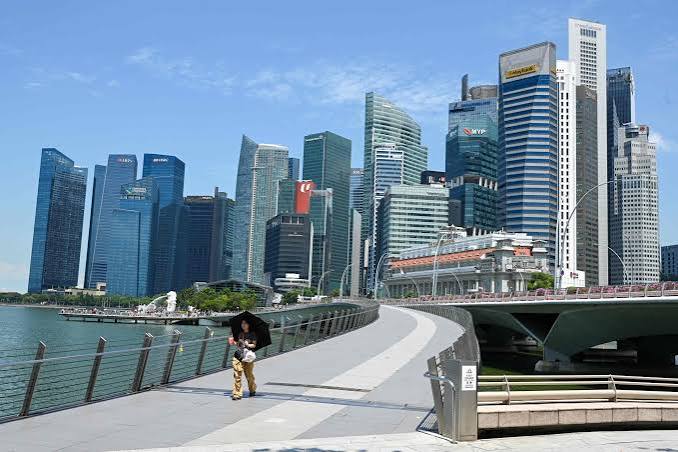

Singapore has raised its economic growth forecast for 2026 after recording stronger-than-expected performance in the third quarter. The government now expects the economy to expand by around 6% this year, up from its earlier forecast of 4.5% to 5.5%.
The revision reflects the strength of international trade, manufacturing and business activity. Singapore has benefited from rising demand for electronics, machinery and other goods, as well as its position as a major centre for global trade and finance.
But the headline figure does not tell the whole story.
While wholesale trade and manufacturing are expanding rapidly, parts of the domestic economy are struggling. Retail trade and food services contracted in the third quarter. Businesses that depend on local consumer spending are not experiencing the same momentum as companies connected to international trade.
This creates an important question for Singapore: can the country maintain strong growth while making sure that its wider business community and workforce benefit from the expansion?
Growth Is Strong, but the Outlook Is Changing
Singapore’s economy grew by 6.1% year-on-year in the third quarter of 2026, according to the Ministry of Energy and Trade and Industry (METI).
Growth was slightly slower than the 6.4% recorded in the second quarter. However, the latest figure was higher than the government’s earlier estimate of 5.4%.
For the first three quarters of 2026, the economy expanded by 6.2% compared with the same period last year.
The government responded by raising its full-year growth forecast to around 6%. However, it expects growth to slow to between 2.5% and 4.5% in 2027.
The expected moderation reflects a more challenging international environment. Growth among some of Singapore’s major trading partners is expected to weaken, while the recent strength in technology-related investment may become less intense.
The message is clear: Singapore is entering 2027 from a strong position, but it cannot assume that the current pace of expansion will continue.
International Trade Is Driving the Expansion
Singapore’s role in global trade remains one of its biggest economic strengths.
The country is a major centre for shipping, logistics, wholesale distribution, financial services and international business. Its ports, airports and financial infrastructure connect companies across Asia, Europe and the Americas.
The latest trade figures show how important this position has become.
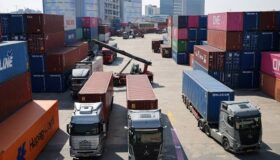
Total merchandise exports increased by 46.9% year-on-year in the third quarter of 2026. Re-exports, which are goods brought into Singapore and then shipped to another market, increased by 56.9%.
Non-oil domestic exports also grew strongly, rising by 45.8%.
These figures show that Singapore is benefiting not only from goods produced within its borders but also from its role as a regional trading and distribution centre.
Services exports added another source of growth. They increased by 14.9% in the third quarter, supported by transport, business and financial services.
This combination of goods trade and services activity gives Singapore a broad connection to international markets.
However, it also creates exposure. When global demand weakens, supply chains are disrupted or trade restrictions increase, Singapore can feel the impact quickly.
Manufacturing and Wholesale Trade Lead the Economy
Two sectors made particularly strong contributions to Singapore’s third-quarter growth: wholesale trade and manufacturing.
Wholesale trade expanded by 14.5% year-on-year, while manufacturing grew by 8.5%.
Wholesale trade contributed 2.7 percentage points to overall GDP growth. Manufacturing contributed another 1.5 percentage points.
Manufacturing growth was supported by electronics, precision engineering and transport engineering. Demand for technology-related equipment and specialised machinery has helped these industries.
Singapore’s industrial base is closely connected to international production networks. Companies use the country for manufacturing, regional distribution, research, engineering and business services.
This makes it an important part of supply chains that serve many major economies.
But the manufacturing sector is also sensitive to changes in global orders. A slowdown in demand from major markets could reduce production and exports.
The challenge is to use the current expansion to build capabilities that remain valuable even when international demand becomes weaker.
The Domestic Economy Is Facing a Different Reality
The strongest warning in Singapore’s latest economic figures comes from consumer-facing businesses.
In the third quarter, retail trade contracted by 2.7% year-on-year. Food and beverage services declined by 2.1%.
These sectors depend more directly on household spending, local demand and consumer confidence.
Their performance contrasts with the expansion in wholesale trade, manufacturing and construction.
This difference matters because strong export figures do not automatically translate into higher sales for local shops, restaurants and service providers.
A manufacturing company may benefit from a rise in overseas orders, while a neighbourhood retailer may still face higher operating costs and cautious customers.
The pressure on consumer-facing businesses also shows why GDP growth should not be treated as a complete measure of economic well-being.
A country can record strong national growth while some businesses and workers continue to face difficult conditions.
For Singapore, the next stage of economic policy will need to consider how growth can support a wider range of industries.
Employment Is Growing, but Businesses Still Face Pressure
Singapore’s labour market recorded further employment gains in the third quarter.
Total employment increased by 32,000 compared with the previous quarter. Construction, other services industries and manufacturing recorded some of the strongest increases.
However, the overall unemployment rate edged up from 1.9% in June to 2.0% in September.
The government’s economic survey also reported a slight increase in unemployment rates among residents and citizens, alongside a rise in retrenchments.
These figures suggest that employment conditions remain relatively strong, but the market is not free from pressure.
The changing structure of the economy is also affecting the type of skills businesses need.
Manufacturing, engineering, financial services and digital industries increasingly require specialised knowledge. Workers may need additional training to move into these areas.
At the same time, small businesses in retail, hospitality and food services need support to manage operating costs, improve productivity and attract customers.
The challenge is not simply to create more jobs. It is to ensure that workers can access the opportunities being created by the country’s changing economic structure.
Inflation and Business Costs Remain Important
Singapore’s growth has also come with higher price pressures.
The Consumer Price Index increased by 2.3% year-on-year in the third quarter, compared with 1.8% in the previous quarter.
Transport prices rose by 7.8%, making transport one of the largest contributors to the increase.
Higher costs can affect both households and companies. Businesses may face more expensive transport, supplies, rent and labour, while consumers have less room in their budgets for discretionary spending.
The overall labour cost picture has been more supportive. Unit labour cost across the economy declined by 1.1% year-on-year in the third quarter.
However, the increase in manufacturing business costs shows that not every part of the economy is experiencing the same cost conditions.
For policymakers, the task is to maintain price stability without unnecessarily weakening business activity.
Why Singapore’s Trade Model Still Matters
Singapore has built its economic position around openness, connectivity and a stable business environment.
It does not rely on a large domestic consumer market. Instead, it connects international companies, investors, manufacturers and service providers.
This model has helped the country attract investment and develop into one of the world’s important business and financial centres.
Its location in Southeast Asia gives companies access to regional markets, while its ports and transport links support international trade.
But the model also makes Singapore sensitive to changes outside its borders.
A slowdown in major economies can affect exports. Trade restrictions can change supply chains. Higher energy and transport costs can reduce business margins.
Singapore therefore needs to keep strengthening the areas that make it competitive: skilled workers, reliable infrastructure, advanced manufacturing, financial services and international business connections.
It must also continue improving the productivity of smaller domestic companies so they can benefit from the same economic opportunities as larger exporters.
The 2027 Test: Turning Strong Growth into Wider Resilience
The government’s 2027 growth forecast of 2.5% to 4.5% suggests that the exceptionally strong pace of 2026 may not continue.
That does not necessarily signal an economic downturn. It reflects the expectation that external demand and technology-related activity will become less supportive.
The more important question is how Singapore uses its current strength.
Investment in skills, business innovation, infrastructure and higher-value services can help the country remain competitive. Stronger links between large international companies and local suppliers can also spread more benefits across the economy.
Support for small and medium-sized businesses will remain important, particularly in sectors that depend on domestic demand.
Singapore must also avoid becoming too dependent on a narrow group of industries or temporary increases in global demand.
Its long-term strength will come from maintaining a diverse economic base that can continue creating value when global conditions change.
Singapore’s latest growth figures demonstrate the advantages of an open, trade-connected economy. But they also reveal a gap between international business performance and the experience of some domestic industries.
The next phase will be about closing that gap. Strong exports and manufacturing growth provide a valuable foundation, but lasting economic resilience will depend on stronger local businesses, productive employment and growth that reaches more parts of the economy.
For Singapore, the real achievement will not simply be recording another year of strong GDP growth. It will be building an economy that can remain competitive when global demand slows and deliver more consistent opportunities for businesses and workers across the country.
Samir Kapoor
Samir Kapoor covers the global economy, cross-border capital, growth signals and the institutions shaping economic change.