How Gulf AI Investment Is Reshaping Infrastructure Strategy
Gulf AI investment is no longer only a technology story; it is becoming an infrastructure, energy and capital allocation strategy.


Artificial intelligence investment in the Gulf is often discussed through the language of ambition: national AI strategies, large data centres, chip partnerships and new technology funds. The deeper story is infrastructure. AI requires power, cooling, land, fibre networks, cloud platforms, specialised chips, skilled engineers and long-term capital. Gulf governments and sovereign investors have recognised that the next phase of digital competition will not be won only by software companies. It will be shaped by countries that can assemble the physical and financial architecture behind computation.
This is why AI investment fits the Gulf’s broader economic model. The region has energy resources, large sovereign balance sheets, available land, young policy institutions and a desire to diversify beyond hydrocarbons. Data centres are power-intensive, and advanced AI infrastructure requires both reliable electricity and strategic procurement of chips. These requirements make AI a natural intersection of energy policy, industrial policy and capital allocation. For countries such as Saudi Arabia and the UAE, AI is not merely an app economy. It is a platform for building new sectors.
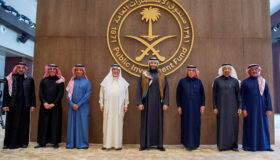
The UAE has approached the field through institutions, cloud partnerships, sovereign capital and specialist vehicles. Abu Dhabi’s technology investment ecosystem reflects a belief that AI will influence finance, health, logistics, government services and defence-adjacent industries. Saudi Arabia has pursued a scale-driven strategy linked to national transformation, digital infrastructure and PIF-backed initiatives. The details differ, but the direction is similar: AI is being treated as strategic infrastructure rather than a narrow technology vertical.
The capital requirements are enormous. Training and deploying advanced models requires expensive chips, high-density data centres and continuous upgrades. Unlike many digital businesses of the past, AI infrastructure has heavy upfront costs and physical constraints. That suits sovereign investors with long horizons, but it also demands discipline. A data centre built without clients, software ecosystems or power planning can become an expensive stranded asset. The winners will be those who connect infrastructure to demand, regulation and talent.
AI as power, capital and industrial infrastructure
Energy is the decisive variable. AI data centres can place significant pressure on electricity systems, especially when governments also want to decarbonise, expand industry and support urban growth. Gulf countries may have an advantage because of energy abundance and renewable investment potential, but they still face questions about grid planning, water use, cooling efficiency and emissions. AI infrastructure strategy must therefore be integrated with energy strategy. A country cannot become a credible AI hub if its compute ambitions conflict with its power system.
Technology sovereignty is another driver. Governments increasingly worry about dependence on foreign cloud providers, foreign chips and external data rules. Gulf AI investment seeks to create local capacity while maintaining relationships with American, European and Asian technology companies. This is a delicate balance. Advanced chips are subject to export controls, cloud partnerships come with compliance obligations and data governance must satisfy both domestic and international requirements. AI infrastructure is therefore also part of economic statecraft.
The private sector will judge these investments by usefulness. Banks, airlines, logistics companies, hospitals, energy firms and public agencies need AI systems that improve productivity, service delivery and decision-making. Building data centres is easier than creating trusted applications and skilled labour markets around them. The Gulf’s AI strategy will become more credible as more local companies use the infrastructure to solve commercial problems rather than simply announce large-scale projects.
There is also a regional competition dimension. Financial centres, logistics hubs and tourism economies once defined Gulf diversification. AI infrastructure may become the next frontier. Countries that offer compute capacity, regulatory clarity, funding and market access could attract startups and global technology firms. But competition could also produce duplication if every country builds similar assets without enough demand. Coordination between capital, regulation and industrial users will determine whether the region creates a genuine AI ecosystem or a collection of expensive platforms.
Gulf AI investment is reshaping infrastructure strategy because computation has become a strategic resource. The region’s capital and energy advantages give it a serious opening, but the opportunity will not be automatic. The real test is whether Gulf countries can turn spending into capability: power into compute, compute into productivity, and productivity into diversified economic value.
For Economic Statesman readers, the useful test is not whether the headline idea sounds attractive, but whether the underlying institutions, capital discipline and execution capacity can sustain it. Markets eventually separate durable structural change from temporary policy momentum. That is why the subject should be read through evidence, sequencing and incentives rather than through promotional language or short-term sentiment.
Nadia Al-Hassan
Nadia Al-Hassan focuses on the economics of AI, semiconductors, cloud infrastructure, cybersecurity and digital sovereignty.