
What Abhishek Mishra’s DPIFF Exit Says About Leadership, Succession and Institutional Capital
Abhishek Mishra's departure from DPIFF after a decade raises a larger institutional question: can relationships, operating memory and reputation survive a long-serving leader's exit?

A decade-long tenure ending at a cultural institution is not merely a personnel story. It is a case study in how organisations convert personal relationships, operating memory and reputation into institutional capital that can survive leadership change.
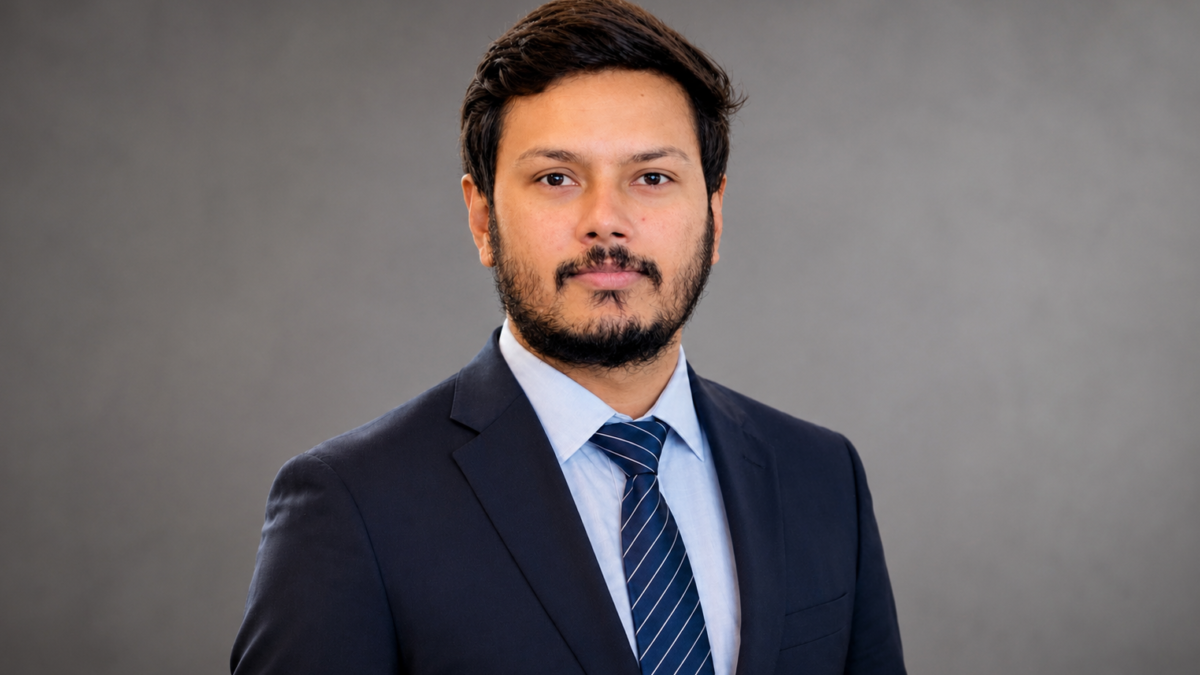
Abhishek Mishra has announced the conclusion of his decade-long association with the Dadasaheb Phalke International Film Festival, or DPIFF, closing a professional chapter that began when he was 18.
The immediate news is straightforward. Mishra said on September 3 that he was stepping down after ten years with the organisation. He described the period as one that gave him growth, perspective, meaningful relationships and experiences, and said he was looking ahead to new challenges and opportunities.
But viewed through an institutional lens, the departure raises a larger question.
What happens to the economic value created around a long-serving leader when that leader leaves?
In traditional accounting, the answer is difficult to see.
Relationships do not sit neatly on a balance sheet.
Institutional memory is rarely assigned a financial value.
Reputation is not a conventional operating asset.
Trust accumulated with partners, employees, audiences and industry stakeholders is difficult to quantify.
Yet these resources can determine whether an organisation grows smoothly, survives a transition or becomes overly dependent on one individual.
Mishra’s departure therefore offers a useful case study in institutional capital: the collection of relationships, knowledge, reputation, processes and organisational habits that allow an institution to function beyond the tenure of any one executive.
A ten-year tenure creates more than experience
Ten years inside one organisation can create an unusual concentration of knowledge.
This is particularly true when the tenure begins early.
Mishra said he joined the DPIFF journey at 18. By the time of his departure, much of his adult professional development had therefore taken place inside the same institutional environment.
That matters economically because senior executives accumulate two kinds of assets over time.
The first is human capital.
This includes judgement, management experience, negotiation ability, market knowledge and the capacity to make decisions under uncertainty.
The second is institutional capital.
This belongs, or should eventually belong, to the organisation.
It includes operating systems, stakeholder relationships, organisational memory, brand credibility, decision-making routines and knowledge that can be transferred from one generation of leadership to another.
The distinction becomes visible during succession.
If most of the value remains attached to the departing individual, the institution becomes vulnerable.
If knowledge and relationships have been successfully converted into organisational systems, leadership can change without destabilising the institution.
That difference is one of the most important tests of institutional maturity.
The economics of relationship capital
Creative organisations are particularly dependent on relationships.
A manufacturing company can point to factories.
A bank can point to deposits and lending assets.
A technology company may point to intellectual property, software and data.
Cultural institutions often operate with a larger proportion of intangible capital.
A film festival may depend on relationships with filmmakers, talent, production companies, sponsors, media organisations, public institutions, agencies, audiences and partners.
No single relationship defines the organisation.
Together, however, they form an economic network.
That network influences access.
It influences credibility.
It influences who participates.
It influences the quality of partnerships the institution can attract.
And it affects whether stakeholders return year after year.
This is why long-serving executives can become unusually important inside creative institutions.
They may not merely manage relationships.
Over time, they can become the relationship.
That can be an advantage during growth.
It can also become a structural risk.
Personal relationship capital
A partner trusts a particular executive.
A filmmaker responds because of an existing relationship.
A sponsor participates because senior leadership has personally maintained the connection.
Institutional relationship capital
The same partner trusts the organisation itself.
Information is retained across teams.
Multiple executives understand the relationship.
Processes survive personnel changes.
The organisation can maintain continuity even when one individual leaves.
The transition from the first model to the second is one of the central tasks of institution-building.
Institutional memory has economic value
Organisations often underestimate memory because it does not appear in conventional financial reporting.
But institutional memory can affect operating efficiency.
A long-serving executive knows which decisions were tried before.
Which partnerships worked.
Which negotiations failed.
Which stakeholders require particular attention.
Which initiatives created reputational problems.
Which processes were designed in response to earlier mistakes.
Why certain strategic choices were made.
A new executive without access to that memory may repeat old errors simply because the organisation failed to preserve the reasoning behind earlier decisions.
The cost is not theoretical.
It can appear as slower decision-making, duplicated work, damaged relationships, poor negotiation or inconsistent strategy.
This is why mature organisations gradually convert memory into infrastructure.
They document decisions.
They create systems.
They distribute knowledge.
They maintain institutional records.
They build teams capable of carrying relationships collectively.
And they reduce dependence on informal knowledge stored inside individual executives.
Succession is therefore not merely an HR process.
It is a knowledge-transfer problem with economic consequences.
What succession reveals about institutional quality
Leadership transitions often attract attention because of personalities.
Who is leaving?
Who will replace them?
Will the new leader change strategy?
But from an institutional perspective, succession reveals something deeper.
It reveals the architecture underneath leadership.
A strong institution should be capable of answering several questions.
Who owns key stakeholder relationships?
Where is organisational knowledge stored?
Which decisions require executive approval?
What changes when the leader changes?
What does not change?
Can the next executive understand why existing systems were built?
Can partners communicate with the organisation rather than depending on one person?
Can the brand retain its authority independently of the outgoing leader?
These questions apply to businesses, foundations, family enterprises, media organisations and cultural platforms alike.
The visible succession may concern a CEO.
The underlying issue concerns organisational design.
Why creative institutions face a particular challenge
The creative economy operates differently from sectors built primarily around physical assets.
Cultural organisations produce intangible value.
Recognition.
Taste.
Prestige.
Access.
Attention.
Reputation.
Community.
These assets are difficult to standardise, which makes leadership continuity particularly important.
A creative institution may have formal systems, but its authority can still depend heavily on informal networks.
Who trusts the organisation?
Who takes its calls?
Who wants to be associated with it?
Who believes its recognition carries meaning?
These are partly institutional questions and partly relationship questions.
The risk is that rapid growth can make an organisation appear more institutionalised than it actually is.
Visibility can scale faster than governance.
Brand recognition can scale faster than internal systems.
Relationships can scale faster than documentation.
And the founder or senior executive can become the connective tissue holding those pieces together.
The weakness becomes apparent only when leadership changes.
The departure is also a human-capital event
Succession does not only affect the institution.
It changes the allocation of human capital.
Mishra is leaving with ten years of accumulated experience in a cultural and entertainment environment.
The organisation retains whatever systems, relationships and institutional memory have been embedded within DPIFF.
Mishra carries forward the experience that has become part of his own professional capability.
That distinction is economically interesting.
Employment and institutional leadership continuously produce knowledge.
Some of that knowledge remains proprietary to the organisation.
Some becomes general managerial capability.
Some becomes reputation.
Some becomes a personal network.
Some becomes judgement.
When a senior executive moves on, those assets are effectively reallocated.
The next phase of Mishra’s career will therefore reveal something the departure statement cannot yet answer: what part of the decade-long experience is portable?
No specific future role or venture was identified in his announcement.
Anything more would currently be speculation.
But the economic principle remains valid.
Long tenures can create highly specialised human capital, and the market value of that capital often becomes clearer only after the executive leaves the institution where it was developed.
Why the next move should not be invented
Leadership departures create a predictable information vacuum.
Investors, employees, journalists and professional networks immediately want to know what comes next.
That instinct frequently produces premature narratives.
A departing executive is assumed to be launching a company.
Joining another organisation.
Raising capital.
Taking an advisory role.
Entering politics.
Moving overseas.
None of those conclusions can be responsibly drawn from Mishra’s statement.
He said only that he was looking toward new challenges and opportunities.
That is relevant because institutional analysis must distinguish between confirmed information and future optionality.
For Economic Statesman, the more interesting issue is not guessing Mishra’s destination.
It is understanding what his departure illustrates about institutional economics.
Institutional capital is built before it is tested
Succession planning is often treated as something an organisation does when someone prepares to leave.
By then, much of the work should already have been completed.
Institutional capital is built continuously.
Through documentation
Critical organisational knowledge should not exist only in private conversations or individual memory.
Through distributed relationships
Major external stakeholders should know the institution, not merely one representative.
Through governance
Authority, escalation and accountability should be clear enough to survive a personnel change.
Through brand independence
The institution must eventually develop an identity greater than the individuals representing it.
Through talent development
Future leadership cannot be created instantly. Organisations need people capable of assuming greater responsibility before a transition becomes urgent.
Through continuity systems
Contracts, databases, stakeholder histories, operating calendars and decision records should make transition less dependent on memory.
This is not glamorous work.
But institutional resilience is rarely built through glamorous work.
The founder-dependence problem applies far beyond startups
Indian business discussions frequently talk about founder dependence.
The concept is usually applied to startups or family businesses, but the same logic applies to cultural institutions.
An organisation can become dependent on a founder.
It can also become dependent on a CEO, editor, curator, artistic director, producer or public-facing executive.
The underlying risk is identical.
If the organisation cannot separate institutional authority from individual authority, succession becomes disproportionately disruptive.
This is why governance is not only relevant to listed companies.
Cultural organisations also need institutional architecture.
As India’s media, entertainment and cultural sectors grow, that architecture will become increasingly important.
Creative ambition can build attention.
Institutional discipline determines whether the organisation endures.
India’s creative economy is entering an institutional phase
India’s creative industries are large, fragmented and culturally diverse.
Film alone operates across languages, regions and business models.
Add streaming, music, digital creators, gaming, live entertainment, media, advertising, festivals and cultural events, and the sector becomes a substantial network of intellectual property, labour, brands and audience attention.
As that ecosystem matures, professionalisation becomes unavoidable.
The next generation of creative institutions will need more than charismatic leadership.
They will need:
governance,
financial discipline,
rights management,
data,
succession planning,
contractual clarity,
institutional memory,
professional management,
and brands capable of surviving leadership changes.
The economics of culture increasingly resembles the economics of other knowledge-intensive sectors.
The most valuable assets are often intangible.
That makes them harder to measure.
It does not make them less important.
A useful framework: four forms of capital in a cultural institution
The Mishra-DPIFF transition can be understood through four categories.
| Capital | What It Includes | What Happens During Leadership Change |
|---|---|---|
| Human Capital | Experience, judgement, managerial ability, domain knowledge | Much of it travels with the departing executive |
| Relationship Capital | Partners, industry networks, trust, access | Must be transferred from individual relationships to institutional relationships |
| Reputational Capital | Brand credibility, public recognition, stakeholder confidence | Should remain primarily with the institution |
| Institutional Capital | Processes, memory, governance, systems, organisational culture | Determines whether continuity survives the transition |
The strongest organisations do not prevent individuals from becoming valuable.
They make sure organisational value grows alongside them.
That is the balance every institution eventually has to manage.
What Mishra’s statement tells us — and what it does not
The public statement tells us several things.
Mishra says he joined the organisation at 18.
He spent ten years associated with DPIFF.
He views the period with gratitude.
He believes the experience contributed to his personal and professional development.
And he is looking toward future challenges and opportunities.
It does not tell us why the transition occurred.
It does not identify a successor.
It does not announce a new company.
It does not identify a future employer.
It does not establish that the departure resulted from disagreement.
Those distinctions matter.
Institutional analysis becomes less useful when it is built on speculation.
The real test begins after the announcement
Leadership transitions are ultimately judged by what happens afterwards.
For DPIFF, the relevant questions will concern continuity.
Does the organisation maintain its relationships?
Do existing programmes continue?
Does decision-making remain clear?
Does the institution preserve its public identity?
Can the next phase operate without requiring constant reference to the previous one?
For Mishra, the questions will be different.
Which capabilities from the decade become relevant elsewhere?
What professional identity emerges outside DPIFF?
Does accumulated relationship capital become a foundation for another institutional role?
Does the experience translate into entrepreneurship, management, advisory work or another direction?
There are no confirmed answers yet.
That is precisely why they should remain questions.
The Economic Statesman view
The easiest way to read Abhishek Mishra’s departure is as an entertainment-industry personnel story.
That would miss the more useful lesson.
Long-serving leaders become part of an institution’s productive architecture.
They accumulate knowledge, relationships and credibility.
Eventually, either through planned succession or unexpected change, the organisation must prove that those assets have become institutional rather than remaining personal.
This is one of the central differences between a platform and an institution.
A platform can grow around individuals.
An institution must eventually survive them.
For India’s expanding creative economy, that distinction will matter increasingly.
The sector has no shortage of talent, ambition or audience scale.
Its next phase will depend more heavily on governance, repeatability, professional management and the ability to convert intangible relationships into durable institutional capital.
Mishra’s departure does not tell us whether DPIFF has passed that test.
It creates the moment in which the test becomes visible.
And for Mishra, it creates the inverse challenge: proving what ten years inside an institution have built in the individual once the institutional title is removed.
He ended his announcement with the observation that every ending is a new beginning.
Economically, that is true in a more literal sense than it may initially appear.
A leadership departure reallocates experience.
It transfers responsibility.
It tests organisational memory.
It exposes governance.
And it begins the process through which the market discovers what belonged to the individual and what truly belonged to the institution.
That is why succession matters.
Not because leadership changes are unusual.
But because they reveal what an organisation has actually built.
Elena Marlowe
Elena Marlowe represents the Economic Statesman editorial desk for platform pages, standards and institutional information.