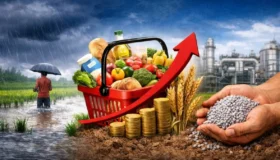
India Doubles Rice Sale Target as Food Supply Concerns Grow
India has doubled its government rice sale target and introduced weekly stock disclosures as weaker rainfall and rising prices increase pressure on domestic supplies.
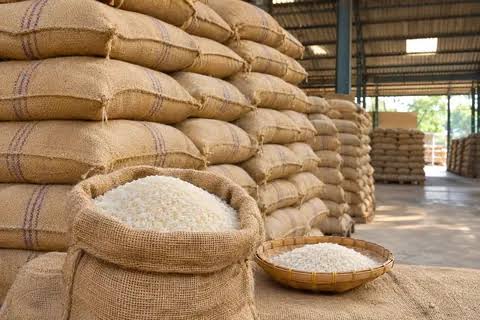

India is stepping up its intervention in the domestic rice market as concerns over production, rising prices and regional supply conditions prompt the government to release more grain into the open market. The Centre has doubled its rice sale target under the Open Market Sale Scheme (Domestic) for the financial year 2026–27, increasing it from 25 lakh metric tonnes to 50 lakh metric tonnes.
The decision comes at a time when below-normal monsoon rainfall has raised concerns about the country’s rice production outlook. India received approximately 13 per cent less rainfall than normal during the monsoon season, according to reporting by Reuters. Industry officials have warned that the production outlook could weaken, with the possibility of the first annual decline in rice output in a decade.
The government’s latest measures are intended to strengthen market availability, discourage hoarding and prevent price pressures from spreading further. They also reflect the importance of rice in India’s food security framework, consumer spending and agricultural economy.
Government Releases More Rice Into the Market
Under the Open Market Sale Scheme, the government sells food grains from its stocks to private traders through competitive e-auctions. The objective is to increase market supply when prices rise or when regional availability becomes a concern.
According to the Ministry of Consumer Affairs, Food and Public Distribution, 25 LMT of rice had already been sold to private buyers through OMSS e-auctions up to October 31, 2026. This compares with 11 LMT during the corresponding period of the previous financial year.
By increasing the annual target to 50 LMT, the government is creating additional room to release public stocks into commercial channels during the remaining months of the financial year.
The scale of the increase is significant because government-held grain stocks serve more than one purpose. They support the Public Distribution System, provide a buffer against supply disruptions and allow the government to intervene when market prices become difficult for consumers.
The additional sales could improve the availability of rice for traders and processors. However, the actual impact on retail prices will depend on the pace of releases, regional distribution and the extent to which additional supplies reach consumers.
Weekly Stock Reporting to Improve Market Transparency
Alongside the higher sale target, the government has made stock disclosure mandatory for businesses and entities holding rice and paddy across the country.
Traders, wholesalers, retailers, large retail chains, processors and millers must report their stock positions every Friday through the government’s Food Stock Portal.
The reporting requirement covers six categories: basmati rice, non-basmati premium rice, non-basmati rice, parboiled rice, broken rice and paddy.
The measure is designed to give authorities more regular information about the quantity of grain held across the supply chain. Better visibility can help identify unusual stock accumulation, monitor regional availability and support decisions on market intervention.
Entities that fail to register or violate prescribed stock limits may face action under Sections 6 and 7 of the Essential Commodities Act, 1955, according to the government order.
For the rice trade, the new requirement increases compliance responsibilities. Businesses will need to maintain accurate stock records and submit information within the prescribed weekly schedule.
Five Southern States Receive Authority to Impose Stock Limits
The Centre has also conveyed its concurrence to Andhra Pradesh, Karnataka, Kerala, Tamil Nadu and Telangana to impose stock limits on rice and paddy wherever considered necessary.
The restrictions, if implemented through the respective state governments’ control orders, can remain in force until January 31, 2027.
The regional focus is important because rice consumption, preferred varieties and supply conditions differ across states. Market pressure in one region or product category does not necessarily indicate a nationwide shortage.
Allowing state governments to impose limits gives them an additional instrument to address local stock accumulation and availability concerns. It also allows intervention to be directed towards areas where authorities consider it necessary rather than applying identical restrictions across the entire country.
The effectiveness of this approach will depend on how individual states implement the provisions, what limits they prescribe and how consistently the rules are monitored.
Bharat Rice Allocation Adds Another Supply Channel
The government has also announced additional allocations of Bharat Rice to three agencies: the National Agricultural Cooperative Marketing Federation of India (NAFED), the National Cooperative Consumers’ Federation of India (NCCF) and Kendriya Bhandar.
These agencies have been asked to explore wider distribution channels, with particular attention to improving availability in southern states.
Bharat Rice provides another route through which government-backed supplies can reach consumers. Its role is particularly relevant when market prices rise because it is intended to offer households access to rice at affordable rates.
The additional allocation complements the open-market auction programme. While OMSS sales primarily increase supplies through private commercial buyers, Bharat Rice distribution provides a more direct consumer-facing channel.
The Production Outlook Remains a Key Risk
The government’s intervention is taking place against a challenging agricultural backdrop. Below-normal rainfall during the crop’s maturation period has raised concerns about yields, while weaker crop conditions could affect procurement and market availability in the months ahead.
The potential impact extends beyond rice prices. Rice is a major component of household food expenditure and an important part of India’s agricultural trade. Changes in domestic availability can influence procurement decisions, government stocks, export policy and the cost of food for consumers.
At the same time, the available information does not establish that India is facing a nationwide rice shortage. Price pressures can differ substantially between varieties and regions, making it important to distinguish local market tightness from an overall supply crisis.
The government must also balance domestic affordability with the interests of farmers, millers, traders and exporters. Releasing public stocks can help moderate prices for consumers, but the longer-term outcome will depend on the next production cycle, procurement levels and the recovery of agricultural output.
India’s expanded rice sale programme is therefore more than a short-term price-control measure. It combines public stock releases, closer monitoring of private inventories, regional regulatory powers and subsidised distribution. Whether these interventions deliver lasting price stability will depend on how effectively they bridge the gap between market demand and available supplies.
Nikhil Varma
Nikhil Varma covers India’s growth model, emerging-market policy credibility, digital infrastructure and global capital links.