
The New Age of Protectionism: How Rising Trade Restrictions Are Reshaping the Global Economy
Global trade restrictions are increasing as governments prioritise economic security and domestic industries. New WTO findings reveal how tariffs, export controls and trade policies are reshaping international commerce.
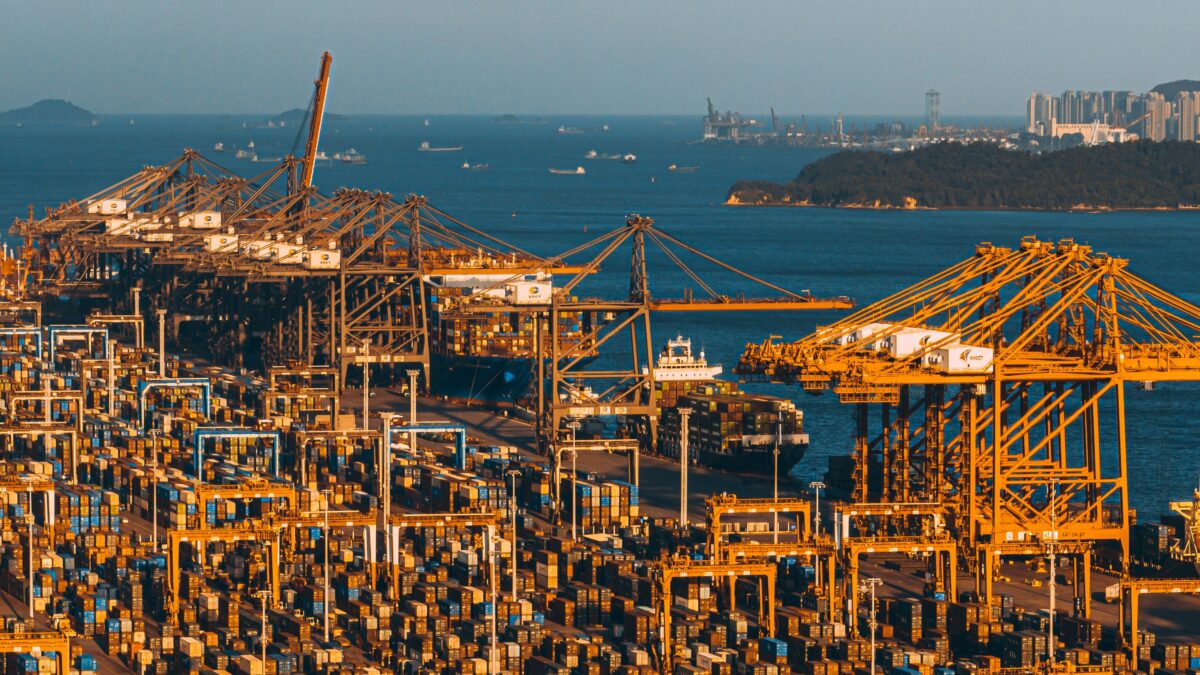

As governments increase tariffs, export controls and other trade restrictions, the global economy faces a growing challenge: protecting national interests without disrupting international commerce.
News Peg: The World Trade Organization’s 33rd G20 Trade Monitoring Report, released on 23 November 2026, highlights a sharp increase in trade restrictions during the first half of the year. G20 economies introduced 206 new restrictive and other non-facilitating trade measures, exceeding the 194 recorded throughout 2025. At the same time, governments introduced 282 measures designed to facilitate trade, revealing two competing forces shaping international commerce.
The Global Return of Trade Protectionism
International trade is entering a more complicated phase as governments increasingly prioritise domestic industries, economic security and strategic independence.
For decades, globalisation encouraged countries to reduce trade barriers, expand international supply chains and strengthen economic partnerships. Businesses benefited from access to international markets, competitive manufacturing costs and cross-border investment.
However, geopolitical tensions, supply-chain disruptions and growing competition between major economies have changed this approach.
Governments are increasingly using tariffs, export controls, subsidies and other trade policies to protect domestic industries and reduce dependence on foreign suppliers.
The latest World Trade Organization report highlights the scale of this shift. During the first half of 2026, G20 economies introduced 206 new restrictive and other non-facilitating trade measures. This exceeded the 194 measures recorded during the entire previous year.
The figures indicate that trade policy is becoming a more active instrument of economic and geopolitical strategy.
$2 Trillion in Imports Affected by New Restrictions
The financial impact of these policies is significant.
According to the WTO, import-related restrictive and other non-facilitating measures introduced by G20 economies during the first half of 2026 covered approximately $2 trillion in imports, representing 12.9% of total G20 imports.
Export-related measures, including export controls and other restrictions, covered approximately $711 billion, equivalent to 4.8% of G20 exports.
The longer-term picture is equally important.
As of 30 June 2026, the accumulated stock of import-related restrictive and other non-facilitating measures introduced since 2009 and still in force covered $4.5 trillion in trade. This represented 29.6% of G20 imports.
The stockpile of export-related measures reached $1.3 trillion, covering 9.1% of G20 exports.
These figures demonstrate how trade restrictions can accumulate over time, gradually changing the conditions under which international businesses operate.
Why Governments Are Prioritising Economic Security
Economic security has become an increasingly important consideration in national policy.
The pandemic exposed the risks of depending heavily on international suppliers for essential goods. Subsequent geopolitical conflicts and shipping disruptions reinforced concerns about access to energy, food, medicines and critical industrial materials.
Governments are now seeking greater control over strategically important sectors.
Semiconductors, defence equipment, advanced technology, energy infrastructure and critical minerals have become central to economic security discussions.
Export controls can restrict access to sensitive technologies, while tariffs can make imported products more expensive and provide additional protection to domestic manufacturers.
These policies may support selected industries in the short term. However, they can also increase costs for businesses that depend on international suppliers.
The challenge is finding a balance between national economic interests and the benefits of international trade.
The United States and China: A Central Trade Policy Challenge
The economic relationship between the United States and China remains one of the most important influences on global trade policy.
Both countries occupy significant positions in international manufacturing, technology and supply chains.
Trade tensions involving tariffs, semiconductor restrictions, advanced technology and strategic industrial sectors have encouraged businesses to reconsider their international operations.
For American companies, restrictions on Chinese technology and manufacturing inputs can increase procurement costs and complicate supply-chain planning.
For Chinese manufacturers, restrictions on access to selected foreign technologies can create pressure to develop domestic alternatives.
The consequences extend beyond the two economies.
Countries across Southeast Asia, Europe and other emerging markets are increasingly important to businesses seeking to diversify production and reduce exposure to geopolitical risks.
However, shifting manufacturing operations requires investment, infrastructure, skilled labour and reliable access to raw materials. Supply-chain diversification is therefore a gradual process rather than an immediate solution.
Global Businesses Face Higher Costs and Greater Uncertainty
Rising trade barriers can affect businesses through several channels.
First, tariffs increase the cost of imported products and components. Companies may pass these costs to consumers or accept lower profit margins.
Second, export restrictions can limit access to essential materials and technologies. Manufacturers may need to identify alternative suppliers or redesign production processes.
Third, changing trade rules create uncertainty around investment decisions.
Businesses planning factories, distribution centres and international partnerships need predictable market access. Frequent changes in trade policy can delay investment and increase compliance expenses.
Smaller companies may face greater difficulties because they often have fewer resources to manage regulatory requirements and diversify suppliers.
For multinational businesses, the new environment requires more sophisticated risk management and a stronger understanding of regional trade regulations.
The Other Side of the Story: Trade Facilitation Is Also Increasing
Despite the rise in restrictions, the WTO report presents a more balanced picture of global trade policy.
G20 economies introduced 282 new trade-facilitating measures during the first half of 2026, exceeding the 225 recorded throughout 2025.
Import-facilitating measures covered approximately $977 billion in trade, representing 6.4% of G20 imports.
Export-facilitating measures reached $560 billion, equivalent to 3.8% of G20 exports.
Some of these measures were temporary responses to trade disruptions associated with the closure of the Strait of Hormuz. Governments introduced tariff reductions and removals to help maintain the movement of goods.
This contrast is important.
It shows that governments are not simply withdrawing from international trade. They are simultaneously introducing restrictions in strategic areas and taking steps to keep essential commercial flows moving.
The future of global trade may therefore depend on how effectively these competing policy priorities are managed.
Emerging Economies Face Both Risks and Opportunities
The changing trade environment presents a mixed outlook for emerging economies.
Countries such as India, Vietnam, Indonesia and Mexico may benefit from companies diversifying their manufacturing and sourcing operations.
New investments in industrial facilities, logistics and export infrastructure could create employment and strengthen domestic production capabilities.
However, these opportunities come with challenges.
Emerging economies often depend on imported energy, machinery, components and industrial technology. Higher tariffs and export restrictions can increase their production costs.
They must also compete for foreign investment while maintaining stable regulatory environments and access to international markets.
Countries that improve infrastructure, develop skilled workforces and establish reliable trade agreements could be better positioned to benefit from changes in global supply chains.
The Future of the Global Trading System
The increasing use of trade restrictions raises important questions about the future of international economic cooperation.
The World Trade Organization was established to support a predictable and rules-based global trading system. Its monitoring reports provide transparency into how governments are changing their trade policies.
However, rising geopolitical competition is testing the ability of international institutions to maintain cooperation among major economies.
Trade restrictions may help governments address selected strategic concerns, but excessive fragmentation could weaken efficiency, increase costs and reduce opportunities for international businesses.
The challenge for policymakers is to protect legitimate national interests without creating unnecessary barriers to commerce.
The Balance Between Protection and Prosperity
Globalisation is not disappearing, but its structure is changing.
Businesses are becoming more conscious of geopolitical exposure, while governments are giving greater importance to domestic manufacturing and strategic industries.
The latest WTO figures reveal a global trading system moving in two directions: increasing restrictions in selected areas and stronger efforts to facilitate trade in others.
For businesses, investors and governments, the ability to adapt to this environment will become increasingly important.
The future of international commerce will not be determined by how many trade barriers countries can build, but by how effectively they can protect economic interests while keeping global markets connected.
Marcus Vane
Marcus Vane covers economic statecraft, sanctions, tariffs, industrial policy and the strategic use of economic power.