South Korea’s Semiconductor Boom: Why Strong Exports Are Not Reaching Every Household
Brazil's Senate has approved a fiscal package targeting up to R$60 billion in improvements to public finances in 2027, but investors want deeper reforms.

South Korea is benefiting from one of the biggest technology investment cycles in the global economy. Demand for artificial intelligence has increased the need for advanced chips, memory products and semiconductor manufacturing equipment. South Korean companies are among the major suppliers meeting that demand.
Exports are rising sharply. Industrial investment is improving. Economic growth has also strengthened.
Yet many households are not experiencing the same level of recovery.
Consumer spending remains weak, inflation is still above the central bank’s target and housing costs are adding to financial pressure. This has created an unusual situation: one of Asia’s most important technology economies is growing strongly in its export industries while domestic demand struggles to keep pace.
The Bank of Korea faces this challenge as it prepares for its monetary policy meeting on 26 November. A Reuters survey found that 32 of 34 economists expected the central bank to raise its benchmark interest rate by 0.25 percentage point, from 3.00% to 3.25%.
The decision will reflect a wider question facing South Korea: how can the country manage inflation and financial risks without slowing the economic recovery that its semiconductor industry is helping to create?
The Semiconductor Industry Is Driving Economic Growth
South Korea’s latest economic performance has been closely linked to its semiconductor sector.
The country’s technology companies supply memory chips and other components used in smartphones, computers, servers and artificial intelligence systems.
As technology companies expand their data centres and computing capacity, demand for advanced memory products has increased.
The scale of the export boom is significant.
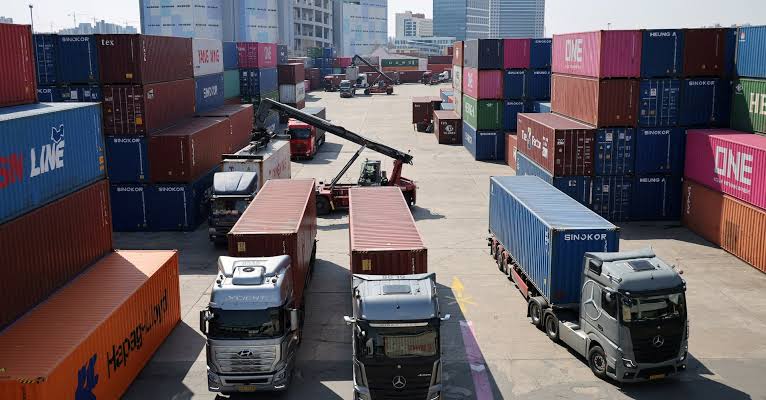
According to South Korea’s Ministry of Trade, September 2026 exports reached a record $120.9 billion, an increase of 83.5% compared with the same month a year earlier.
Semiconductor exports reached approximately $60.3 billion, rising 263% year-on-year. They accounted for almost half of the country’s total exports during the month.
This performance has supported industrial activity, company revenues and investment in production capacity.
The Korea Development Institute’s November economic outlook also points to strong growth. It projected that the economy would expand by 3.8% in 2026 and 3.9% in 2027, supported by semiconductor exports and investment linked to AI infrastructure.
These figures show why South Korea has become an important part of the global AI supply chain.
However, strong export figures do not automatically mean that the entire economy is performing equally well.
Why the Benefits Are Not Reaching Every Household
The biggest concern is the gap between corporate performance and household spending.
Large semiconductor companies can benefit directly from higher chip prices, stronger international demand and increased production. Their employees and shareholders may also receive higher bonuses and dividends.
But the benefits take time to reach the wider economy.
Small businesses, retail companies, restaurants and service providers do not necessarily benefit from the semiconductor boom. Many households also work in sectors that are less connected to technology exports.
South Korea’s third-quarter economic data highlighted this imbalance.
The economy grew by 3.4% year-on-year in the July–September quarter, supported by exports and investment. However, private consumption declined by 0.2% compared with the previous quarter.
Private consumption measures spending by households on goods and services. It includes purchases such as food, clothing, transport, household products and leisure activities.
When this spending weakens, businesses that depend on domestic customers can struggle even while major exporters are performing well.
The government has acknowledged the difference. Its November economic assessment described strong export activity and investment alongside a gradual, rather than rapid, improvement in consumption.
This makes household demand one of the most important questions for South Korea’s next phase of growth.
Inflation Is Still a Concern
South Korea is also dealing with inflation that remains above the Bank of Korea’s 2% target.
Consumer prices increased by 2.8% in October compared with a year earlier. The rate was slightly lower than September’s 2.9%, but it remained high enough to concern policymakers.
For households, the impact is felt through everyday expenses.
Food, transport, housing and other essential costs influence how much money people have available for non-essential purchases. When these expenses rise, families may reduce spending elsewhere.
This can create pressure on businesses and delay a stronger recovery in domestic demand.
The central bank must also consider the risk that inflation could remain elevated if strong export activity, rising service costs and domestic demand create additional price pressure.
Lower inflation would give households more purchasing power. But achieving that without damaging economic activity is difficult.
The Bank of Korea Faces a Difficult Interest-Rate Decision
The Bank of Korea’s meeting on 26 November is attracting considerable attention.
The central bank held its benchmark interest rate at 3.00% in October, explaining that strong exports and investment were supporting the economy while inflation and financial stability risks remained.
The latest Reuters poll suggests that most economists expect another increase of 0.25 percentage point.
If the central bank raises the rate to 3.25%, it would make borrowing more expensive across parts of the economy.
Higher interest rates can help control inflation by reducing demand for loans and encouraging saving. They can also support the currency by making domestic financial assets more attractive.
However, they create difficulties for households and businesses.
Families with variable-rate loans may face higher monthly repayments. Companies that depend on borrowing may delay investment. Smaller businesses may find it more expensive to finance daily operations.
This is particularly important in South Korea because household debt remains a major financial stability concern.
The central bank therefore has to consider more than inflation alone. It must also assess the effect of higher borrowing costs on household finances, housing and domestic consumption.
Housing Prices Add Another Layer of Pressure
South Korea’s housing market is another reason policymakers are being cautious.
Rising property prices, particularly in and around Seoul, can increase the financial burden on households.
Many families depend on borrowing to purchase homes. When property prices rise, buyers may take on larger loans. If interest rates also increase, the cost of servicing those loans can become more difficult to manage.
Housing costs also influence consumer behaviour in other ways.
Families spending more on mortgage payments, rent or housing deposits may have less money available for shopping, travel and other services.
This can weaken domestic demand even when employment and export activity are improving.
The Bank of Korea must therefore balance inflation control with the risk that tighter financial conditions could place additional pressure on households.
Can the Semiconductor Boom Support Broader Consumption?
There is a possibility that the benefits of stronger semiconductor exports will spread more widely.
The Bank of Korea has previously identified several channels through which this could happen.
First, higher company profits can support employee bonuses and salary increases. Second, shareholders may receive larger dividend payments. Third, stronger corporate tax revenue can improve the government’s ability to support households and public investment.
A stronger currency can also reduce the cost of imported goods, helping households maintain their purchasing power.
However, these benefits are not automatic.
They depend on how companies distribute profits, whether workers receive higher incomes and whether improvements in productivity reach businesses outside the technology sector.
South Korea also needs to strengthen its smaller companies and domestic service industries. These businesses employ large numbers of people and play an important role in household income.
If growth remains concentrated in a small number of export industries, the economy may continue to look stronger in national statistics than it feels to many households.
The Risk of Depending Too Heavily on Artificial Intelligence
The semiconductor boom is closely connected to global spending on artificial intelligence.
Technology companies are investing heavily in data centres, advanced processors and memory systems. This has created a major opportunity for South Korean chipmakers.
But there is also a risk.
If global companies reduce their AI investment, demand for semiconductor products could slow. A correction in technology stock valuations could also affect investor confidence and corporate spending.
South Korea is therefore exposed to developments in the global technology market.
The country’s growth strategy cannot depend entirely on one industry, even if that industry is currently performing exceptionally well.
Manufacturing diversification, domestic innovation, stronger services and improved productivity will be important for reducing this dependence.
The government and businesses need to ensure that the current technology cycle creates lasting economic capacity rather than a temporary increase in export revenue.
What South Korea’s Next Economic Phase Will Depend On
South Korea’s semiconductor success has strengthened its position in the global technology supply chain. Record exports and stronger investment have helped the economy recover and improved its growth outlook.
But the next stage will be judged by a different measure: whether the benefits reach ordinary households and businesses.
The Bank of Korea’s interest-rate decision will provide an important signal about how policymakers view inflation, financial stability and future demand. A rate increase may help contain price pressures, but it could also make borrowing more expensive for households already dealing with high debt.
In the longer term, South Korea needs to turn export earnings into broader economic strength. That means better wages, stronger domestic businesses, productive investment and a more balanced distribution of growth.
The semiconductor industry has given the country a powerful economic advantage. The challenge now is to make sure that advantage supports more than corporate profits and export records. A strong economy must also create better conditions for households, workers and smaller businesses. Until that happens, South Korea’s growth story will remain impressive but incomplete.
Helena Strauss
Helena Strauss writes on energy markets, commodities, climate finance and the industrial policy choices behind energy security.