
AI Infrastructure and Gulf Sovereign Investment Strategies
Gulf sovereign investors are moving into AI infrastructure, data centres and advanced technology. Discover how Saudi Arabia, the UAE and Qatar are positioning themselves in the global AI economy
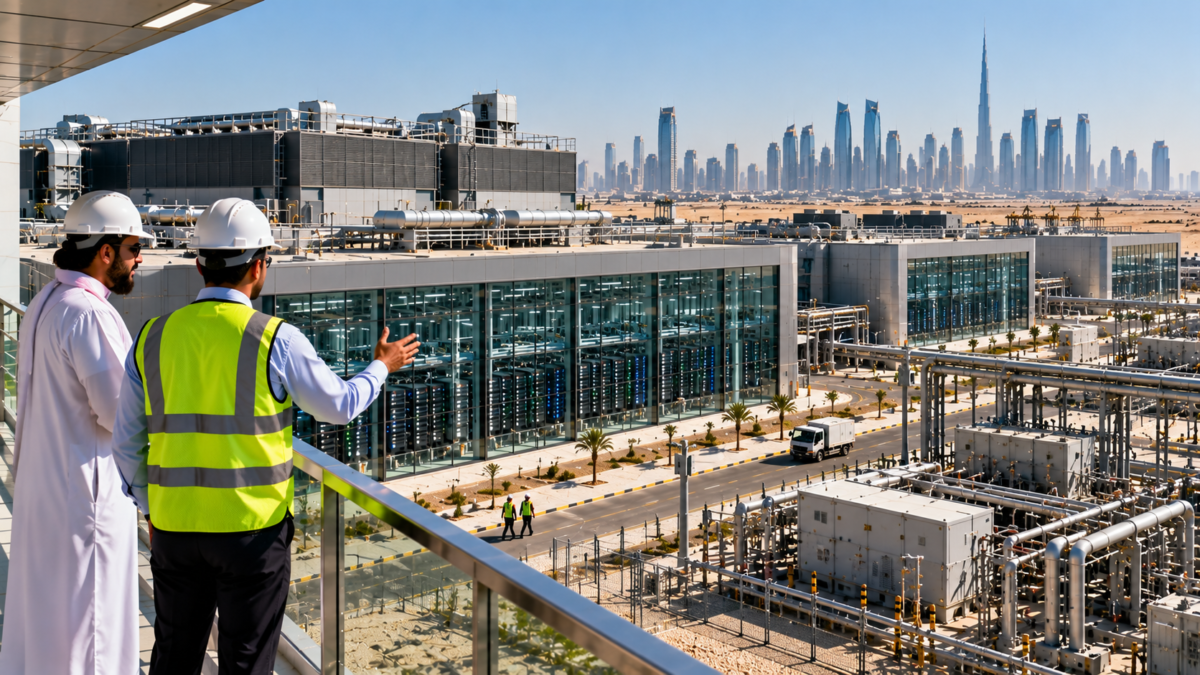

How Saudi Arabia, the UAE and Qatar are deploying capital into data centres, semiconductors, electricity and technology partnerships to compete in the global artificial intelligence economy.
Artificial intelligence is becoming one of the most capital-intensive industries in the global economy. Advanced AI models need more than software and computing talent. They also depend on data centres, specialised processors, reliable electricity, cooling systems, fibre-optic networks and cloud platforms.
For Gulf economies, this shift creates an opportunity beyond technology adoption. Saudi Arabia, the United Arab Emirates and Qatar are using sovereign investment institutions, government-backed companies and international partnerships to enter the global AI infrastructure market.
Their strategy supports two major economic goals. First, it helps diversify national economies beyond hydrocarbons. Second, it creates opportunities in an industry that could reshape productivity, business competition and international relations.
However, financial resources alone cannot create a successful AI hub. These countries also need advanced chips, reliable power, technical expertise and long-term commercial demand. The quality of their partnerships will matter just as much as the size of their investments.
Why AI Infrastructure Has Become a Strategic Investment
AI infrastructure includes the physical and digital systems that support artificial intelligence. Data centres sit at the centre of this ecosystem. They house specialised processors, networking equipment and high-performance computing systems.
These facilities need substantial electricity, advanced cooling and reliable connectivity. As businesses adopt AI, demand for computing capacity continues to grow. Technology companies need more infrastructure to train large models, operate cloud services and deliver AI applications.
This demand creates investment opportunities across several connected industries.
Data centres require land, construction materials, electrical equipment, cooling systems and grid connections. Semiconductor companies supply the processors. Cloud providers and software businesses then turn this computing capacity into commercial services.
For Gulf investors, the opportunity goes beyond buying stakes in technology companies. They can also finance and develop the infrastructure that supports the wider AI economy.
Deloitte’s June 2025 analysis of Gulf sovereign wealth funds identified growing investment activity in AI start-ups, semiconductors, chips, data centres and related infrastructure. The report also highlighted the role of international technology partnerships.
Why Gulf Sovereign Wealth Funds Are Interested
Gulf sovereign wealth funds manage national capital. Their traditional portfolios include international financial markets, real estate, infrastructure, energy and private businesses.
Today, many of their investment strategies also support national technology and diversification goals.
AI offers several potential benefits. It can improve productivity across existing industries, support new technology businesses and strengthen government services. It can also attract international companies that need access to computing infrastructure.
Countries with significant energy resources and investment capital have another advantage. They can connect their traditional energy strengths with the growing digital economy.
However, sovereign wealth funds do not all operate in the same way. Some invest directly in companies. Others provide capital through specialist funds, investment platforms and joint ventures. Government-backed operating companies may also develop infrastructure, but they are not automatically sovereign wealth funds.
These distinctions matter when assessing the region’s AI investment strategy.
Saudi Arabia: HUMAIN and the Development of an AI Ecosystem
Saudi Arabia has made artificial intelligence an important part of its Vision 2030 economic transformation programme.
A major step came in May 2025. The Public Investment Fund (PIF) announced HUMAIN, a PIF-owned company that operates and invests across the AI value chain.
HUMAIN focuses on next-generation data centres, AI infrastructure, cloud capabilities, advanced AI models and digital solutions.
The company aims to serve domestic, regional and international customers. It also seeks to strengthen Saudi Arabia’s position in the global technology economy.
The country’s infrastructure expansion is already visible. Saudi Press Agency reported in April 2026 that operational data-centre capacity had grown from 68 megawatts in 2021 to more than 440 megawatts in 2025. It also reported over 60 data centres developed by more than 20 companies. Investment exceeded SAR 16 billion.
Another major development is the Hexagon Data Center project in Riyadh. Saudi authorities announced a planned capacity of 480 megawatts. The project aims to become a major government data-centre facility.
Financing also plays a central role. In January 2026, HUMAIN and the National Infrastructure Fund announced a financing framework worth up to $1.2 billion. It will support AI and digital infrastructure development. The framework covers financing for up to 250 megawatts of hyperscale AI data-centre capacity.
Together, these developments show how Saudi Arabia is combining public investment, specialist operating companies and infrastructure finance. The goal is to build a domestic AI ecosystem with international reach.
UAE: Building an International AI Infrastructure Hub
The United Arab Emirates combines technology investment, international partnerships and large-scale digital infrastructure in its AI strategy.
Abu Dhabi-based G42 plays an important role in the country’s ambitions. The company operates across artificial intelligence, cloud computing, data infrastructure and related technology services.
The UAE also uses investment platforms such as MGX. The platform supports investment in AI and advanced technology.
One of the most prominent international initiatives is Stargate UAE. Announced in 2025, it forms part of a wider collaboration involving G42 and international technology partners.
The planned development aims to create a major AI infrastructure cluster. It will connect computing capacity with advanced chips, cloud platforms and supporting technology systems.
The UAE wants to become an international centre for AI computing. Its ambition extends beyond serving as a regional consumer of technology services.
However, large infrastructure projects also face security challenges. Reuters reported in September 2026 that the UAE was reviewing parts of its planned five-gigawatt AI data-centre project. Regional attacks had raised concerns about the security of critical infrastructure.
The report described possible changes to facility locations and additional security measures. It also stated that the first phase of Stargate UAE remained under construction.
This development highlights an important issue. AI infrastructure is becoming a strategic national asset. Governments must now include its protection in their investment plans.
Qatar: Combining Sovereign Capital With Technology Partnerships
Qatar is also working to expand its role in the international AI economy through sovereign investment and partnerships.
The Qatar Investment Authority (QIA) invests internationally across technology, financial services, infrastructure and other sectors. These investments give Qatar exposure to businesses and technologies that support its long-term economic ambitions.
Domestic initiatives also support the country’s wider technology strategy. They aim to strengthen digital infrastructure, cloud services and AI adoption.
Deloitte’s 2025 analysis identified QIA investments and commitments involving technology businesses, semiconductor-related companies and AI start-ups. These activities show how sovereign investors can participate in the AI value chain without developing every technology themselves.
However, financial exposure does not automatically create domestic technical capacity. An investment in an international semiconductor company or AI business can provide strategic relationships and financial returns. It does not necessarily establish local chip manufacturing or ownership of the underlying technology.
Qatar’s opportunity lies in connecting international investments with domestic digital capabilities. Skilled talent and a competitive business environment will also play important roles.
The Four Major Layers of AI Investment
Gulf AI investment covers four connected areas. Each supports a different part of the technology ecosystem.
1. Data centres and computing infrastructure
Data centres provide the physical facilities that run AI systems. They require major capital commitments, reliable electricity, advanced cooling and high-speed network connections.
These facilities can become long-term infrastructure assets. However, their commercial success depends on customer contracts, utilisation rates and regular technology upgrades.
2. Semiconductors and advanced processors
AI systems rely on specialised chips. These include graphics processing units and other accelerators designed for high-performance computing.
The semiconductor supply chain remains concentrated among a relatively small number of companies and countries. Gulf investors can gain exposure through partnerships and international investments. However, global supply constraints and export-control rules still influence access to the most advanced processors.
3. Electricity and energy infrastructure
AI data centres consume substantial amounts of electricity. Their expansion requires dependable generation, grid connections, backup systems and cooling infrastructure.
The Gulf’s energy resources can offer an advantage. However, electricity must also remain affordable and reliable. Governments must balance this demand with their sustainability objectives.
4. AI models, cloud platforms and applications
Infrastructure alone cannot create a competitive AI economy. Businesses also need software, cloud services, research capabilities, skilled developers and useful commercial applications.
Investment in local AI models and applications can strengthen capabilities across healthcare, finance, energy, logistics and public administration.
These four areas depend on one another. A country may build significant data-centre capacity but still rely on foreign chips, software and technical expertise.
Why Electricity and Cooling Could Become the Biggest Constraints
A key question for Gulf AI investment concerns the ability of energy infrastructure to keep pace with computing demand.
Data centres operate around the clock and need dependable power. Advanced AI systems also generate substantial heat. This makes cooling a critical part of facility design.
The Gulf has significant energy resources. However, that does not mean every location has enough grid capacity or suitable infrastructure for hyperscale computing.
Large projects may need new power-generation facilities, transmission upgrades and water-management systems. They may also require more efficient cooling technologies.
Research from the Middle East Institute on the GCC AI ecosystem identifies energy availability, computing capacity and infrastructure coordination as essential requirements for a regional AI stack.
This creates a closer relationship between technology companies, utilities, infrastructure funds and energy producers. Their coordination will influence the pace and cost of future AI development.
The Importance of International Technology Partnerships
Gulf investors bring financial resources, energy advantages and access to major development projects. However, a competitive AI industry also needs advanced technical knowledge and relationships with established global companies.
International partnerships can provide access to processors, cloud platforms, research expertise, software and operational experience.
Deloitte’s analysis notes that Gulf sovereign investors increasingly use joint ventures and international investments to gain exposure to AI and related technologies.
These partnerships can accelerate development. However, they can also create dependencies. Export controls, national security concerns and international political relationships may affect access to advanced chips, specialised equipment and other technologies.
Gulf governments therefore face a balancing act. They want to build local capabilities while maintaining cooperation with global technology companies.
The real test will be whether these partnerships create technology transfer, skilled employment and lasting domestic expertise. Simply building facilities with imported equipment may not deliver those outcomes.
The Financial Risks Behind the AI Investment Boom
AI infrastructure requires large investments. The sector also carries financial risks that investors must assess carefully.
Data centres need substantial upfront capital before they generate revenue. Their performance depends on customer demand, electricity costs, operating efficiency and technology cycles.
A facility designed around one generation of processors may need expensive upgrades as computing requirements change.
Overcapacity presents another risk. Several countries and companies may build large facilities at the same time. Computing supply could then grow faster than demand in certain markets.
Valuations also require careful attention. Some AI-related companies trade on expectations of future growth rather than established earnings.
Sovereign wealth funds must therefore assess projects against clear commercial criteria. These include expected utilisation, financing structures, customer commitments, technology risks and realistic exit opportunities.
Strategic importance can support long-term investment. However, it cannot replace financial discipline.
What Gulf AI Investment Means for the Global Technology Economy
The growing involvement of Gulf sovereign capital is changing the geography of AI infrastructure investment.
The region wants to connect energy resources, financial capital, land, data-centre facilities and international technology partnerships. Together, these assets could support a competitive computing ecosystem.
For technology companies, this creates opportunities to enter new markets, expand cloud infrastructure and secure long-term investment partners.
For the global AI industry, additional computing capacity could support wider adoption of AI services. It could also diversify the geographical location of critical infrastructure.
However, the Gulf’s position will depend on more than the amount of money committed to projects. Access to advanced processors, reliable power, secure networks, skilled workers and strong technology partnerships will determine the region’s competitiveness.
Saudi Arabia, the UAE and Qatar are investing heavily to secure a place in the next phase of the global AI economy. Their long-term success will depend on converting financial capital and infrastructure development into productive technology capabilities, sustainable businesses and lasting economic value.
Nadia Al-Hassan
Nadia Al-Hassan focuses on the economics of AI, semiconductors, cloud infrastructure, cybersecurity and digital sovereignty.