
Why Gulf Energy Decisions Affect Importing Nations
Gulf energy production and shipping routes influence global oil prices, LNG supplies and energy security. Discover why importing nations remain exposed to developments in the Middle East.
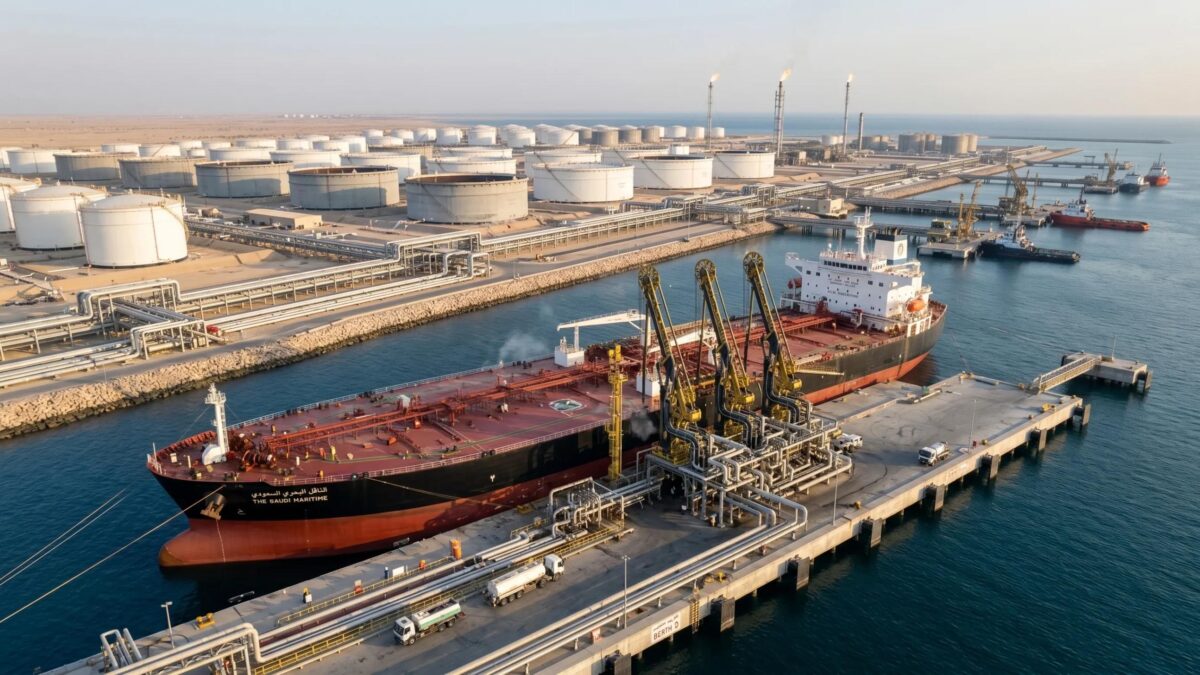

How Gulf oil and gas production, export infrastructure and strategic shipping routes influence global energy security and the economies of importing countries.
Energy decisions made in the Gulf rarely remain confined to the region. When major producers adjust oil output, when export infrastructure faces disruption or when shipping routes become difficult to access, the consequences can reach refineries, power stations, factories and households thousands of kilometres away.
The Gulf occupies a central position in the international energy system because it combines large hydrocarbon resources with strategically important maritime routes. Countries such as Saudi Arabia, the United Arab Emirates, Kuwait, Qatar and Iraq supply energy to major importing economies, particularly across Asia.
For importing nations, the region is not simply a source of oil and natural gas. It is a critical part of the infrastructure that supports industrial production, electricity generation, transportation and economic stability.
Why the Gulf Has Such a Significant Role in Global Energy
The Gulf’s influence comes from the concentration of oil and natural gas production, export infrastructure and maritime transportation networks within a relatively compact geographical area.
Saudi Arabia remains one of the world’s leading oil producers and an influential member of the Organization of the Petroleum Exporting Countries (OPEC). The UAE, Kuwait and Iraq are also important oil-producing countries, while Qatar has established itself as a major global supplier of liquefied natural gas (LNG).
These countries serve different markets and have different production capacities, export arrangements and energy strategies. Their decisions can influence the amount of energy available to international buyers and the expectations that shape commodity prices.
The region’s importance is reinforced by the presence of the Strait of Hormuz, which connects the Persian Gulf with the Gulf of Oman and the Arabian Sea.
According to the International Energy Agency’s February 2026 factsheet, approximately 20 million barrels per day of crude oil and petroleum products passed through the Strait in 2025. This represented around one-quarter of global seaborne oil trade.
The same route is important for natural gas exports. Qatar and the UAE depend heavily on the Strait to transport LNG to international markets.
How Gulf Production Decisions Influence Oil Prices
Oil prices are determined by several factors, including global demand, available supply, inventories, production costs, market expectations and geopolitical developments.
Gulf producers influence this balance through their production decisions. When major producers increase output, additional supply can help ease market tightness, provided the oil can be produced, transported and delivered to buyers.
When production is reduced or disrupted, the market may become more concerned about future availability. Buyers may seek alternative supplies, traders may adjust their positions and refiners may face higher procurement costs.
OPEC and its wider OPEC+ alliance play an important role in coordinating production policies among participating countries.
On 4 October 2026, seven OPEC+ countries — Saudi Arabia, Russia, Iraq, Kuwait, Kazakhstan, Algeria and Oman — agreed to maintain their September production requirements for November. The group reaffirmed its commitment to market stability and continued consultation on production policy.
However, production targets should not be confused with actual exports. A country may have permission to produce additional barrels but still face constraints involving infrastructure, export terminals, shipping availability or security conditions.
This distinction has become especially important in 2026, when regional disruptions have affected the ability of producers to move energy to international markets.
The Strait of Hormuz: A Critical Energy Chokepoint
The Strait of Hormuz is one of the most strategically important maritime passages in the world.
Its narrow shipping channels connect major Gulf energy producers with international markets. Oil tankers carrying crude and petroleum products from Saudi Arabia, Iraq, Kuwait, Qatar, the UAE and Iran use the route, although some Saudi and Emirati exports can bypass it through alternative infrastructure.
The IEA estimates that around 80% of oil and petroleum products passing through the Strait in 2025 were destined for Asian markets.
China, India and Japan are among the major importing countries exposed to this trade route.
The Strait is also essential for LNG. The IEA estimates that approximately 93% of Qatar’s LNG exports and 96% of the UAE’s LNG exports transited through Hormuz in 2025. Together, these flows represented close to one-fifth of global LNG trade.
This concentration creates a significant vulnerability. Even when production facilities remain operational, a disruption to shipping can prevent energy supplies from reaching international customers.
Why Importing Countries Feel the Impact
Energy-importing economies are exposed to Gulf developments through several interconnected channels.
Higher import costs: When crude oil prices rise, countries that depend heavily on imported petroleum may face larger energy bills. This can increase pressure on trade balances and foreign-exchange requirements.
Inflation: Oil and gas are important inputs in transportation, manufacturing, electricity generation and agriculture. Higher energy costs can eventually affect the prices of goods and services across the economy.
Industrial production: Refineries, petrochemical companies, fertiliser producers, airlines and other energy-intensive businesses may experience higher operating expenses when supplies become expensive or uncertain.
Currency pressure: Countries that need more foreign currency to pay for energy imports may face additional pressure on their external accounts, particularly when their domestic currencies are already under strain.
Government finances: Governments that subsidise fuel or electricity may have to spend more to protect consumers when international energy prices increase.
The extent of the impact depends on a country’s energy mix, domestic production, strategic reserves, import contracts and ability to secure alternative supplies.
Why Asia Is Particularly Exposed
Asian economies are among the most important customers for Gulf energy exports.
The region’s dependence reflects the scale of industrial activity, urbanisation, transportation demand and electricity consumption across countries such as China, India, Japan and South Korea.
India is especially sensitive to changes in international oil prices because it imports a substantial share of the crude oil required by its refineries.
Higher crude prices can increase the country’s import bill and affect inflation, currency conditions and the finances of energy-related businesses.
For India, the impact extends beyond petrol and diesel. Oil and gas are important inputs for petrochemicals, fertilisers, aviation, logistics and several manufacturing industries.
Natural gas disruptions can also affect fertiliser production and industrial consumers. Since LNG supplies from Qatar and the UAE rely heavily on the Strait of Hormuz, shipping interruptions can create additional uncertainty for buyers.
Asian importing nations therefore have strong incentives to diversify their energy suppliers, maintain strategic reserves and strengthen long-term procurement arrangements.
What Happens When Shipping Routes Are Disrupted?
Energy security depends not only on the availability of oil and gas but also on the ability to transport them reliably.
When a major maritime route becomes unsafe or unavailable, shipping companies may reroute vessels, delay departures or demand higher insurance premiums.
Longer routes increase fuel consumption and delivery times. Higher insurance and freight costs can make imported energy more expensive even when the underlying commodity price has not changed significantly.
The US Energy Information Administration has identified the Strait of Hormuz, the Suez Canal, the SUMED pipeline and the Bab el-Mandeb Strait as important components of international energy transportation.
Disruptions in the Red Sea have also encouraged some vessels to travel around the Cape of Good Hope, adding distance and cost to shipments between Asia and Europe.
In October 2026, OPEC ministers highlighted the importance of safeguarding international maritime routes. They noted that interruptions to energy flows had pushed shipping and insurance costs to exceptionally high levels, adding pressure across the global oil value chain.
This demonstrates that the cost of energy security includes transportation, insurance and logistics, not only the price of crude oil or natural gas.
Can Alternative Export Routes Reduce Gulf Dependence?
Some Gulf producers have developed infrastructure that allows part of their energy exports to bypass the Strait of Hormuz.
Saudi Arabia operates the East-West Pipeline, which transports crude oil towards the Red Sea. The UAE also has a pipeline connecting its oil-producing areas to the export terminal at Fujairah, outside the Strait.
According to the IEA, available capacity on alternative routes was estimated at approximately 3.5 million to 5.5 million barrels per day in its February 2026 assessment.
These routes provide valuable flexibility, but they cannot replace all the oil normally transported through Hormuz.
Their effectiveness depends on available capacity, operational conditions, export-terminal access and the ability to move additional volumes through connected infrastructure.
The situation is even more challenging for LNG. The IEA identifies no alternative export route capable of replacing the principal LNG shipments from Qatar and the UAE that normally pass through the Strait.
This means that diversification of shipping routes remains an important but incomplete solution to regional energy vulnerabilities.
How Gulf Producers Are Responding to a Changing Market
Gulf producers face a complicated challenge. They must manage production, protect export infrastructure, maintain relationships with international buyers and respond to changes in global energy demand.
Saudi Arabia and the UAE have invested in pipelines, export terminals, storage and energy infrastructure to improve their ability to serve international markets.
Qatar has continued to focus on expanding its LNG position and strengthening long-term relationships with gas buyers.
At the same time, OPEC+ production policy remains an important part of the market outlook. Its decisions can influence expectations about future supply, although actual production and export capacity depend on conditions on the ground.
The International Energy Agency’s October 2026 Oil Market Report described a fragile recovery in Gulf oil supply. It reported that global supply increased to 102.3 million barrels per day in September, driven by a recovery in Gulf production.
However, the report also warned that renewed attacks on regional energy infrastructure and tanker traffic threatened further improvements.
The message for importing nations is that an announced production increase does not necessarily guarantee stable deliveries. Physical infrastructure and secure maritime access remain equally important.
Why Importing Nations Need Stronger Energy Security Strategies
Countries that rely heavily on imported energy cannot control geopolitical developments in the Gulf. They can, however, reduce the economic consequences of supply disruptions.
One important approach is supplier diversification. Importing countries can build relationships with multiple producing regions and avoid excessive dependence on a single source or transportation route.
Strategic petroleum reserves provide another layer of protection. These reserves can help governments manage temporary supply interruptions and reduce the need for immediate emergency purchases.
Long-term contracts may also provide greater predictability, although they do not eliminate the risk of physical delivery disruptions.
Investment in renewable energy, nuclear power, domestic production and energy efficiency can reduce exposure to imported fossil fuels over time.
For India, strengthening refining flexibility, expanding strategic reserves, improving energy infrastructure and diversifying crude and LNG procurement can support resilience.
The objective is not to eliminate international energy trade but to ensure that the economy can continue operating when a major supplier or shipping route faces disruption.
Gulf Energy Decisions Will Continue to Shape Global Markets
The Gulf’s position in the international energy system is built on a combination of production capacity, export infrastructure, investment and geographical importance. Decisions taken by regional producers can influence global prices, while disruptions to maritime routes can affect the physical availability of energy in importing economies.
For countries across Asia and Europe, energy security therefore requires more than monitoring oil prices or following OPEC announcements. It requires understanding the entire supply chain, from production facilities and pipelines to ports, tankers, insurance markets and domestic distribution networks.
As global energy demand evolves, the Gulf will remain an important part of the international supply picture. The resilience of importing nations will depend on their ability to diversify sources, protect critical infrastructure and prepare for disruptions before they become economic crises.
Helena Strauss
Helena Strauss writes on energy markets, commodities, climate finance and the industrial policy choices behind energy security.