
Why RBI Policy Matters for Global Investors
RBI policy matters for global investors because it shapes inflation credibility, rupee stability, liquidity and India’s capital-market confidence.
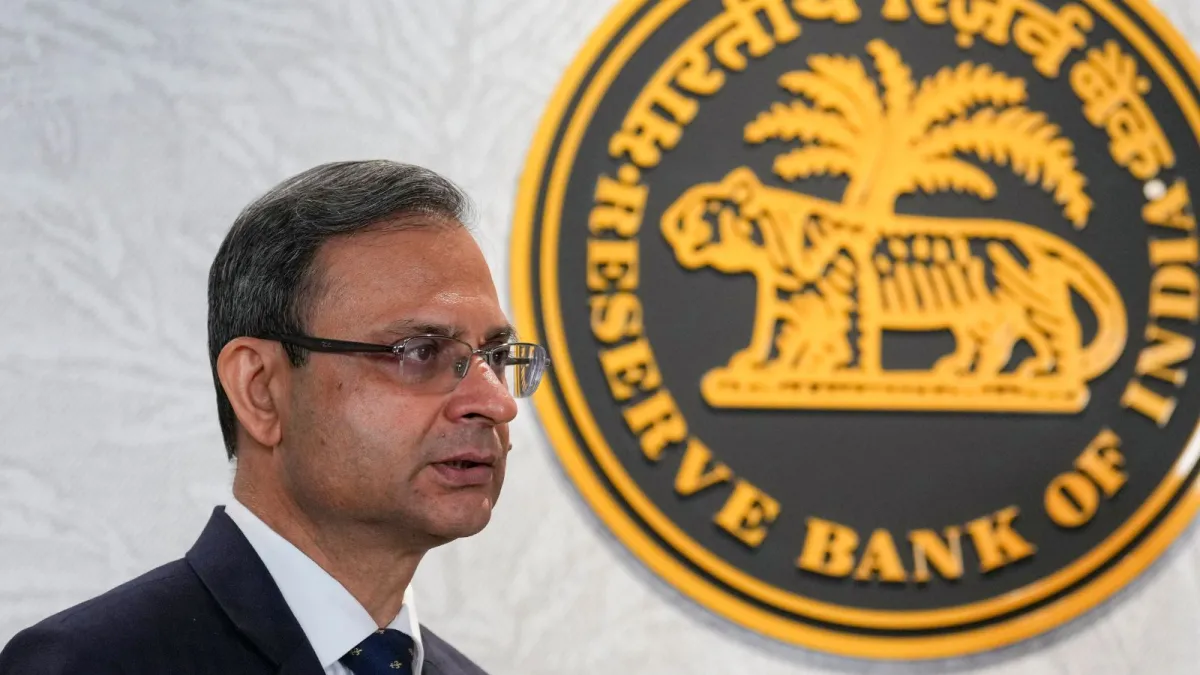

The Reserve Bank of India is often analysed through the domestic lens of inflation, growth and bank liquidity. Global investors read it more widely. RBI policy affects the rupee, bond yields, equity sentiment, external confidence and the cost of capital in one of the world’s most closely watched emerging markets. As India’s weight in global portfolios increases, the central bank’s credibility becomes a global investment variable.
Inflation management is the first reason. India operates with a flexible inflation-targeting framework centred on consumer-price stability while keeping growth in view. For foreign investors, the precise policy rate matters, but the credibility of the framework matters more. If inflation expectations are anchored, long-term investors can price rupee assets with greater confidence. If inflation appears unstable, the risk premium rises.
Rupee stability is another channel. India imports significant energy and capital goods, so currency weakness can feed into inflation and corporate margins. The RBI does not need to defend a fixed exchange rate for the currency to matter. Its liquidity operations, rate decisions and reserve management all influence how investors judge external resilience. A central bank that can manage volatility without exhausting credibility supports market confidence.
Bond markets are increasingly important. As India’s government securities become more visible to global investors, questions around monetary policy, fiscal coordination and inflation credibility become sharper. Foreign participation can deepen markets, but it can also increase sensitivity to global rate cycles. The RBI’s communication helps investors understand how domestic objectives will be balanced against external pressure.
Liquidity management is a distinctive part of the RBI’s role. Indian markets pay close attention to banking-system liquidity, money-market rates and the transmission of policy through credit. If liquidity is too tight, credit conditions can restrain growth. If it is too loose, inflation and asset-price risks may build. The RBI’s operational choices therefore matter to banks, non-bank lenders, corporates and government financing.
For equity investors, RBI policy shapes the macro backdrop. Stable inflation and orderly currency markets support valuations, especially for financials, consumer companies and infrastructure-linked sectors. Sudden tightening can pressure rate-sensitive areas, but a loss of inflation credibility would be worse. Investors often prefer a central bank that acts early and clearly to one that delays and then must move abruptly.
RBI policy also carries a signalling function for India’s global economic ambition. A country seeking to attract manufacturing, infrastructure capital and long-term portfolio flows needs a credible monetary framework. Investors can tolerate volatility. They struggle with policy ambiguity. The RBI’s institutional credibility is therefore part of India’s broader investment proposition.
For international readers, India should not be treated as a simple growth story detached from macro policy. The country’s scale is important, but scale becomes investable only when inflation, currency management, banking liquidity and fiscal coordination support confidence. That is why RBI communication is followed by global funds, multinational companies and sovereign investors who are trying to understand the durability of India’s expansion.
For Indian companies, monetary policy affects more than headline borrowing rates. It influences working-capital costs, bond-market access, bank lending conditions, foreign-currency planning and investor appetite. Sectors linked to infrastructure, real estate, finance and consumption can feel the transmission differently. The policy signal must therefore be read through the structure of the business, not only through the repo rate.
Before publication, live data points such as inflation, repo rate, foreign-exchange reserves and growth figures should be updated from RBI releases, official statistics and credible institutional databases. The evergreen argument can remain stable, but current figures must be checked on the day of publication.
That is why the article should be published with live source checks rather than as a generic opinion. The topic is evergreen, but the evidence around it changes through official releases, policy documents, market data and institutional reports. Economic Statesman should keep the analysis durable while updating any current examples before publication.
That final distinction is essential for any reader treating policy as an investment signal rather than background noise.
What to watch next
Watch inflation expectations, food-price shocks, oil prices, rupee volatility, banking liquidity and the language of the Monetary Policy Committee. Also watch how the RBI balances domestic growth with global financial conditions. For global investors, RBI policy is not a narrow domestic matter. It is one of the mechanisms through which India converts economic scale into investable confidence.
Julian Reed
Julian Reed covers monetary policy, central-bank communication, inflation targeting and the wider financial signals that move markets.