
APEC 2026: Asia-Pacific Leaders Agree on Trade, Connectivity and Innovation Agenda
The Shenzhen APEC summit concludes with a declaration and three outcome documents focused on trade, connectivity and innovation.
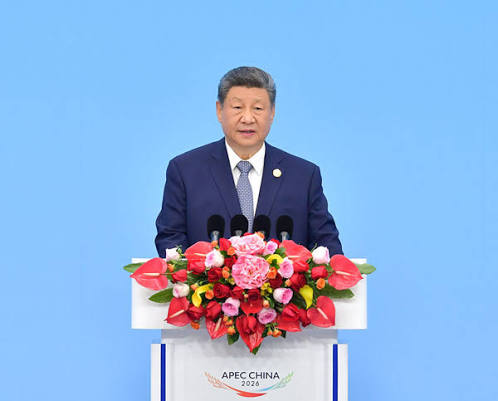

The Shenzhen declaration sets out a regional cooperation agenda as tariff disputes, technology restrictions and supply-chain pressures reshape global commerce.
The 33rd Asia-Pacific Economic Cooperation (APEC) Leaders’ Meeting concluded in Shenzhen, China, on 19 November 2026 with an agreement to strengthen regional cooperation on trade, infrastructure, digital technology and innovation. Leaders adopted the 2026 APEC Leaders’ Declaration alongside three outcome documents covering trade, connectivity and innovation.
The meeting came at a challenging moment for international commerce. Tariff disputes, restrictions on advanced technology and uncertainty over global supply chains have increased pressure on businesses and governments. Against this backdrop, the Shenzhen summit placed economic integration and regional cooperation at the centre of its agenda.
The outcome matters because APEC economies account for approximately 62% of global GDP and around half of international trade. Their economic decisions influence manufacturing, investment, technology and supply chains well beyond the Asia-Pacific region.
Shenzhen Declaration Puts Regional Trade Cooperation First
Chinese President Xi Jinping chaired the leaders’ meeting under the theme of building an Asia-Pacific community and promoting shared prosperity.
The declaration emphasised economic integration, open trade, investment facilitation and stronger regional cooperation. Leaders also discussed the need to reduce barriers that restrict the movement of goods, services, capital and technology.
One major priority is the long-term vision of a Free Trade Area of the Asia-Pacific (FTAAP). The initiative seeks to deepen economic integration among APEC member economies.
However, the proposal is not a newly signed free trade agreement. It remains a long-term regional objective that requires negotiations, policy coordination and agreement among participating economies.
The leaders also highlighted the importance of aligning existing trade arrangements and improving customs procedures. Such measures could reduce administrative costs and make cross-border business easier.
Digital Trade and Artificial Intelligence Become Central Priorities
Technology emerged as one of the strongest themes of the Shenzhen meeting.
APEC leaders recognised artificial intelligence, digital infrastructure and cross-border data exchange as important drivers of future economic growth.
The declaration called for stronger regional cooperation on digital infrastructure, data governance and secure cross-border data flows. It also highlighted the need to encourage wider AI adoption across industries.
These priorities reflect the growing economic importance of technology in international trade. Businesses increasingly depend on digital platforms, cloud services, automated production and data-based operations.
For manufacturers, better digital connectivity can improve supply-chain visibility and reduce operational delays. For financial institutions, digital systems can support faster payments and cross-border transactions.
However, countries still face differences in data protection rules, cybersecurity standards and technology regulations. Greater cooperation will require governments to address these differences without weakening national regulatory safeguards.
Infrastructure Connectivity Remains a Regional Economic Priority
The Shenzhen agenda also placed emphasis on physical, institutional and people-to-people connectivity.
Physical connectivity includes transport networks, ports, logistics infrastructure and regional trade corridors. Institutional connectivity focuses on improving regulations, customs systems and policy coordination.
These areas are important because trade growth depends on more than tariff reductions. Businesses also need efficient ports, reliable transport systems and predictable regulations.
Better infrastructure can reduce shipping delays and logistics expenses. It can also help smaller businesses access international markets.
The summit encouraged member economies to improve infrastructure networks and strengthen cooperation on trade facilitation.
For developing economies, these priorities could support industrial investment and improve access to regional production networks.
China Announces $20 Million for APEC Cooperation
China announced a contribution of $20 million to support practical cooperation within APEC.
It also proposed establishing a Centre for Asia-Pacific Community Studies in Shenzhen to support policy research and regional exchanges.
Additional cooperation institutions are planned in areas such as digital technology, cross-border data flows, clean energy and small and medium-sized enterprise development.
These announcements reflect China’s effort to strengthen its role in regional economic cooperation.
For businesses, the proposed initiatives could create opportunities for research partnerships, technology exchanges and regional investment.
However, the practical impact will depend on how these institutions are established and whether member economies participate actively in their programmes.
Trade Tensions Continue to Challenge Regional Integration
The summit’s emphasis on open trade comes amid continuing economic tensions between major powers.
The United States and China remain engaged in disputes over tariffs, advanced semiconductors, export controls and access to strategic technologies.
Washington’s restrictions on advanced AI chips have added another layer of uncertainty to the relationship. Beijing has criticised protectionist measures and called for a more open international trading system.
These disagreements matter because both economies play central roles in global manufacturing and technology supply chains.
Restrictions on semiconductor access can affect companies involved in artificial intelligence, electronics, data centres and advanced manufacturing.
For smaller economies, the competition creates difficult choices. They must maintain access to major markets while managing pressure to align with different technology and trade standards.
The Shenzhen declaration therefore represents a shared commitment to cooperation, but it does not remove the underlying political and commercial differences.
Canada and China Demonstrate the Importance of Bilateral Trade Agreements
Developments outside the main leaders’ meeting also highlighted the changing trade environment.
Canada and China agreed to expand tariff relief on selected products ahead of the APEC summit. China agreed to provide additional tariff relief covering around C$400 million in Canadian exports, including frozen pork, fish and seafood.
Canada also agreed to extend certain tariff-remission measures for Chinese steel and aluminium products.
The arrangement reflects Canada’s effort to diversify its export markets and strengthen economic relationships beyond the United States.
It also demonstrates how bilateral agreements can complement wider regional trade discussions.
However, differences over industrial policy, electric vehicles and national security remain important challenges in the Canada-China relationship.
APEC’s Decisions Depend on Voluntary Cooperation
Despite the significance of the Shenzhen declaration, APEC operates differently from institutions that negotiate legally binding trade agreements.
Its decisions are generally reached through consensus, and member economies undertake commitments voluntarily.
This structure allows economies with different political systems and economic priorities to participate in regional discussions. However, it also limits the enforcement of collective commitments.
The success of the latest declaration will therefore depend on implementation at the national level.
Governments will need to translate the agreed priorities into practical measures involving customs procedures, digital regulations, infrastructure investment and business cooperation.
The difference between political commitments and actual policy implementation will determine the summit’s long-term economic impact.
Vietnam Prepares to Host APEC in 2027
The conclusion of the Shenzhen meeting also marked the transfer of hosting responsibilities to Vietnam for 2027.
Vietnam will have an opportunity to continue discussions on regional integration, trade facilitation, digital transformation and economic cooperation.
The next summit will take place against a global economic environment shaped by technology competition, supply-chain restructuring and changing investment patterns.
For Asia-Pacific economies, maintaining access to international markets while strengthening domestic industries will remain a central challenge.
The Shenzhen declaration has established a framework for cooperation, but its real value will depend on the actions that follow.
For businesses and investors, the key issue is whether regional governments can turn the commitments on trade, connectivity and innovation into practical improvements in market access, infrastructure and cross-border operations.
Samir Kapoor
Samir Kapoor covers the global economy, cross-border capital, growth signals and the institutions shaping economic change.