Why Gulf Real Estate Is Linked to Capital Mobility
Gulf real estate markets are increasingly shaped by capital mobility, private wealth, residency rules and cross-border investment flows.
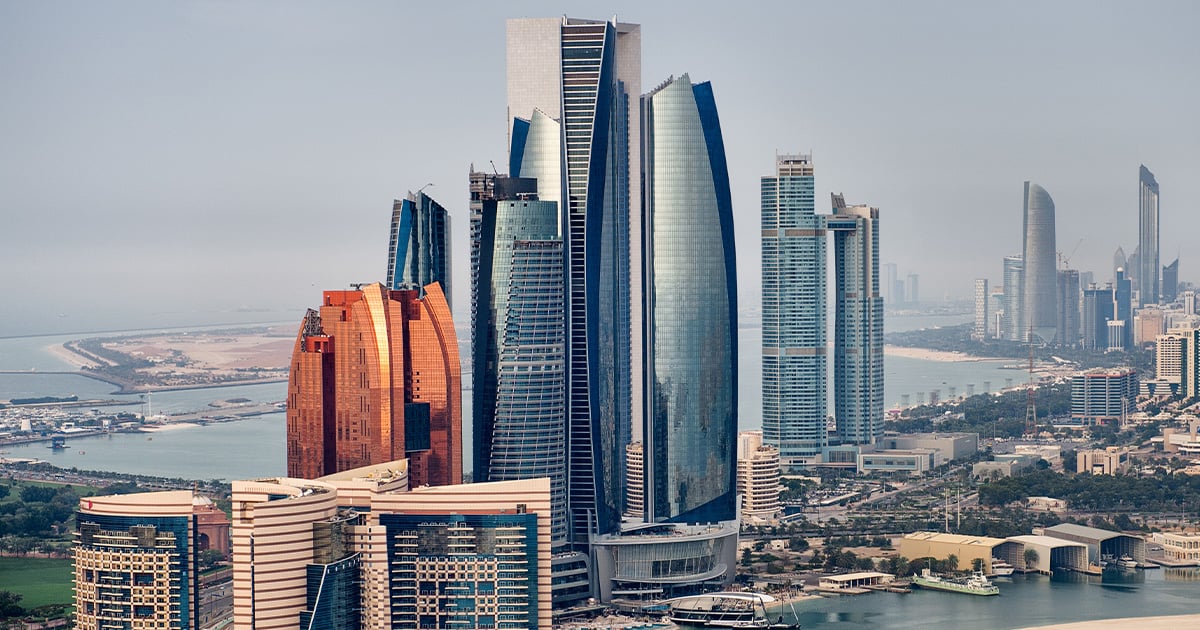

Gulf real estate is often discussed through prices, luxury towers and new districts. The more important question is why capital keeps moving into these markets. Property in the Gulf is not only a local housing story. It is linked to capital mobility, residency policy, private wealth, tourism, financial services and regional confidence. Dubai, Abu Dhabi, Doha and Riyadh each have different market structures, but all show how real estate can become a channel through which mobile capital chooses a base.
Capital mobility matters because wealthy individuals, entrepreneurs and companies increasingly organise their lives across multiple jurisdictions. They look for places that offer safety, connectivity, tax efficiency, lifestyle, education, healthcare and business access. Real estate becomes part of that decision. A property purchase may be an investment, a second home, a residency strategy, a family office base or a signal of long-term commitment to a market. In the Gulf, these motives frequently overlap.
Dubai is the clearest example. Its property market has benefited from international buyers, residency reforms, business relocation and the city’s role as a regional services hub. Real estate demand is not driven only by local wages or domestic population growth. It is shaped by inflows from South Asia, Europe, Russia, Africa and the wider Middle East. That makes the market sensitive to global wealth movements as much as local economic conditions.
Abu Dhabi’s market is linked more closely to institutional capital, government-backed development and long-term urban planning. Its real estate story is less speculative in tone and more integrated with sovereign wealth, culture, tourism, education and industrial strategy. Qatar has its own pattern, with real estate tied to national development, hospitality, financial services and post-event infrastructure use. Saudi Arabia’s real estate expansion is being driven by population scale, tourism goals, mega-projects and urban transformation.
Property as a channel for mobile wealth
The link between property and policy is essential. Residency programmes, foreign ownership rules, mortgage availability, rental regulation, land release and urban planning all affect how mobile capital behaves. A property market becomes more attractive when investors believe the rules are predictable and the city has a long-term economic role. It becomes more vulnerable when supply grows faster than real demand or when speculation dominates end-user fundamentals.
Real estate also functions as an entry point into other sectors. A family that buys property may later move business operations, schooling, wealth management and healthcare relationships into the same country. A company that relocates regional headquarters creates demand for offices, housing and services. Developers, banks, brokers, lawyers and asset managers all benefit from this clustering. Property therefore becomes part of an ecosystem rather than a standalone asset class.
There are risks. Markets linked to mobile capital can be more volatile because international buyers respond quickly to currency moves, sanctions, political instability and global liquidity. Luxury demand can mask weakness in middle-income affordability. Rapid development can create oversupply if population and job growth do not keep pace. Regulators must therefore distinguish between sustainable capital attraction and excessive financialisation of housing.
For investors, the key is to read Gulf real estate through economic function. Is the city attracting jobs, companies and long-term residents? Is infrastructure improving? Are legal systems reliable? Is supply disciplined? Are rental yields supported by real demand? A skyline alone is not a strategy. The strongest markets are those where property is tied to business formation, tourism, financial services and population growth.
Gulf real estate is linked to capital mobility because property has become one of the ways global wealth chooses jurisdiction. It reflects confidence in a city’s future, but it can also reveal excess. The region’s challenge is to keep real estate connected to productive economic activity. When property supports talent, enterprise and investment, it becomes infrastructure. When it only absorbs speculative capital, it becomes risk.
For Economic Statesman readers, the useful test is not whether the headline idea sounds attractive, but whether the underlying institutions, capital discipline and execution capacity can sustain it. Markets eventually separate durable structural change from temporary policy momentum. That is why the subject should be read through evidence, sequencing and incentives rather than through promotional language or short-term sentiment.
For Economic Statesman readers, the useful test is not whether the headline idea sounds attractive, but whether the underlying institutions, capital discipline and execution capacity can sustain it. Markets eventually separate durable structural change from temporary policy momentum. That is why the subject should be read through evidence, sequencing and incentives rather than through promotional language or short-term sentiment.
Nadia Al-Hassan
Nadia Al-Hassan focuses on the economics of AI, semiconductors, cloud infrastructure, cybersecurity and digital sovereignty.