
India Bans Lithium-Ion Battery Black Mass Exports to Secure Critical Minerals
India's new export restriction aims to retain lithium-ion battery black mass for domestic recycling and critical mineral recovery.
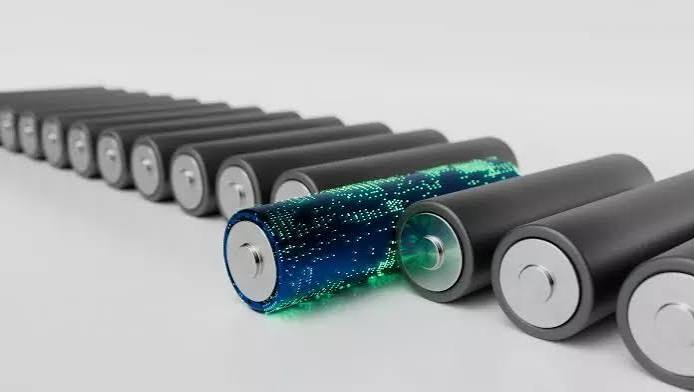

India has moved to retain valuable battery-recycling material within its borders. The government has prohibited exports of specified lithium-ion battery black mass, aiming to strengthen domestic recycling and recover critical minerals.
The Directorate General of Foreign Trade (DGFT) issued Notification No. 49/2026-27 on November 10. It changed the export classification of the specified material from “Free” to “Prohibited”.
The restriction took immediate effect and will remain in force until further orders. It applies to material classified under ITC (HS) Code 85491400.
The decision reflects India’s growing focus on securing minerals needed for electric vehicles, battery manufacturing, electronics and renewable energy.
What Is Lithium-Ion Battery Black Mass?
Black mass is a powder-like material produced by shredding used lithium-ion batteries and battery manufacturing waste.
It contains recoverable quantities of valuable minerals. These include lithium, cobalt, nickel and manganese.
Recyclers process this material to recover minerals for further industrial use. The recovered materials can support battery production and other manufacturing applications.
Black mass is therefore an important resource in the battery recycling industry. It allows manufacturers to recover materials from existing products instead of depending entirely on newly mined resources.
This process is also known as urban mining. It involves recovering valuable materials from discarded products and industrial waste.
What Exactly Does the Export Ban Cover?
The DGFT notification covers a specific category of battery waste and scrap.
It includes unsorted waste and scrap of primary cells, primary batteries and electric accumulators. It also covers spent cells, batteries and accumulators that do not contain lead, cadmium or mercury.
The notification identifies this category as lithium-ion battery black mass under ITC (HS) Code 85491400.
Previously, exports under this classification were permitted under the “Free” category. The government has now changed the status to “Prohibited”.
The restriction applies until further orders. Transitional arrangements under Paragraph 1.05 of the Foreign Trade Policy 2023 will also apply.
Importantly, the notification does not establish a blanket ban on every type of battery or battery-related material. Its scope is limited to the specified classification.
Why India Wants More Battery Waste Processed Domestically
India’s demand for lithium-ion batteries is increasing across several industries.
Electric vehicles, consumer electronics and energy storage systems require battery materials. Solar and renewable energy projects also depend on storage technologies.
However, India remains dependent on imports for several critical minerals. This creates supply-chain risks for industries that need reliable access to raw materials.
Domestic recycling offers another source of mineral supply. It can recover valuable materials from discarded batteries and manufacturing waste.
The government says some domestically generated black mass has been exported, while Indian recyclers have sometimes imported material to meet their requirements.
This creates a supply mismatch. Domestic recycling facilities need sufficient raw material to operate efficiently.
The export restriction aims to address that problem by retaining the specified material within India.
₹1,500 Crore Scheme Supports Critical Mineral Recycling
The export restriction complements the government’s ₹1,500 crore incentive scheme for critical mineral recycling.
The Union Cabinet approved the scheme in September 2025. It aims to develop domestic capacity for recovering and processing critical minerals from secondary sources.
These sources include battery waste and electronic waste.
The scheme is intended to encourage investment in recycling facilities and mineral recovery technologies. Retaining black mass domestically could improve access to raw material for companies developing these facilities.
However, the export ban alone cannot create a competitive recycling industry. Companies will still need suitable processing technology, skilled workers, reliable collection systems and environmental clearances.
The government will also need to support the development of organised battery-waste collection networks.
Implications for Battery Recyclers and Manufacturers
Domestic recyclers could become the immediate beneficiaries of the policy change.
Greater availability of black mass may improve their access to processing material. It could also encourage companies to expand recycling and refining capacity.
Battery manufacturers may benefit over time if domestic recyclers can supply recovered minerals at competitive prices and consistent quality.
The policy could also create opportunities for businesses involved in battery collection, sorting, transportation and mineral processing.
However, the actual impact will depend on how much material becomes available through formal recycling channels.
Companies must also consider the cost of processing. Recovering lithium, cobalt and nickel requires specialised technology and investment.
The availability of raw material does not automatically guarantee commercially viable mineral recovery.
The Collection and Processing Challenge
India’s battery recycling ambitions face challenges beyond exports.
A substantial volume of used batteries enters informal collection and trading networks. This can make it difficult to track waste and ensure proper treatment.
Recycling companies need a dependable supply of used batteries and manufacturing scrap. They also require systems to collect, sort and transport hazardous material safely.
Processing capacity must expand alongside collection infrastructure. Otherwise, retaining more black mass within the country may not translate into higher mineral recovery.
Environmental compliance is another important consideration. Battery recycling involves chemical processes that require proper waste management and pollution controls.
The government will need to ensure that additional domestic processing takes place through compliant facilities.
A Wider Push to Build Domestic Critical Mineral Supply Chains
India’s latest decision is part of a broader strategy to reduce dependence on imported critical minerals.
The government has been supporting mineral exploration, processing, recycling and domestic manufacturing through different policy initiatives.
The National Critical Mineral Mission provides a wider framework for strengthening these capabilities.
The objective is to build supply chains that support electric mobility, electronics, renewable energy and advanced manufacturing.
Battery recycling can contribute to this goal by recovering minerals already present in products and industrial waste.
The export restriction is therefore a supply-chain measure, not simply a trade control.
Its effectiveness will depend on whether domestic companies can turn retained battery waste into usable industrial materials.
India’s black mass export prohibition gives local recyclers greater access to a strategically important resource. But the long-term outcome will depend on investment, technology, collection systems and processing efficiency. Keeping critical minerals within the country is only the first step. Building a competitive recycling industry will determine whether the policy delivers lasting benefits.
Julian Reed
Julian Reed covers monetary policy, central-bank communication, inflation targeting and the wider financial signals that move markets.