What the World Bank Does and Why Its Role Still Matters
A source-led Economic Statesman explainer on what the world bank does and why its role still matters, written for readers tracking world economy, policy, markets and capital.
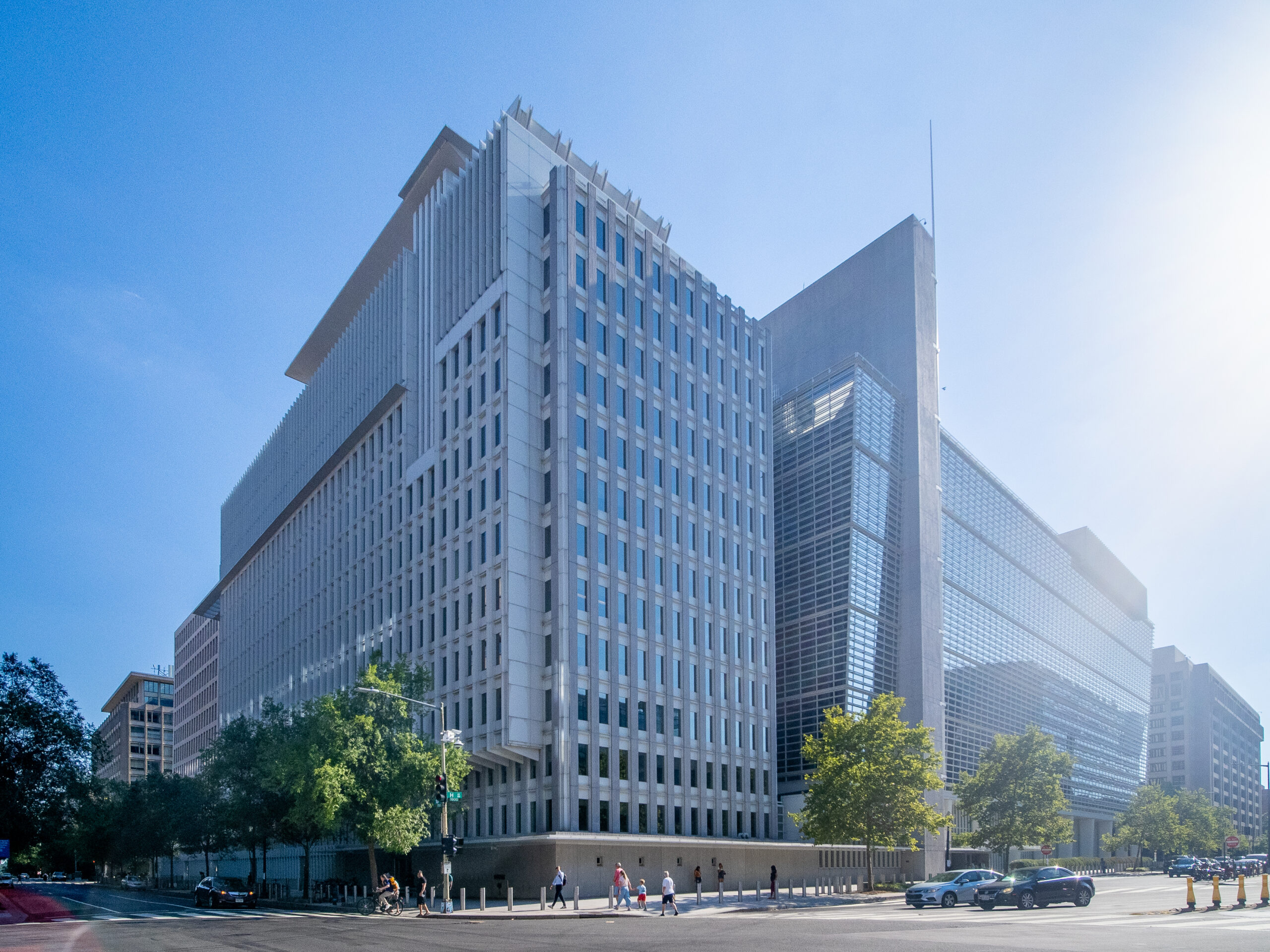

The World Bank is often placed beside the IMF in public discussion, but its role is different. Where the IMF is focused on macroeconomic stability and balance-of-payments pressure, the World Bank is focused on development, poverty reduction and long-term capacity. It finances projects, provides policy advice and supports reforms designed to improve the conditions under which economies can grow.
Its work can appear less dramatic because it is not always tied to immediate crisis. A road, school system, electricity network or public-health programme does not move markets in the way a central-bank decision does. Yet these investments shape the productive base of an economy. Development is not only about income; it is about whether people, firms and institutions have the systems required to participate in growth.
The World Bank’s financing helps governments undertake projects that may be too large, too long-term or too complex for ordinary market borrowing. It also brings procurement standards, safeguards and technical expertise. In the best cases, the money is only one part of the value. The institution helps design the project so it can deliver measurable public benefit rather than becoming another line in the debt stock.
The bank’s role has become more important as countries face overlapping needs. Many developing economies must expand infrastructure, adapt to climate risk, improve education, formalise employment, digitise public services and maintain debt sustainability at the same time. Private capital can help, but it often needs public structures and risk reduction before it enters at scale.
There is also a strategic dimension. Development finance now sits in a world of geopolitical competition. Infrastructure, ports, digital networks and energy systems can influence alliances and market access. The World Bank’s challenge is to support development in a way that strengthens national capacity and transparency rather than creating dependency or low-quality debt.
The test is implementation
The difficulty with development work is not only raising money. It is execution. Projects can be delayed by land issues, weak procurement, poor maintenance, local politics or limited administrative capacity. A well-designed loan can still disappoint if the institutions receiving it cannot implement effectively. This is why the bank invests heavily in technical assistance and policy reform alongside financing.
Measuring success is equally complex. A private investor may judge a project by cash return. A development institution must consider wider gains: lower transport costs, improved learning outcomes, better health, higher resilience or increased access to electricity. These benefits may emerge over years, and they may not appear neatly in one ministry’s budget.
The World Bank is not beyond criticism. Some argue that development projects can be too bureaucratic, too slow or too shaped by donor priorities. Others argue that standards and safeguards are necessary precisely because development money carries public consequences. The right assessment depends on whether the institution improves the quality of investment, not simply whether it increases the quantity of lending.
The bank’s work also influences private-sector confidence. When public systems improve, private investment becomes easier. Better roads reduce logistics costs; reliable electricity allows factories to operate; land and registry reform can unlock credit; education improves labour quality. These gains may not be branded as market reforms, but they change the economics of investing in a country.
Data is another part of its influence. Development requires measurement: poverty, learning outcomes, infrastructure gaps, health systems, public spending and climate exposure. Countries with better data can target policy more accurately and persuade investors with more confidence. The World Bank’s research and technical work therefore helps create the informational infrastructure of development.
The institution’s future relevance will depend on speed and scale. Developing countries often argue that financing is too slow or too small relative to climate and infrastructure needs. The bank must balance prudence with urgency. If it can mobilise more capital while maintaining standards, its role will remain central. If it becomes too slow, alternative lenders and bilateral arrangements will fill the space.
The operational detail matters because international economic signals are uneven. A policy that looks stabilising in one country can create stress in another through capital flows, import prices or refinancing costs. A supply-chain adjustment that improves resilience for a multinational firm can raise costs for consumers. The global economy is not one smooth machine; it is a set of linked systems in which pressure moves through the weakest channel first.
Readers should also distinguish a cyclical movement from a structural change. Cycles can reverse when demand improves, inventories normalise or interest rates move. Structural changes alter the rules under which decisions are made. They change where capital is comfortable, which institutions are trusted, which routes are secure and which sectors receive state support. The strongest analysis begins by asking which kind of change is taking place.
For Economic Statesman readers, the World Bank matters because growth depends on foundations. Markets reward countries that can move goods, educate workers, collect taxes, provide reliable energy and manage climate risk. The World Bank’s role is to help build those foundations. Its influence is visible not in daily market noise, but in the long arc of whether economies become more capable.
Victor Ames
Victor Ames writes on market structure, capital flows, investment cycles and the way financial conditions transmit into the real economy for Economic Statesman.