Why Supply Chains Are Moving From Efficiency to Resilience
Global supply chains are being redesigned around resilience after years of disruption exposed the limits of pure efficiency.
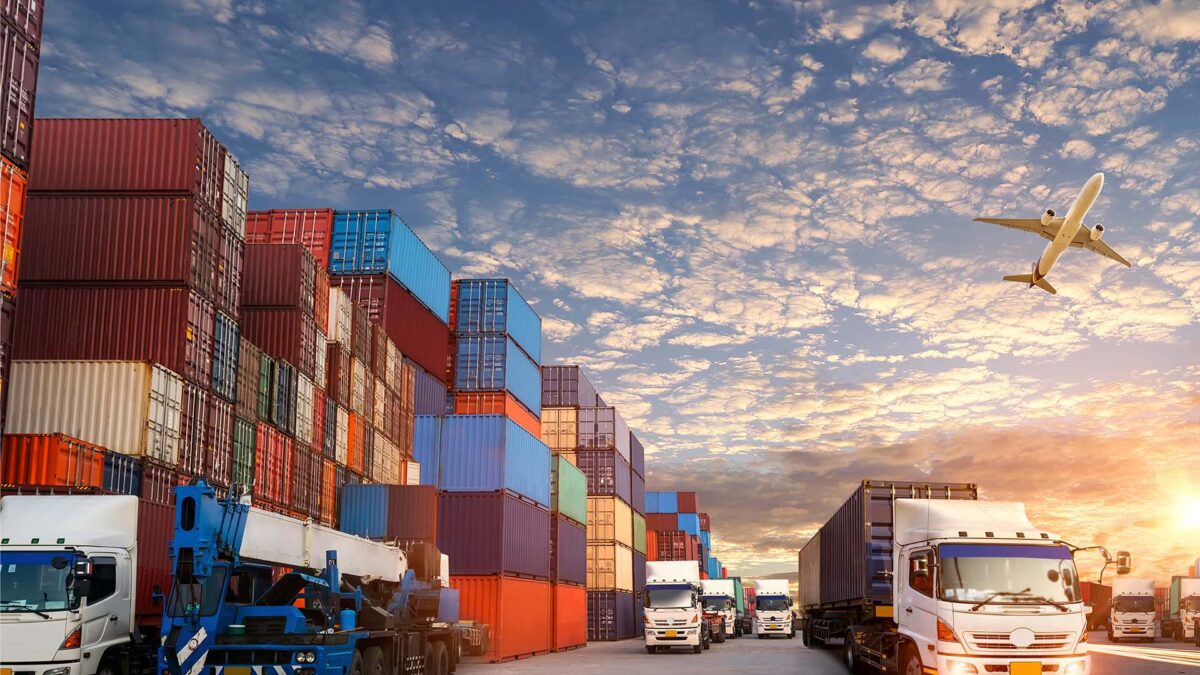

For three decades, global supply chains were built around efficiency. Companies searched for the lowest-cost production base, reduced inventories, concentrated suppliers and relied on logistics systems that were assumed to be predictable. That model delivered lower prices and wider product availability, but it also created hidden fragility. The pandemic, port congestion, geopolitical tensions, sanctions, tariffs, climate disruptions and Red Sea shipping pressures all exposed a central weakness: a supply chain optimised only for cost may fail when the world becomes less predictable.
The new corporate language is resilience. Firms still care about cost, but they now ask additional questions. Can a supplier continue operating during a crisis? Is the route vulnerable to conflict or political pressure? Are critical inputs concentrated in one country? Can inventory buffers protect production? Are customs systems reliable? Does regulation require supply-chain transparency? These questions are no longer confined to operations teams. They now sit with boards, finance chiefs and policy advisers.
The shift does not mean globalisation is ending. Most companies cannot simply recreate entire supply chains at home. Modern production depends on specialised ecosystems, skilled suppliers, intermediate goods and scale. What is changing is the preference for optionality. Companies want multiple suppliers, alternative routes, regional buffers and better visibility. The goal is not to abandon efficiency, but to avoid being trapped by it.
This is why strategies such as China+1, nearshoring, friend-shoring and multi-sourcing have gained attention. Each aims to reduce dependence on a single geography or route. But these strategies are more complicated than they sound. Moving final assembly may not reduce dependence if upstream components still come from the same place. Nearshoring may reduce transport risk but increase labour or compliance costs. Friend-shoring may satisfy policymakers but limit access to the most efficient suppliers.
The end of cost-only supply chain thinking
Inventory management is also being rethought. Just-in-time systems helped reduce working capital and warehouse costs, but they left companies vulnerable when transport networks broke down. Some firms now hold more safety stock for critical inputs. That improves resilience but ties up capital and can reduce margins. Supply-chain resilience is therefore a financial decision as much as an operational one. The cost of disruption must be weighed against the cost of preparation.
Governments are accelerating the shift. Industrial policy, export controls, sanctions, subsidies and local-content rules are changing where companies invest. Strategic sectors such as semiconductors, pharmaceuticals, energy equipment, food, defence and critical minerals are being treated as national-security concerns. When governments intervene, supply chains become political. Companies must then design networks that satisfy both commercial efficiency and policy constraints.
Logistics data has become more valuable in this environment. Firms need to know not only where goods are produced, but how they move, which ports they pass through, which suppliers sit upstream and which disruptions could cascade through the network. Visibility allows earlier decisions. A company that understands its second- and third-tier suppliers can respond faster than one that only sees direct vendors.
Resilience has limits. Redundancy costs money. Smaller suppliers may not be able to meet compliance demands. Consumers may resist higher prices. Investors may question lower margins. The challenge is to identify which parts of the chain require resilience and which can still be optimised for cost. Not every component needs duplication. Critical inputs, however, need contingency planning.
Supply chains are moving from efficiency to resilience because the global economy is less forgiving than it once appeared. The future model will not reject efficiency; it will price risk more honestly. The strongest companies will be those that know where they are exposed, where they can diversify and where they must accept cost in exchange for continuity. In a fragmented world, reliability has become a competitive advantage.
For Economic Statesman readers, the useful test is not whether the headline idea sounds attractive, but whether the underlying institutions, capital discipline and execution capacity can sustain it. Markets eventually separate durable structural change from temporary policy momentum. That is why the subject should be read through evidence, sequencing and incentives rather than through promotional language or short-term sentiment.
For Economic Statesman readers, the useful test is not whether the headline idea sounds attractive, but whether the underlying institutions, capital discipline and execution capacity can sustain it. Markets eventually separate durable structural change from temporary policy momentum. That is why the subject should be read through evidence, sequencing and incentives rather than through promotional language or short-term sentiment.
Anika Sen
Anika Sen writes on export controls, supply-chain security, strategic manufacturing and the economics of technology policy.