
India Extends Medical Devices PLI Scheme to 2035–36, Opens Fresh Applications
India has extended its medical devices PLI scheme to 2035–36, with ₹2,700 crore available to support new manufacturing investments
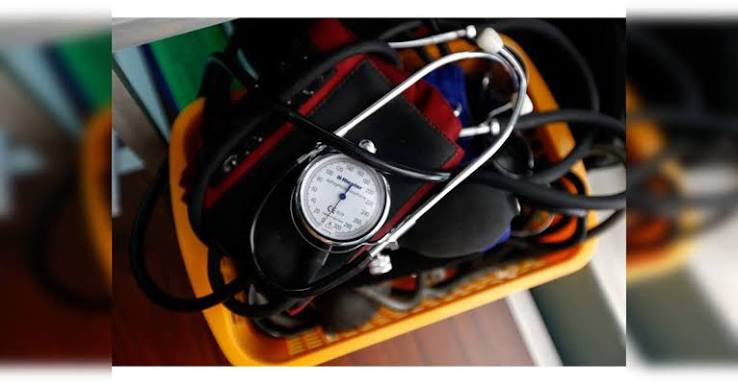

The government has relaxed investment and eligibility rules to attract manufacturers and strengthen domestic production of advanced medical equipment.
The government has extended its Production Linked Incentive (PLI) scheme for medical devices until 2035–36 and invited fresh applications from manufacturers. The revised programme aims to deepen domestic production of critical components and high-end medical equipment. It also seeks to make the scheme more accessible by reducing investment requirements and removing the minimum sales threshold for claiming incentives.
The Department of Pharmaceuticals announced the changes on 10 November 2026. Around ₹2,700 crore remains available under the scheme. The government plans to use this allocation to attract fresh investment, strengthen domestic supply chains and reduce dependence on imported medical technology.
Government Extends the Scheme by Eight Years
The medical devices PLI scheme was launched in 2020–21 to encourage domestic manufacturing. The government has now extended its tenure until the financial year 2035–36.
The extension gives manufacturers a longer investment horizon. Companies will also get three years to establish manufacturing facilities under the revised framework.
The government has invited fresh applications through an online portal. According to the Department of Pharmaceuticals, the portal was expected to become operational within 10 days of the announcement.
The revised guidelines also allow companies to submit multiple applications across one or more eligible manufacturing segments. The application window will remain open continuously for an extended period.
These changes aim to attract both existing manufacturers and new investors. They also give companies greater flexibility when planning production facilities and investment commitments.
Four Manufacturing Segments Receive Incentive Support
The revised scheme divides eligible manufacturing activities into four target segments. Each segment focuses on a different part of the medical technology supply chain.
The first segment covers medical consumables, disposables and implants. The second focuses on critical components used in medical devices.
The third segment targets high-end medical devices where domestic manufacturing remains at an early stage. The fourth covers advanced equipment that companies currently assemble in India but do not manufacture fully.
The incentive structure will vary across these segments. The government has proposed average tapering incentive rates of around 5% for the first segment, 9% for the second and third segments, and 6% for the fourth.
This structure places greater support on critical components and advanced equipment. It also encourages companies to move beyond basic assembly and develop deeper manufacturing capabilities within India.
Relaxed Rules Aim to Attract More Investors
The government has removed the minimum sales threshold that manufacturers previously needed to meet to claim incentives. It has also reduced the minimum investment requirement.
Business Standard reported that the earlier minimum investment requirement stood at ₹180 crore. The revised framework lowers this requirement, although the official government announcement did not specify the new threshold.
The changes address some of the restrictions that manufacturers faced under the first phase of the programme. Earlier timelines and eligibility conditions could make it difficult for companies to establish facilities and begin commercial production.
The new three-year setup period provides additional time for project execution. The removal of the sales threshold may also help companies that need longer to scale production.
For smaller manufacturers and component suppliers, easier entry conditions could create new opportunities. The government’s focus on critical components may also support micro, small and medium enterprises that supply parts to larger medical technology companies.
More Than 60 Medical Devices Already Manufactured in India
The first phase of the scheme has supported domestic manufacturing of more than 60 high-end medical devices and components. These include X-ray tubes and detectors, 1.5-tesla MRI machines, CT scanners, mammography equipment, linear accelerators, cardiac and orthopaedic implants, cath labs and dialysers.
The Department of Pharmaceuticals has reported production worth more than ₹16,000 crore under the programme.
This progress shows that India has started building manufacturing capacity across several medical technology categories. However, the next phase aims to expand production into more advanced equipment and critical components.
The government has identified products such as 3T MRI machines, PET-CT scanners, ultrasound probes and consoles, and high-throughput in-vitro diagnostic analysers as priority areas. These products are not currently manufactured domestically at the required level.
The policy aims to improve local production capabilities and reduce reliance on imported technology.
Critical Components Become a Key Manufacturing Priority
Medical devices depend on specialised components, precision engineering and advanced technology. Domestic assembly alone does not create a complete manufacturing ecosystem.
The revised scheme therefore places greater emphasis on critical component manufacturing and value-chain integration. This could encourage companies to develop local suppliers and expand technical capabilities.
A stronger domestic component base may also improve supply-chain resilience. Manufacturers could face fewer disruptions if they source more parts locally rather than depending heavily on overseas suppliers.
The approach may create opportunities for engineering firms, electronics manufacturers and specialised component suppliers. It could also support technology partnerships and skill development in the medical technology sector.
However, manufacturers will still need to meet strict quality and regulatory requirements. Medical devices must maintain safety, reliability and performance standards before reaching hospitals and healthcare providers.
What the Extension Means for India’s Medical Technology Industry
The extended scheme could influence investment decisions across India’s medical technology sector. A longer policy period and relaxed eligibility rules may encourage companies to establish new facilities or expand existing operations.
Domestic manufacturing could also improve competition in the market. Greater local production may help reduce costs over time, although the final impact on device prices will depend on manufacturing efficiency, component availability and market competition.
The initiative also has implications for India’s export ambitions. Stronger domestic capabilities could help manufacturers compete in international markets, particularly in products where the country can build cost and production advantages.
Still, policy incentives alone cannot guarantee rapid growth. Manufacturers will need access to advanced technology, skilled workers, research capabilities and reliable suppliers. Consistent regulatory processes will also remain important.
Implementation Will Determine the Scheme’s Impact
The extension of the medical devices PLI scheme marks another step in India’s effort to strengthen domestic manufacturing. The revised rules address investment barriers and provide manufacturers with more time to establish production facilities.
The remaining ₹2,700 crore allocation creates an opportunity to attract fresh projects. The focus on critical components and advanced equipment could also help India move towards deeper manufacturing rather than relying mainly on assembly.
The real test will be whether the revised framework converts investor interest into operational factories, local component production and commercially competitive products. If implementation delivers these outcomes, the scheme could strengthen India’s medical technology ecosystem and reduce its dependence on imported equipment over the coming decade.
Samir Kapoor
Samir Kapoor covers the global economy, cross-border capital, growth signals and the institutions shaping economic change.