How Free Trade Agreements Shape Investment Flows
Free trade agreements are not only about tariffs; they influence investment decisions, supply-chain design and corporate market access.
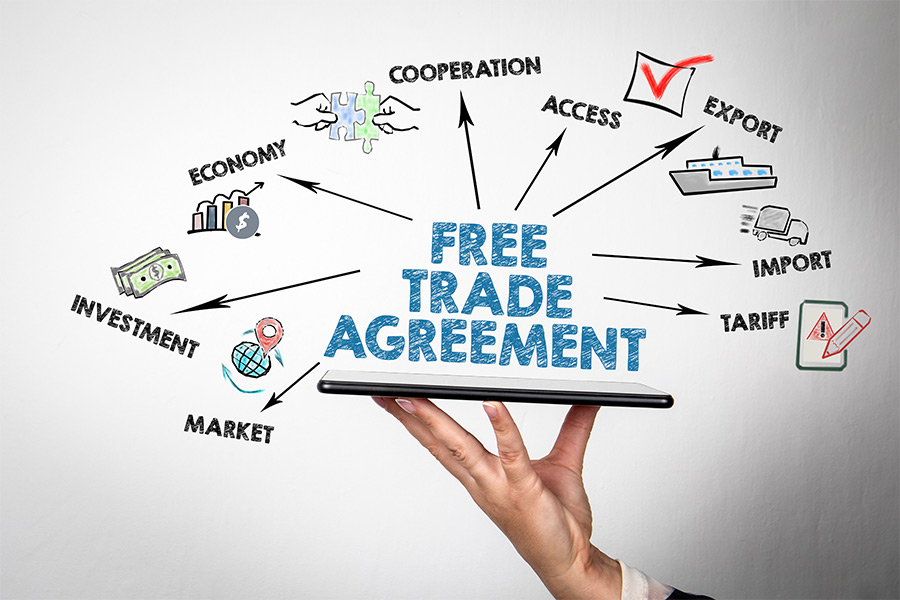

Free trade agreements are often judged by tariff cuts, but their effect on investment can be just as important. The subject is often treated as a technical issue inside trade departments, but it has become part of the strategic economy. Companies now operate in a world where tariffs, political distance, shipping disruption, industrial policy and demand shifts can change the value of an entire production network. That is why Economic Statesman reads this issue not as a narrow logistics matter, but as a signal of how global commerce is being reorganised.
The underlying mechanism is straightforward but powerful. When an agreement clarifies market access, rules of origin, services treatment and dispute procedures, it changes the calculation behind factories, logistics hubs and regional headquarters. When that mechanism changes, the effects spread beyond exporters. They reach consumers through prices, manufacturers through input costs, governments through tax receipts and investors through earnings expectations. Trade is not a separate layer of the economy. It is the operating system through which production, capital and demand are connected.
The old assumption was that global supply chains would keep deepening as long as companies could reduce cost and governments avoided major disruption. That assumption has weakened. The pandemic showed how quickly logistics can stall. Strategic rivalry has made technology and industrial inputs more sensitive. The war in Ukraine and Red Sea disruptions reminded companies that shipping routes carry geopolitical risk. Climate shocks have added another layer of uncertainty to ports, farms and transport networks.
For companies, the practical implication is clear. Companies use agreements to decide where to place production, how to qualify for preferential access and whether a country can serve as a platform for wider exports. The best firms are not simply moving production from one country to another. They are mapping dependencies, testing alternative routes, building supplier visibility and asking whether capital expenditure still makes sense under new policy conditions. The conversation has moved from procurement cost to enterprise risk.
The structural reading
Governments also have a larger role. Governments negotiate trade agreements to attract investors, deepen value chains and signal that the country is committed to predictable commercial rules. Trade policy now intersects with national security, climate policy, labour standards and industrial development. This can produce more resilient systems, but it can also raise costs and fragment markets if policy becomes too defensive. The balance between openness and control is becoming one of the defining questions of the global economy.
The risk is that resilience becomes a slogan. Not every agreement produces investment; weak implementation, complex rules of origin or poor infrastructure can reduce the value of formal market access. A company can announce diversification without reducing real dependence. A government can subsidise capacity without building competitiveness. A port can expand physically while customs systems remain slow. Resilience requires evidence: alternative suppliers that actually work, infrastructure that clears goods quickly, data that reveals bottlenecks and capital discipline that avoids overbuilding.
Investors should read trade patterns as early economic signals. Changes in import shares, shipping distances, port throughput, customs delays or regional production flows can reveal how companies are adapting before the results appear in earnings. Trade data can show where competitiveness is moving, where inflation pressure may emerge and where policy incentives are beginning to redirect capital.
Free trade agreements shape capital because investors follow credible access, not just low tariffs. The world is not abandoning trade. It is rewriting the terms under which trade is considered safe, strategic and investable. That shift will reward countries and companies that can combine openness with reliability. It will punish those that confuse cheapness with resilience or policy ambition with execution.
For Economic Statesman readers, the useful test is not whether the headline idea sounds attractive, but whether the underlying institutions, capital discipline and execution capacity can sustain it. Markets eventually separate durable structural change from temporary policy momentum. That is why the subject should be read through evidence, sequencing and incentives rather than through promotional language or short-term sentiment.
For Economic Statesman readers, the useful test is not whether the headline idea sounds attractive, but whether the underlying institutions, capital discipline and execution capacity can sustain it. Markets eventually separate durable structural change from temporary policy momentum. That is why the subject should be read through evidence, sequencing and incentives rather than through promotional language or short-term sentiment.
Thomas Keane
Thomas Keane focuses on public finance, policy credibility, institutional capacity and how governments manage economic risk.