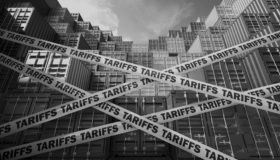
How Inflation Travels From Commodity Markets to Households
A source-led Economic Statesman explainer on how inflation travels from commodity markets to households, written for readers tracking world economy, policy, markets and capital.


Inflation often feels domestic because households meet it at the supermarket, fuel station or electricity bill. Yet many price pressures begin far from the consumer. Oil, gas, wheat, metals, shipping and fertiliser markets set costs that move through production chains before appearing in household budgets. Commodity inflation is not simply a headline for traders. It is one of the main routes by which global stress becomes local discomfort.
The first stage is input cost. Energy is used to manufacture, refrigerate, transport and package goods. Metals enter construction, machinery and electronics. Agricultural commodities feed into food processing and animal feed. When these prices rise, producers face a choice: absorb lower margins, reduce output, or pass the cost onward. In competitive sectors, the pass-through may be delayed. In essential goods, it can arrive quickly.
Transport is the second channel. Most goods carry an embedded logistics cost. Higher fuel prices raise the cost of trucking, shipping and air freight. Port delays, insurance costs and route changes can add further pressure. Even a product with stable factory costs can become more expensive if the journey to market becomes longer, riskier or more fuel-intensive.
Exchange rates can amplify the effect. Many commodities are priced in dollars. If a country’s currency weakens against the dollar, the local price of imports can rise even when the global commodity price is unchanged. This is why commodity shocks are often harsher for economies with currency pressure or limited foreign-exchange reserves.
The household sees the final price, but the full chain is longer. A rise in natural gas can affect fertiliser costs, which can affect farm economics, which can affect food processors, which can affect retail prices. A rise in oil can affect packaging, transport and consumer fuel at the same time. The inflation is not one item; it is a network effect.
Why the pass-through differs across countries
Commodity inflation does not arrive evenly. Countries with domestic energy production, strong currencies, diversified import sources and efficient logistics can absorb more pressure. Countries dependent on imported fuel and food have less protection. Government policy also matters. Tax structure, subsidies, price caps and strategic reserves can all change the speed and visibility of pass-through.
Subsidies can soften the immediate blow, but they are not free. If poorly targeted, they transfer commodity pressure from household bills to the public budget. That may be justified during a temporary shock, but sustained subsidies can strain fiscal balances and reduce room for investment. The political problem is that removing support often becomes harder than introducing it.
Central banks face a difficult decision when commodity-driven inflation rises. Raising interest rates cannot produce more oil, wheat or copper. But if central banks do nothing, households and companies may begin to expect higher inflation to continue. Wage demands, pricing behaviour and contract negotiations can then turn a commodity shock into broader inflation. The policy response is therefore about expectations as much as the original price move.
The timing of pass-through depends on contracts. Utilities, airlines, retailers and manufacturers may hedge prices or operate under fixed supply agreements. This can delay the impact of a commodity move. When contracts reset, the price pressure can arrive suddenly. Households may therefore feel inflation months after the original market shock, which makes the cause harder to recognise.
Expectations can magnify the process. If businesses believe input costs will keep rising, they may raise prices pre-emptively. If workers believe purchasing power will continue to fall, wage demands rise. Once expectations shift, inflation becomes less about the original commodity and more about behaviour. Central banks worry about this second round because it is harder to reverse than the first shock.
The distributional impact is unequal. Lower-income households spend a larger share of income on food, fuel and basic utilities. Commodity inflation therefore acts like a regressive pressure, even when the source is global. Governments that respond with broad support may spend too much; governments that respond too narrowly may miss households under stress. Policy design matters as much as the size of relief.
The operational detail matters because international economic signals are uneven. A policy that looks stabilising in one country can create stress in another through capital flows, import prices or refinancing costs. A supply-chain adjustment that improves resilience for a multinational firm can raise costs for consumers. The global economy is not one smooth machine; it is a set of linked systems in which pressure moves through the weakest channel first.
Readers should also distinguish a cyclical movement from a structural change. Cycles can reverse when demand improves, inventories normalise or interest rates move. Structural changes alter the rules under which decisions are made. They change where capital is comfortable, which institutions are trusted, which routes are secure and which sectors receive state support. The strongest analysis begins by asking which kind of change is taking place.
For readers, the key is to trace inflation backward. Ask which commodity moved, whether the currency intensified the move, which sectors rely on that input, and whether policy is absorbing or passing the cost onward. Household inflation is often the last page of a story written earlier in commodity markets, shipping lanes, currency desks and government budgets.
Thomas Keane
Thomas Keane focuses on public finance, policy credibility, institutional capacity and how governments manage economic risk.