Why Tariffs Have Returned to Global Politics
Tariffs have returned because governments are using trade policy to address security, industrial strategy and domestic political pressure.
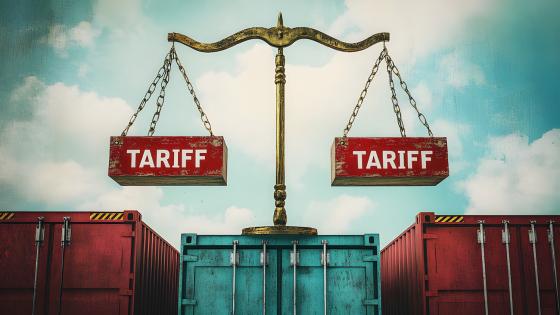

Tariffs were supposed to be a fading instrument. After decades of trade liberalisation, many policymakers treated them as a costly remnant of an older economic order. Yet tariffs have returned to the centre of global politics. They are being used not only to protect industries but to bargain, punish, signal resolve and reshape supply chains. Their revival tells us that trade policy has become inseparable from strategic competition and domestic political economy.
The appeal of tariffs is directness. A government can announce a duty, target a country or sector, and show domestic voters that it is acting. Unlike industrial policy, which requires years of investment, tariffs can be imposed quickly. They also create leverage in negotiations. A country may use tariffs to force market access, respond to subsidies, counter alleged dumping or push companies to relocate production. The instrument is old; the motivations have become more strategic.
The economic cost is also real. Tariffs raise the price of imported goods, and those costs are often shared between consumers, importers, retailers and foreign producers. They can protect jobs in one industry while increasing input costs for another. A tariff on steel, for example, may help domestic steelmakers but hurt manufacturers that use steel. That is why tariffs rarely remain a simple story of national protection. They redistribute costs across the economy.
The return of tariffs reflects frustration with the limits of the rules-based trading system. Governments increasingly argue that traditional trade rules did not adequately address state subsidies, forced technology transfer, strategic overcapacity or national-security concerns. Instead of waiting for multilateral reform, they act through unilateral or bilateral measures. This weakens predictability, but it also reflects a deeper political reality: trade is now judged by resilience and fairness as well as efficiency.
Companies are responding by changing their supply-chain assumptions. The cheapest sourcing location is no longer automatically the best. Firms now consider tariff exposure, rules of origin, political alignment and the risk of sudden policy shifts. A product may be redesigned, re-routed or assembled in a different country to qualify for lower duties. Trade lawyers, customs specialists and supply-chain strategists have become more important to corporate planning.
For emerging economies, tariffs create both risk and opportunity. Trade diversion can move orders away from targeted countries and towards alternative manufacturing hubs. But the opportunity is not automatic. To benefit, countries need reliable ports, customs capacity, power supply, labour skills and policy credibility. Tariffs may redirect attention; only competitiveness converts that attention into investment.
For investors, the key is not simply whether tariffs are good or bad. The better question is who has pricing power. Companies with strong brands, scarce inputs or domestic production may absorb tariff shocks better than low-margin importers. Sectors dependent on complex cross-border components may face margin pressure. Currency movements, inventory cycles and supplier contracts can delay the effect, which is why tariff risk often appears gradually before it shows up in earnings.
For companies and investors, the practical lesson is to build a political-economy map around every important market. That map should identify suppliers, customers, financing sources, technology dependencies, regulatory permissions and public-sector relationships. Economic statecraft rarely arrives as a single dramatic measure. It usually appears through licensing rules, procurement preferences, customs enforcement, investment screening, bank compliance and changes in official language.
The stronger organisations will not treat these developments as temporary interruptions. They will make them part of strategy, treasury, legal review and market-entry planning. That does not mean retreating from global business. It means understanding that in sensitive sectors, commercial advantage can disappear if political access, technology permissions or trusted supply are lost. In this environment, resilience is not a slogan; it is a form of competitiveness.
The editorial test for any claim in this area is evidence. Before publication, every reference to a tariff, sanction, export-control rule, subsidy, corridor or investment-screening measure should be checked against official releases, legal texts or institutional reports. The argument can be analytical, but the factual base must remain precise.
What to watch next
Watch rules of origin, retaliation, exemptions and the sectors chosen for protection. Tariffs on consumer goods affect inflation differently from tariffs on strategic inputs. Tariffs imposed as bargaining tools may fade after negotiation, while tariffs tied to national security can last much longer. Their return does not mean global trade is ending. It means trade is being politicised again, and companies must now treat tariff policy as a permanent variable in global strategy.
Thomas Keane
Thomas Keane focuses on public finance, policy credibility, institutional capacity and how governments manage economic risk.