
How Trade Corridors Become Instruments of Diplomacy
Trade corridors become diplomatic instruments when infrastructure, logistics and finance connect countries into strategic economic routes.
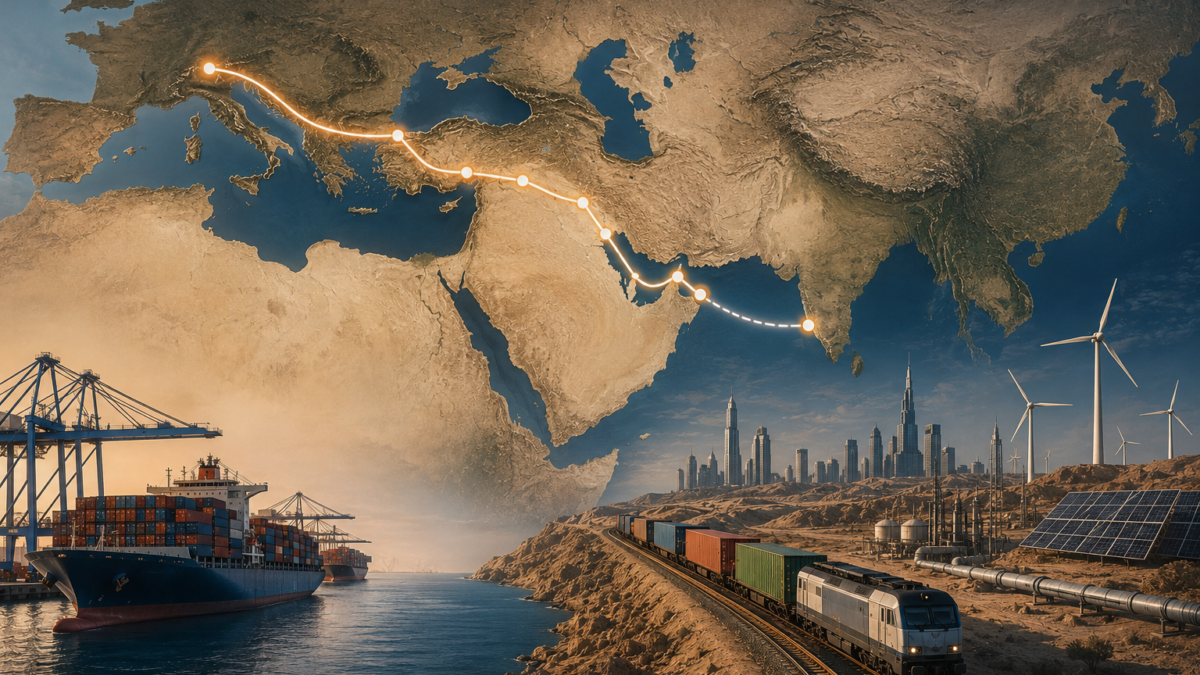

A trade corridor is more than a line on a map. It is a bundle of ports, railways, roads, customs systems, energy links, financing arrangements and political commitments. When these pieces connect markets across borders, they create economic value. When they also shift influence, reduce dependence or bind countries into long-term cooperation, trade corridors become instruments of diplomacy.
The diplomatic power of a corridor begins with geography. Countries that control ports, canals, rail junctions or energy routes often hold influence beyond their economic size. Infrastructure can shorten delivery times, lower logistics costs and redirect trade flows. It can also create dependence. If a landlocked country relies on a neighbour’s port, or if a region depends on one maritime chokepoint, the route becomes a strategic relationship as much as a commercial one.
Financing matters as much as concrete. Large corridors are rarely built by private capital alone. They often require public finance, development banks, export-credit agencies, sovereign funds or multilateral institutions. The source of financing can shape standards, procurement, governance and political alignment. A railway funded by one country, operated with another’s technology and insured by a third-party institution becomes a network of obligations and influence.
Trade corridors also carry symbolism. They show which countries want to be connected and which routes they want to bypass. A corridor can signal regional integration, strategic autonomy or geopolitical alignment. It may be designed to reduce dependence on a rival route, open access to new markets or support post-conflict reconstruction. The economic function is movement; the diplomatic function is positioning.
For businesses, corridors change market access. A manufacturer may consider a new export market once shipping times fall. A logistics firm may invest in warehousing along the route. A commodity producer may gain pricing power if it can reach multiple ports instead of one. But businesses must also understand political risk. Corridors can be delayed by border disputes, regulatory inconsistency, debt concerns, security issues or changes in government.
For host countries, the benefits depend on execution. A corridor that simply moves goods across territory may provide limited local value. A corridor that builds industrial zones, skills, services and supplier networks can support deeper development. The difference lies in complementary policy: customs reform, power supply, land-use planning, financial services and investment promotion. Infrastructure creates the possibility of growth; institutions convert it into durable gains.
The global interest in corridors has increased because supply chains are being reconsidered. Companies and governments want alternative routes that reduce exposure to chokepoints and political shocks. This gives middle powers and transit states a chance to become more important. It also increases competition among corridor visions, each backed by different sources of capital, standards and diplomatic priorities.
For companies and investors, the practical lesson is to build a political-economy map around every important market. That map should identify suppliers, customers, financing sources, technology dependencies, regulatory permissions and public-sector relationships. Economic statecraft rarely arrives as a single dramatic measure. It usually appears through licensing rules, procurement preferences, customs enforcement, investment screening, bank compliance and changes in official language.
The stronger organisations will not treat these developments as temporary interruptions. They will make them part of strategy, treasury, legal review and market-entry planning. That does not mean retreating from global business. It means understanding that in sensitive sectors, commercial advantage can disappear if political access, technology permissions or trusted supply are lost. In this environment, resilience is not a slogan; it is a form of competitiveness.
The editorial test for any claim in this area is evidence. Before publication, every reference to a tariff, sanction, export-control rule, subsidy, corridor or investment-screening measure should be checked against official releases, legal texts or institutional reports. The argument can be analytical, but the factual base must remain precise.
That is why the article should be published with live source checks rather than as a generic opinion. The topic is evergreen, but the evidence around it changes through official releases, policy documents, market data and institutional reports. Economic Statesman should keep the analysis durable while updating any current examples before publication.
What to watch next
Watch financing terms, customs harmonisation, port capacity, insurance costs and whether private companies actually use the corridor once it is built. Announcements are easy; freight volumes are harder. The most successful corridors will be those that combine political trust with commercial logic. When goods, capital and influence move along the same route, infrastructure becomes diplomacy in physical form.
Marcus Vane
Marcus Vane covers economic statecraft, sanctions, tariffs, industrial policy and the strategic use of economic power.