
India’s ₹4,371 Crore VISTAR Scheme Targets a Major Upgrade in Economic Data
India's VISTAR scheme aims to modernise official statistics through 59 proposed surveys, new economic indicators, district-level data and the eighth Economic Census.
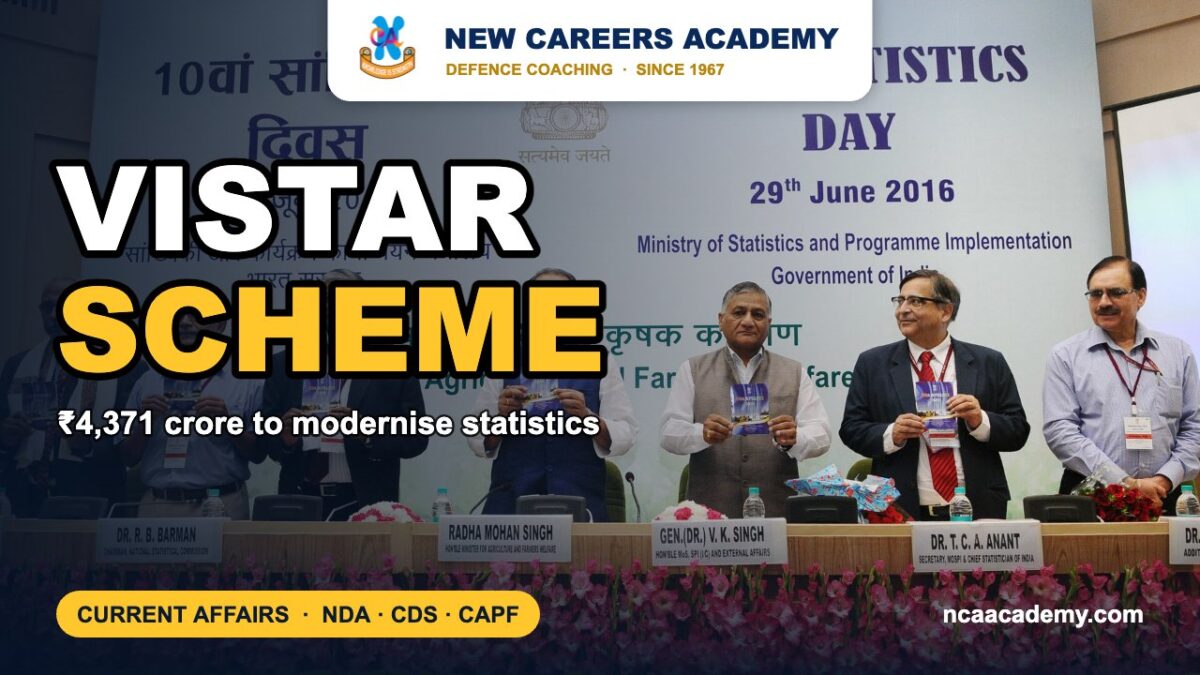

How a new government programme aims to modernise statistical infrastructure, expand surveys and improve the data used for policy and business decisions.
India’s economic decisions depend on reliable information about employment, household spending, industrial production and business activity. Yet some parts of the economy remain difficult to measure, particularly informal businesses and smaller enterprises operating beyond major urban centres.
The Union Cabinet has now approved a major programme to address these gaps. On November 4, 2026, it cleared the Viksit Bharat Initiative for Statistical Transformation, Analytics and Research (VISTAR), with an outlay of ₹4,371.10 crore for the period 2026–27 to 2030–31.
The programme aims to modernise India’s official statistical system through wider surveys, digital data collection, artificial intelligence and stronger coordination between central and state statistical agencies. It also includes the proposed eighth Economic Census, which will provide detailed information about non-farm establishments across the country.
The initiative matters because economic policy is only as effective as the information used to design it. Better data can help governments identify gaps, businesses assess markets and researchers understand changes taking place across India’s economy.
Why India Needs a Stronger Statistical System
India’s economy includes large organised companies, small enterprises, self-employed workers, household businesses and informal economic activity. Measuring these segments accurately is a complex task.
Traditional surveys provide essential information, but they can take time to conduct and process. Some economic activities may also remain underrepresented, particularly when businesses operate informally or do not maintain detailed records.
This creates challenges for policymakers. National figures may show overall growth, but governments also need to understand how employment, consumption and production differ between states, districts and cities.
The VISTAR programme is designed to improve the availability, quality and timeliness of official statistics. It brings together survey operations, state-level statistical development and the Economic Census under one central programme.
Its five-year allocation is intended to support a more integrated system rather than isolated improvements to individual surveys.
From 43 Surveys to 59: Expanding Economic Coverage
One of the most significant elements of VISTAR is the proposed expansion of the national survey programme.
The Ministry of Statistics and Programme Implementation (MoSPI) plans to conduct 59 surveys during the 16th Finance Commission cycle, compared with 43 major surveys conducted previously.
The expansion is intended to address data gaps across different sectors and provide more detailed information for public policy.
These surveys can help improve the understanding of employment, household consumption, enterprise activity and other economic conditions. More frequent and detailed information can also help policymakers identify changes before they become visible in broader national indicators.
However, the increase in survey numbers alone will not guarantee better statistics. The quality of sampling, fieldwork, response rates, validation and publication will determine whether the additional information is reliable and useful.
AI and Alternative Data Enter Official Statistics
VISTAR also introduces a stronger technology component. MoSPI plans to integrate artificial intelligence and machine learning into regular statistical workflows.
The proposed applications include data processing, validation and analysis. These technologies could help identify inconsistencies, process large datasets and improve the speed of statistical operations.
The programme also plans to use alternative data sources, including mobile phone information, retail scanner data and e-commerce records. These sources are intended to complement traditional surveys, fill information gaps and reduce the burden on respondents.
For example, retail scanner information can help researchers understand changes in purchasing patterns. E-commerce data can offer additional insight into online sales, while mobile data may help analyse selected patterns of economic activity.
However, alternative data cannot simply replace official surveys. Coverage may be uneven, and people or businesses without digital access may be underrepresented. The government will need clear standards for data quality, privacy, consent and responsible use.
Technology can improve statistical capacity, but transparent methodology and independent validation remain essential.
New Indicators Could Improve Economic Visibility
The government also plans to introduce two new statistical measures:
Headline Index of Services Production: This indicator is intended to provide a more comprehensive view of activity across the services sector. Services contribute substantially to India’s economy, but measuring output across diverse activities is difficult.
Index of Unincorporated Sector Enterprises: This measure is expected to improve the understanding of businesses operating outside the formal corporate structure. Such enterprises play an important role in employment, production and local economic activity.
These indicators could help policymakers and businesses assess changes that are not fully captured by existing industrial and economic measures.
Their usefulness will depend on the methodology, coverage and frequency of publication. The government will need to explain how the indices are constructed and how they relate to existing indicators.
Why District-Level Data Matters
Economic conditions can differ significantly across states and even between districts within the same state. National averages often hide these differences.
VISTAR includes a redesigned Support for Statistical Strengthening framework, known as SSS 2.0. It will provide financial and technical assistance to state and Union Territory governments through a deliverable-linked system.
The programme aims to improve district-level and million-plus city estimates in important surveys, including the Periodic Labour Force Survey, Household Consumption Expenditure Survey and Annual Survey of Unincorporated Sector Enterprises.
It will also support improvements in state and district GDP estimates and state-level industrial production data.
This could help governments understand where employment opportunities are growing, which districts require additional infrastructure and where economic activity remains concentrated.
For businesses, more detailed regional information can support decisions about expansion, distribution networks, staffing and investment locations.
The challenge will be ensuring that states have the trained personnel, technology and institutional capacity to produce consistent data.
The Eighth Economic Census: Bringing Smaller Businesses Into Focus
Another major component of VISTAR is the eighth Economic Census, which will be conducted by MoSPI in collaboration with state and Union Territory governments.
The census will collect information about non-farm establishments, their economic activities and the workers they employ. The planned level of detail extends down to Gram Panchayat and municipal ward levels.
This is particularly important for understanding India’s unorganised business sector. Small shops, workshops, service providers and other establishments contribute to employment and economic output, but their activity can be difficult to capture through conventional company-based reporting.
The census will also provide a baseline for developing a National Statistical Business Register. Such a register can help identify establishments and improve the design of future enterprise surveys.
More comprehensive information could eventually improve estimates of the unorganised sector’s contribution to GDP.
The exercise will require extensive coordination with state authorities. Identifying establishments, avoiding duplication and maintaining consistent records across locations will be major operational tasks.
What Better Economic Data Means for Businesses
Reliable statistics are not only important for government departments. Businesses also depend on economic information when making investment and expansion decisions.
More detailed consumption data can help companies understand customer demand. Employment statistics can help assess labour availability, while district-level output estimates can provide insight into emerging markets.
Better information about smaller enterprises may also help financial institutions understand potential borrowers and identify business segments that remain underserved.
For investors, stronger official data can improve the assessment of regional economic performance and the quality of market research.
However, the benefits will emerge gradually. Companies will need access to the published information in usable formats, while government agencies must maintain consistent definitions and transparent release schedules.
Implementation Will Determine the Results
The ₹4,371.10 crore allocation represents a major commitment to India’s statistical infrastructure. But the success of VISTAR will depend on how effectively the programme is implemented.
The government will need to ensure that surveys are conducted on schedule, data quality remains consistent and state statistical systems receive adequate support.
Privacy protection will also be important as mobile, scanner and e-commerce information becomes part of statistical analysis. Clear safeguards will be necessary to maintain public trust and prevent misuse of sensitive information.
Artificial intelligence can help improve processing and identify errors, but it should not replace methodological scrutiny or human oversight.
The programme also offers opportunities for students and researchers through internships and research proposals, potentially strengthening India’s wider statistical and analytical talent base.
VISTAR represents a shift towards treating official statistics as essential national infrastructure. Better economic data can improve policy design, make regional differences more visible and help businesses understand changing markets. The real test will be whether the programme turns its financial allocation and technology plans into accurate, timely and accessible information that decision-makers can trust.
Julian Reed
Julian Reed covers monetary policy, central-bank communication, inflation targeting and the wider financial signals that move markets.