
India Turns to Egypt to Expand Its Trade and Investment Reach Across Africa
India's upcoming business delegation to Egypt aims to expand investment and trade partnerships across startups, pharmaceuticals, fintech and manufacturing.
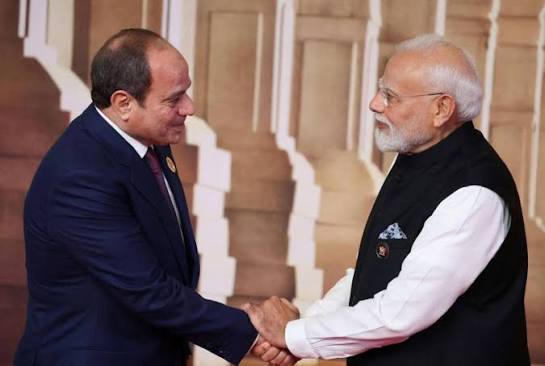

How a new business delegation and planned startup cooperation could position Egypt as a strategic gateway for Indian companies seeking opportunities in African, Arab and European markets.
India is looking beyond its traditional Gulf partnerships as it seeks to expand trade and investment links across West Asia, Africa and Europe. Egypt is emerging as an important partner in this strategy because of its location, industrial base and network of trade agreements.
Commerce and Industry Minister Piyush Goyal is scheduled to visit Cairo next week with a large Indian business delegation. The visit is expected to explore cooperation in startups, financial technology, pharmaceuticals, automobile components and infrastructure. An India–Egypt Startup Summit is also being planned.
The development reflects a broader effort to turn diplomatic relations into commercial partnerships. For Indian companies, Egypt could provide access not only to its domestic market but also to neighbouring markets across Africa, the Arab world and Southern Europe.
Why Egypt Matters to India’s Trade Strategy
Egypt occupies a strategic position between Africa, the Middle East and Europe. Its access to the Mediterranean Sea, Red Sea and Suez Canal gives it an important role in international shipping and logistics.
The country also has trade agreements with several regional and international markets. These arrangements can make Egypt an attractive location for companies seeking to manufacture products locally and export them to other destinations.
For Indian businesses, this creates an opportunity to diversify their international presence. Instead of serving every market directly from India, companies can explore production, distribution and partnerships in Egypt.
The opportunity is particularly relevant for sectors where Indian companies already have manufacturing experience, including pharmaceuticals, chemicals, engineering goods, textiles and automotive components.
Egypt is also interested in attracting Indian investment and technical expertise. Its government has identified industrial cooperation, manufacturing partnerships and export development as important areas for economic engagement.
Existing Indian Investment Provides a Foundation
The proposed visit builds on an established business presence. More than 700 Indian companies are registered in Egypt, with around 70 actively operating across different sectors. Their combined investments exceed US$5.5 billion.
Indian businesses have established operations in chemicals, energy, textiles, agriculture, pharmaceuticals, automotive-related activities and other industries.
These investments provide an existing network of commercial relationships. They also demonstrate that Indian companies are already familiar with Egypt’s business environment and industrial opportunities.
Bilateral trade has also expanded. According to the Embassy of India in Cairo, trade between the two countries reached approximately US$6.5 billion in financial year 2025–26.
India’s exports to Egypt include petroleum products, engineering goods, chemicals, cotton yarn, pharmaceuticals and buffalo meat. Imports from Egypt include petroleum products, inorganic chemicals, metallic and non-metallic compounds, and citrus fruits.
This trade relationship offers scope for diversification. Both countries can explore opportunities in higher-value manufactured products, technology services and industrial inputs rather than relying only on established commodity categories.
Startups and Fintech Could Create New Partnerships
One of the important features of the proposed visit is the planned India–Egypt Startup Summit.
India has developed a large startup ecosystem across digital payments, financial technology, software, healthcare and business services. Egypt is also working to strengthen its startup environment and attract technology investment.
Cooperation could allow companies to explore joint ventures, market access and technology partnerships.
Financial technology is another area with potential. Indian companies have experience in digital payments, financial software and technology-enabled services. Egyptian businesses could benefit from partnerships involving payment infrastructure, digital platforms and financial inclusion solutions.
However, commercial opportunities will depend on local regulation, licensing requirements, customer demand and the ability of companies to build sustainable operations.
A summit can create introductions and discussions, but long-term partnerships require investment, market research and local execution.
Pharmaceuticals and Automobile Components Offer Industrial Potential
Pharmaceuticals are among the more established areas of Indian industrial expertise. Indian manufacturers have experience in generic medicines, formulations, active pharmaceutical ingredients and healthcare products.
Egypt offers access to a significant domestic healthcare market and a potential manufacturing base for regional exports.
Cooperation could include local production, technology transfer, distribution partnerships and manufacturing agreements. Companies will need to assess product registration requirements, quality standards and regulatory approvals before entering the market.
Automobile components offer another opportunity. India’s automotive supplier ecosystem includes manufacturers of engineering components, electrical systems, precision parts and other vehicle-related products.
Egypt’s location and industrial infrastructure could support partnerships aimed at supplying local manufacturers and regional markets.
For both sectors, the commercial case will depend on production costs, local demand, logistics and the availability of reliable distribution networks.
The Suez Canal Economic Zone Adds to the Investment Case
The Suez Canal Economic Zone is an important part of Egypt’s industrial and logistics strategy.
Located around a major international shipping route, the zone is intended to attract manufacturing, logistics and industrial investment. Its proximity to ports and international trade routes can make it attractive for companies seeking export-oriented production.
Indian companies have shown interest in opportunities connected to the zone. Earlier discussions between Indian and Egyptian officials covered the possibility of an Indian industrial zone and cooperation in manufacturing.
For Indian investors, the attraction is not limited to shipping access. Industrial facilities located near logistics infrastructure can potentially reduce transportation time and improve access to overseas customers.
However, companies must evaluate land arrangements, utility access, labour availability, customs procedures and local regulations before committing capital.
The Suez Canal Economic Zone should therefore be viewed as a potential investment platform, not an automatic guarantee of lower costs or easier market access.
Egypt’s Trade Agreements Could Open Wider Markets
Egypt’s appeal for Indian companies extends beyond its domestic economy.
Its network of trade agreements provides preferential access to several markets in Africa, the Arab region and Europe. Companies may be able to use Egypt as a base for manufacturing and distribution, subject to the relevant rules of origin and product-specific trade requirements.
This could be particularly useful for Indian businesses seeking to expand exports without establishing separate production facilities in every market.
For example, a manufacturer could assess whether producing or assembling selected goods in Egypt would improve its ability to serve regional customers. The decision would depend on tariff treatment, local content rules, logistics costs and regulatory requirements.
Such a strategy requires careful planning. Simply routing goods through Egypt does not automatically qualify them for preferential trade treatment. Companies must comply with the applicable origin requirements.
Connectivity and Regional Supply Chains
Egypt’s location also gives it relevance to wider connectivity discussions linking India with the Middle East and Europe.
The India–Middle East–Europe Economic Corridor has been discussed as a broader connectivity initiative. Egypt has expressed interest in regional infrastructure and trade links that could strengthen its role in international commerce.
The country’s ports and access to the Suez Canal already make it an important logistics location. Additional investment in industrial infrastructure, transport and trade facilitation could strengthen its position further.
For Indian companies, connectivity matters because market access depends on more than tariffs. Shipping schedules, port capacity, customs procedures and the reliability of transport networks all influence the cost of doing business.
Regional uncertainty also needs to be considered. Disruptions around important maritime routes can affect shipping costs and delivery schedules, even when companies are operating far from the immediate source of tension.
What Businesses Should Evaluate Before Investing
The proposed delegation may create new contacts, but companies should approach Egypt with a clear commercial strategy.
Before entering the market, businesses should examine:
- Market demand: Whether Egyptian customers and regional buyers have sufficient demand for the product or service.
- Regulatory requirements: Licensing, product registration, tax rules and foreign investment regulations.
- Local partnerships: The availability of distributors, suppliers, manufacturers and reliable business partners.
- Trade access: Whether the intended export markets offer preferential treatment under applicable agreements.
- Operating costs: Land, utilities, labour, financing, logistics and compliance expenses.
- Currency and payment risks: Exchange-rate movements, payment terms and the availability of suitable financial arrangements.
These factors will determine whether an opportunity can develop into a commercially viable project.
The Indian business community also needs to distinguish between preliminary investment interest, signed agreements and operational projects. Announcements made during official visits do not necessarily translate into immediate capital deployment.
From Diplomatic Engagement to Commercial Results
The upcoming visit is part of a wider effort to strengthen India–Egypt relations through business and institutional cooperation. It is expected to be followed by further high-level engagement, including visits by Egyptian officials to India and additional diplomatic discussions.
The two countries have also been strengthening their business institutions. In September 2026, the Cairo Chamber of Commerce and the Federation of Indian Chambers of Commerce and Industry signed a memorandum of understanding to establish a joint Egyptian–Indian Chamber of Commerce.
Such institutional links can help businesses identify partners, exchange market information and address practical trade barriers.
The opportunity is clear, but the outcome will depend on execution. Egypt offers Indian companies a combination of location, industrial infrastructure and access to regional markets. India, in turn, brings manufacturing expertise, technology capabilities and an established business presence.
The next phase of the relationship will be measured by the projects that emerge from these discussions. If both sides can convert business introductions into production partnerships, investment commitments and sustained trade, Egypt could become a more important platform for India’s international expansion. The larger opportunity is not simply to increase bilateral trade, but to build a commercial relationship that connects Indian businesses with markets across Africa, the Arab world and Europe.
Nadia Al-Hassan
Nadia Al-Hassan focuses on the economics of AI, semiconductors, cloud infrastructure, cybersecurity and digital sovereignty.