
India’s Services Sector Hits Four-Month Growth High, but Hiring Remains Weak
India's services activity reached a four-month growth high in October, but subdued hiring and weaker international orders reveal challenges beneath the expansion.
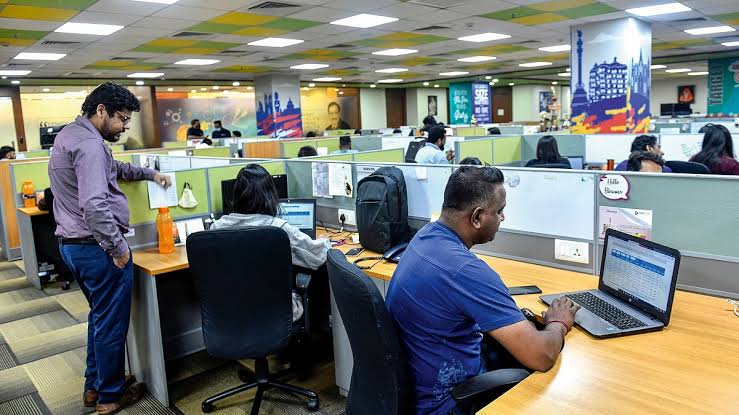

India’s services economy gained momentum in October as stronger domestic demand and an increase in new business orders supported activity across several industries. However, the latest business survey reveals a gap between rising output and employment, suggesting that companies remain cautious about expanding their workforces despite improving demand conditions.
The HSBC India Services Business Activity Index rose to 55.8 in October from 55.2 in September, recording its strongest expansion in four months. A reading above 50 indicates that business activity is increasing compared with the previous month.
The improvement highlights the continued importance of domestic consumption in supporting India’s economic growth. Businesses reported stronger sales, new client acquisitions and favourable demand conditions. Nevertheless, weaker international orders and subdued hiring indicate that the recovery is not equally strong across all parts of the services sector.
Domestic Demand Becomes the Main Growth Driver
The strongest support for services activity came from domestic customers. New business increased at its fastest pace since June, reflecting improved demand across the companies surveyed.
The services sector includes a broad range of activities, including financial services, insurance, information technology, real estate, transport, tourism, communication and professional services. Growth across these segments has significant implications for India’s overall economic performance because services account for a substantial share of national output.
According to the October survey, all four broad service categories covered by the index reported faster growth in output and new business.
Successful advertising campaigns, new client acquisitions and favourable market conditions contributed to stronger sales.
This suggests that Indian businesses continue to find opportunities within the domestic market, even as international demand remains less supportive.
For companies dependent on Indian consumers and businesses, stronger domestic orders could encourage higher capacity utilisation and additional investment. However, the extent to which this translates into long-term expansion will depend on whether demand remains consistent in the coming months.
Employment Growth Nearly Comes to a Standstill
Despite stronger business activity, employment growth remained subdued.
The survey indicated that hiring among services companies almost stalled in October, matching the pace recorded in June and marking the slowest employment expansion in ten months.
This creates an important distinction between business growth and job creation. Companies may be handling higher workloads through improved productivity, better utilisation of existing employees or more efficient operating processes rather than immediately increasing headcount.
For India’s labour market, this trend deserves attention. The services sector has become an important source of employment for professionals, graduates and workers across different skill categories.
Financial services, technology, consulting, hospitality and business-support operations can generate employment opportunities as companies expand. However, a sustained increase in business orders does not automatically guarantee that recruitment will accelerate.
If hiring remains weak while output increases, the benefits of economic expansion may not be distributed evenly across the workforce.
International Demand Shows Signs of Weakness
While domestic orders improved, overseas demand remained a concern.
Growth in new export business matched its weakest pace in 45 months, according to the Reuters report on the October survey.
This is significant because India’s services exports have become an important source of foreign-exchange earnings. Information technology, business-process management, consulting, financial services and professional outsourcing connect Indian companies with customers across international markets.
A slowdown in overseas orders can affect revenue visibility, business confidence and hiring plans among companies that depend heavily on international clients.
The difference between domestic and international demand also highlights the uneven nature of the current recovery. Indian companies are benefiting from stronger local business conditions, but global economic uncertainty continues to influence their export opportunities.
For businesses with substantial international exposure, maintaining client relationships, improving service delivery and diversifying markets will remain important.
Input Cost Inflation Falls to a Six-Year Low
Another encouraging development in the October survey was the moderation in cost pressures.
Input cost inflation eased to its lowest level in more than six years, according to Reuters. However, companies continued to report higher expenses related to electricity, labour, raw materials and transportation.
The slower increase in input costs could provide some relief to businesses operating with tight margins.
Service providers often face pressure from employee compensation, office infrastructure, technology investments and administrative expenses. When these costs rise faster than revenue, profitability can weaken even when sales increase.
A moderation in cost inflation gives companies greater flexibility to manage operating expenses. It may also reduce pressure to increase prices charged to customers.
Prices charged by services companies rose at their slowest pace in four months, suggesting that businesses were facing less pressure to pass higher costs on to customers.
This trend could become relevant for the broader inflation outlook if cost pressures remain contained.
Manufacturing and Services Present Different Signals
The services sector’s improvement contrasts with the moderation recorded in manufacturing.
India’s manufacturing Purchasing Managers’ Index declined to 54.7 in October from 55.1 in September. Although the sector continued to expand, the lower reading indicated a slower pace of improvement.
Meanwhile, the composite PMI, which combines manufacturing and services activity, increased to 56.2 from 55.9, marking its strongest expansion in four months.
The combined figures suggest that services activity provided stronger support to private-sector growth during October, offsetting some of the moderation in manufacturing.
This distinction matters because the two sectors respond differently to economic conditions. Manufacturing is more exposed to production costs, industrial demand, export orders and supply-chain movements, while services activity is influenced by consumer spending, business demand and corporate investment.
A broad-based recovery requires sustained expansion across both sectors rather than depending on one part of the economy.
What the October Survey Means for India’s Growth Outlook
The October services data provides a positive signal for domestic economic activity, but it also identifies areas that policymakers and businesses will need to monitor.
Stronger new orders indicate that demand remains resilient. Moderating input costs could support profitability, while continued expansion across service categories suggests that the sector retains its growth momentum.
However, weaker international demand, slower recruitment and declining business confidence indicate that companies remain cautious about the longer-term outlook.
The Reserve Bank of India has projected real GDP growth of 7.1% for 2026–27. Its October monetary policy assessment also highlighted the importance of domestic demand, services exports and investment activity in sustaining economic momentum.
The services sector will remain central to this outlook. Its ability to convert stronger business activity into employment, productivity improvements and higher export earnings will influence the quality of India’s economic expansion.
October’s PMI reading therefore presents a mixed but important picture: domestic demand is supporting growth, operating cost pressures are easing, but job creation and international business remain areas of concern. The next few months will show whether the improvement in services activity develops into a more balanced expansion.
Samir Kapoor
Samir Kapoor covers the global economy, cross-border capital, growth signals and the institutions shaping economic change.