
India Offers ₹2,814 Crore in Subsidies to Build Lithium and Nickel Processing Capacity
India's new ₹2,814 crore incentive scheme aims to attract ₹10,000 crore in investment and establish domestic lithium and nickel processing capacity.
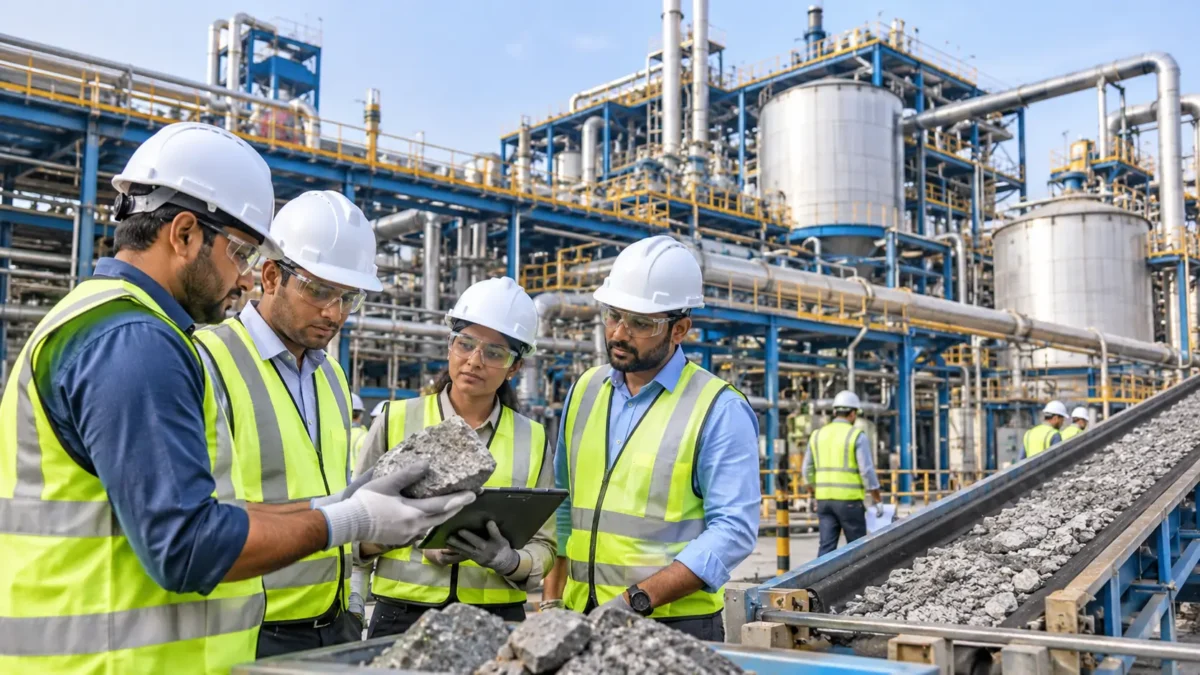

India is moving to strengthen its position in the global critical minerals industry with a ₹2,814 crore incentive programme designed to establish domestic lithium and nickel processing facilities. The initiative addresses a significant gap in the country’s manufacturing ecosystem: although India is expanding its electric vehicle, battery and electronics industries, it remains heavily dependent on overseas suppliers for refined critical mineral materials.
Approved by the Union Cabinet on November 4, 2026, the Capex Support Scheme to Promote Critical Mineral Processing will operate for five years, from financial year 2026–27 to 2030–31. It provides capital subsidies to encourage companies to establish four processing plants, comprising two lithium facilities and two nickel facilities.
The government expects the scheme to attract approximately ₹10,000 crore in investment. Beyond the financial commitment, the programme represents an attempt to move India further up the mineral value chain, from dependence on imported refined materials towards domestic processing and higher industrial value addition.
Why Critical Mineral Processing Matters
Critical minerals are essential inputs for several industries that are expected to shape future economic growth. Lithium and nickel are particularly important for battery manufacturing, electric mobility and energy storage.
Lithium is a key component of rechargeable batteries used in electric vehicles, consumer electronics and battery energy storage systems. Nickel is used in several battery chemistries and is also important for stainless steel and speciality steel production. Cobalt, which can be recovered as a by-product of nickel processing, is another material used in certain battery technologies.
India has identified 24 critical minerals as strategically important for its economic and industrial requirements. However, domestic processing infrastructure remains limited, particularly for high-purity materials and refined intermediates.
The government has identified high capital requirements, limited access to suitable technologies and constraints in raw-material availability as major challenges facing commercial-scale processing projects.
This creates a supply-chain vulnerability. Even when manufacturers have access to imported raw materials, the availability of processed materials can depend on a limited number of international suppliers and processing locations.
Developing domestic facilities could give Indian manufacturers greater access to these essential industrial inputs.
How the ₹2,814 Crore Scheme Will Work
The programme offers a capital subsidy covering 30% of eligible investment for establishing four processing plants.
The proposed facilities will include:
- Two lithium processing plants: Each must have a minimum processing capacity of 30,000 tonnes.
- Two nickel processing plants: Each must have a minimum processing capacity of 50,000 tonnes.
- Cobalt recovery: Nickel processing is also expected to enable the recovery of cobalt as a by-product.
The maximum government support will be capped at ₹500 crore per lithium beneficiary and ₹900 crore per nickel beneficiary.
The subsidy is designed to reduce the initial financial burden of establishing facilities that require specialised technology, equipment and processing infrastructure.
The support will be released in three instalments linked to the achievement of specified project milestones. This approach connects government assistance with implementation progress rather than providing the entire subsidy upfront.
Companies Will Compete for Government Support
The government has introduced a two-stage selection process to identify beneficiaries.
In the first stage, applicants will be assessed for technical qualifications. Only companies meeting the prescribed requirements will be allowed to participate in the second stage, which involves financial bidding.
For each mineral, two beneficiaries will be selected based on the least-cost criterion. In practical terms, eligible bidders seeking the lowest capital expenditure support from the government will be preferred.
This structure is intended to encourage competition while limiting the amount of public financial assistance required for each project.
However, the final impact will depend on the quality of applicants, their access to raw materials, the technologies they adopt and their ability to complete projects within the programme period.
The approval of the scheme does not mean that the four facilities have already been constructed or that their production capacity is operational.
The Investment Opportunity Beyond Electric Vehicles
The scheme has implications beyond the electric vehicle market.
Battery energy storage systems are becoming increasingly important as India expands its renewable energy capacity. Solar and wind power generation depend on weather conditions, making energy storage necessary to improve the reliability of electricity supply.
Domestic access to processed lithium and nickel could support battery manufacturers serving electric vehicles as well as stationary storage applications.
The electronics industry is another potential beneficiary. Critical minerals and their processed compounds are used across components, industrial equipment and advanced manufacturing applications.
Defence production and speciality steel are also among the sectors expected to benefit from stronger domestic mineral-processing capabilities.
For investors, the opportunity could extend across several parts of the supply chain, including mineral processing technology, industrial equipment, chemical processing, recycling, logistics and battery manufacturing.
The scheme could also encourage partnerships between Indian companies and international technology providers, particularly where specialised processing expertise is required.
Why Import Dependence Remains a Strategic Concern
The global processing of several critical minerals remains concentrated in a limited number of countries. This concentration creates risks for industries that depend on uninterrupted access to refined materials.
Export restrictions, geopolitical tensions, shipping disruptions and sudden price changes can affect manufacturers even when demand for their final products remains strong.
India’s dependence on imported refined materials therefore creates both an economic and a strategic challenge.
Domestic processing can help reduce exposure to external supply disruptions, but it does not automatically eliminate import dependence. Processing facilities still require reliable access to raw materials, which may need to be sourced from domestic mines, overseas suppliers or recycled materials.
This means India’s broader critical mineral strategy must address exploration, mining, overseas resource partnerships, recycling, refining technology and downstream manufacturing together.
A processing facility without dependable raw-material supplies may struggle to operate at commercial scale.
Can the Scheme Create a Competitive Domestic Industry?
The ₹2,814 crore programme provides financial support, but building a competitive processing industry will require more than subsidies.
Companies will need access to advanced technology, skilled personnel, reliable electricity, water, environmental management systems and long-term raw-material contracts.
Processing projects also involve significant technical and environmental requirements. The ability to meet regulatory standards while maintaining commercially viable production costs will be important for attracting long-term investment.
The government’s expectation of approximately ₹10,000 crore in investment indicates the scale of private capital it hopes to mobilise. Whether that investment materialises will depend on the quality of project proposals and the commercial viability of the selected facilities.
India’s opportunity lies in developing a complete industrial ecosystem rather than concentrating only on the production of individual minerals. Stronger domestic processing capabilities could support battery manufacturing, electronics, electric mobility, defence and energy storage.
The new scheme is an important step towards that objective. Its ultimate success, however, will be measured by operational plants, dependable supplies of processed materials and a sustained reduction in India’s vulnerability
Samir Kapoor
Samir Kapoor covers the global economy, cross-border capital, growth signals and the institutions shaping economic change.