Why Public Debt Has Become a Strategic Economic Question
A source-led Economic Statesman explainer on why public debt has become a strategic economic question, written for readers tracking world economy, policy, markets and capital.
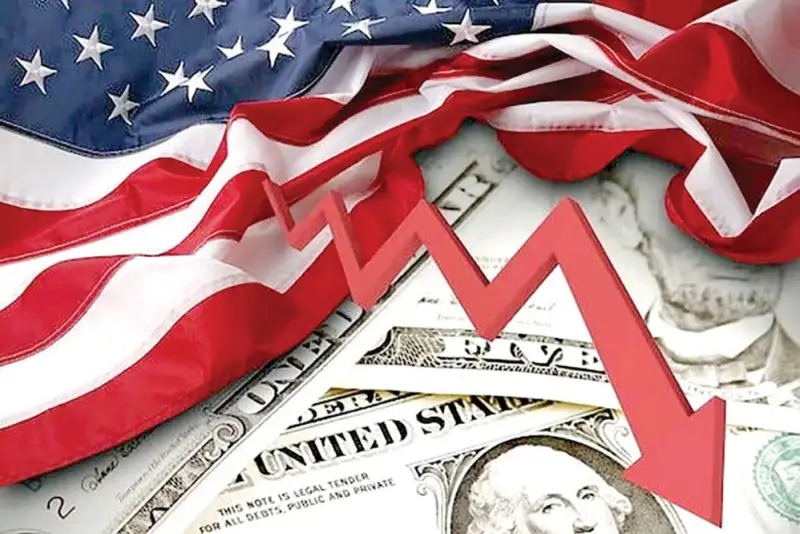

Public debt used to be discussed mainly as a fiscal ratio. Today it is also a strategic question. Governments borrow to finance infrastructure, defence, social protection, industrial policy and crisis response. Borrowing can be productive when it raises future capacity. It becomes dangerous when interest costs crowd out investment, investors lose confidence or debt leaves the state with too little room to respond to the next shock.
The issue has become more difficult because the interest-rate environment has changed. When borrowing costs were low, many governments could carry larger debt burdens without immediate stress. Higher rates have altered that calculation. The level of debt still matters, but the cost of refinancing it matters just as much. A government may discover that old debt was affordable only under old money conditions.
Debt sustainability is not determined by one number. It depends on growth, interest rates, currency structure, maturity profile, investor base and institutional credibility. A country that borrows in its own currency, has long maturities and commands market trust is in a different position from a country that depends on foreign-currency debt and short-term refinancing. The headline debt-to-GDP ratio is only the beginning.
Public debt becomes strategic because it shapes national choices. A government with fiscal room can invest during downturns, support banks in stress, fund energy security and respond to geopolitical pressure. A government with little room may be forced into cuts or tax increases at the worst moment. Debt therefore affects sovereignty. It determines how much freedom a state has when external conditions turn hostile.
Markets judge this freedom through bond yields and credit spreads. When investors believe a government has a credible fiscal path, they may tolerate high debt. When credibility weakens, yields can rise quickly. Higher yields then worsen the fiscal outlook by increasing interest payments. This feedback loop is why public debt can shift from a slow-moving concern into a market event.
Borrowing is not the same as waste
The quality of spending is critical. Borrowing to fund productive infrastructure, education, energy systems or digital capacity can improve the economy’s ability to service debt later. Borrowing to cover persistent inefficiency, poorly targeted subsidies or politically attractive but low-return projects can weaken the future. The debate should therefore move beyond whether debt is high and ask what the borrowing is buying.
Demographics add pressure. Ageing societies face rising pension and healthcare commitments, while younger economies often need heavy investment in infrastructure and jobs. Both groups require fiscal planning, but the political incentives are difficult. Benefits are immediate; discipline is delayed. Markets can remain patient for years, then suddenly demand proof that the numbers add up.
Public debt is also connected to economic statecraft. Defence spending, energy transition, supply-chain security and industrial strategy all require public money or guarantees. Countries with stronger fiscal credibility can support strategic sectors without frightening investors. Countries with weaker credibility may find that every new commitment raises questions about sustainability.
The maturity profile is often more revealing than the debt headline. If a large share of debt must be refinanced soon, higher rates can hit the budget quickly. If maturities are long, the impact arrives more gradually. This is why debt managers focus on duration, currency composition and investor diversification. Strategy is not only how much the state borrows, but how it structures the obligation.
Interest payments create a political economy of their own. Money spent servicing debt cannot be spent on infrastructure, health, defence or tax relief. When interest costs rise, governments have less room to make visible improvements. Public frustration may then grow, even if the technical debt ratio looks manageable. Fiscal credibility is therefore linked to democratic confidence.
Debt debates should also distinguish emergency borrowing from permanent drift. A crisis may require the state to borrow aggressively to protect the economy. The test comes afterward. If temporary measures become permanent without revenue or productivity gains, the fiscal position weakens. A credible government explains how emergency support will be unwound or converted into lasting capacity.
The operational detail matters because international economic signals are uneven. A policy that looks stabilising in one country can create stress in another through capital flows, import prices or refinancing costs. A supply-chain adjustment that improves resilience for a multinational firm can raise costs for consumers. The global economy is not one smooth machine; it is a set of linked systems in which pressure moves through the weakest channel first.
Readers should also distinguish a cyclical movement from a structural change. Cycles can reverse when demand improves, inventories normalise or interest rates move. Structural changes alter the rules under which decisions are made. They change where capital is comfortable, which institutions are trusted, which routes are secure and which sectors receive state support. The strongest analysis begins by asking which kind of change is taking place.
The professional reading is to treat debt as a capacity issue. What matters is whether the state is using its balance sheet to raise national resilience and productivity, or merely postponing difficult decisions. Public debt is neither automatically bad nor automatically harmless. It is a claim on the future, and the future will judge whether the money strengthened the economy that must repay it.
Anika Sen
Anika Sen writes on export controls, supply-chain security, strategic manufacturing and the economics of technology policy.