
China’s Trade Surplus Crosses $1 Trillion as AI Exports Surge
China’s trade surplus crossed $1 trillion in the first ten months of 2026, driven by strong technology exports and growing global demand for AI infrastructure.
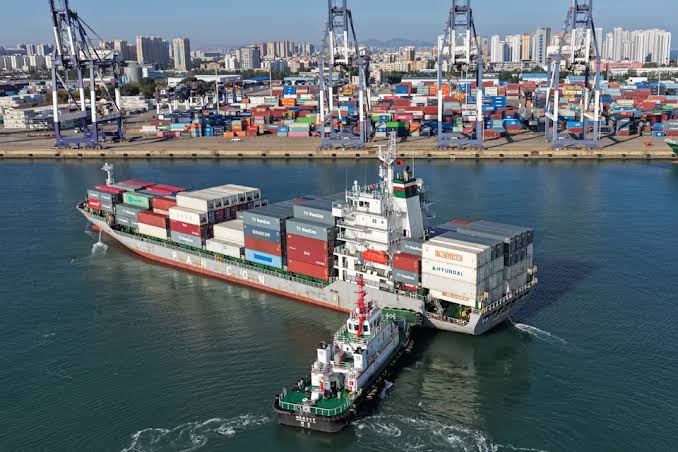

China’s external trade position has reached another significant milestone, with its merchandise trade surplus exceeding $1 trillion during the first ten months of 2026. Strong overseas demand for technology products, particularly goods connected to artificial intelligence infrastructure, has helped sustain export growth even as domestic consumption and the property sector continue to weigh on the country’s economic outlook.
Customs data released on November 10 showed that exports increased by 35.2% year-on-year in October, reaching approximately $412.3 billion. Imports grew even faster, rising 41.6% to around $307.1 billion. The cumulative trade surplus for January–October stood at approximately $1.04 trillion, placing China on course to potentially exceed its record surplus of $1.2 trillion in 2025.
The figures highlight a major feature of China’s current economic landscape: external demand is providing substantial support to industrial production and growth at a time when domestic demand remains comparatively subdued.
AI Infrastructure Becomes a Major Export Driver
The global expansion of artificial intelligence infrastructure has emerged as an important source of demand for Chinese manufacturers. Investment in data centres, computing capacity, semiconductor-related products and networking equipment has supported shipments of high-technology goods.
Reuters reported that semiconductor exports increased sharply during the year, reflecting the growing importance of technology-related trade. High-tech products have become an increasingly important part of China’s export performance, helping manufacturers access demand beyond traditional consumer goods and industrial categories.
The expansion of AI infrastructure is also changing the composition of global trade. Demand is no longer limited to finished electronic devices. It increasingly includes components, specialised equipment and supporting technologies required to build and operate large-scale computing systems.
For Chinese exporters, this shift offers an opportunity to capture a larger share of global technology supply chains. However, the durability of this demand will depend partly on whether investment in AI infrastructure continues at its current pace.
Imports Are Growing, but Domestic Demand Remains a Concern
October’s import growth of 41.6% was notably stronger than the increase recorded in September and exceeded market expectations. The rise reflected stronger purchases across several categories, including energy and technology-related products.
The faster increase in imports also narrowed the monthly trade surplus. China recorded a surplus of approximately $105.3 billion in October, compared with around $133.5 billion in September.
However, stronger import figures do not necessarily indicate that domestic consumption has recovered decisively. Industrial requirements, energy purchases and demand for components can raise import volumes even when household spending remains weak.
China continues to face structural challenges linked to its property market downturn and cautious consumer sentiment. These pressures have limited the strength of domestic demand and increased the importance of exports as a source of economic activity.
The distinction matters because a sustainable recovery requires stronger domestic consumption alongside industrial and export performance. An economy relying heavily on overseas buyers remains exposed to changes in global demand, trade restrictions and geopolitical developments.
A Growing Trade Imbalance Could Intensify International Pressure
China’s expanding surplus is likely to attract further scrutiny from major trading partners, particularly the United States and the European Union.
A persistent imbalance between exports and imports can become a source of political and economic tension when trading partners believe that domestic industries are facing excessive competitive pressure. Concerns over industrial overcapacity, pricing practices and market access have already shaped trade discussions involving Chinese electric vehicles, manufacturing goods and technology products.
The latest figures add another dimension to those discussions. China’s export growth is being supported not only by established manufacturing industries but also by products linked to strategic technologies and the global digital economy.
For European manufacturers, the expansion of Chinese exports raises questions about competitiveness in sectors where domestic industrial capacity and employment are politically important. In the United States, trade policy remains closely connected to strategic competition, technology access and the resilience of supply chains.
The possibility of additional tariffs or trade barriers therefore remains a risk for Chinese exporters. Even where demand is strong, regulatory restrictions and changes in market access could affect the pace and direction of future shipments.
The United States–China Trade Truce Offers Limited Relief
The latest trade data also arrives amid continuing efforts by Washington and Beijing to manage their economic relationship. The extension of the temporary trade truce has provided exporters with some relief from the immediate risk of renewed tariff escalation.
However, a temporary arrangement does not remove the structural disagreements between the two economies. Technology restrictions, industrial policy, market access and the trade imbalance remain difficult issues.
The anticipated discussions between the two countries at the upcoming Asia-Pacific Economic Cooperation gathering could provide an opportunity to address some of these concerns. Nevertheless, businesses are likely to remain cautious until there is greater clarity about the durability of trade arrangements.
For manufacturers operating across international supply chains, policy uncertainty can influence investment decisions just as significantly as tariffs themselves. Companies may seek alternative production locations, diversify sourcing arrangements or adjust export strategies to reduce exposure to sudden regulatory changes.
Implications for Global Manufacturing and Emerging Economies
China’s export performance has consequences beyond its own economy. Its manufacturing capacity and pricing influence competition across a wide range of international markets, including electronics, machinery, automobiles and industrial components.
Emerging economies face a particularly complex situation. On one hand, access to competitively priced Chinese goods can reduce input costs for domestic manufacturers and improve affordability for consumers. On the other, large volumes of imports can increase competitive pressure on local industries.
For countries seeking to expand domestic manufacturing, the challenge is to balance access to global supply chains with the development of competitive local production. This requires investment in technology, logistics, workforce capabilities and reliable infrastructure rather than relying exclusively on import restrictions.
India, for example, must assess the implications of China’s export strength across sectors where both countries participate in global manufacturing networks. The opportunity lies in attracting investment and expanding domestic value addition, while ensuring that local businesses can compete on productivity, quality and cost.
China’s position also demonstrates how rapidly global technology investment can influence trade flows. Countries able to supply components and equipment for expanding digital infrastructure may benefit from new export opportunities, although dependence on a single demand cycle carries risks.
The Sustainability Question Behind the Export Boom
China’s $1.04 trillion trade surplus is an indicator of export competitiveness, but it is not, by itself, a complete measure of economic strength. A large surplus can reflect strong international demand and productive manufacturing capacity, but it can also reveal an imbalance between domestic production and domestic absorption.
The central question for policymakers is whether export growth can be accompanied by a broader recovery in household consumption and private-sector confidence.
If domestic demand remains weak, manufacturers may continue directing a greater share of production towards overseas markets. That could sustain industrial activity in the near term but also intensify concerns among trading partners about excess capacity and competitive pressure.
The outlook will also depend on the global AI investment cycle. Continued spending on data centres and advanced computing could support technology exports into 2027. A slowdown in investment, however, would expose the risks of relying too heavily on a narrow set of high-growth export categories.
China’s latest trade figures therefore present two sides of the same economic story. The country remains a formidable manufacturing and export power, with technology demand providing a powerful source of momentum. Yet the scale of its surplus also underscores the unresolved challenge of strengthening domestic demand and maintaining stable trade relationships.
The next phase of China’s economic performance will depend not only on how much it can sell abroad, but also on whether it can build a more balanced relationship between domestic consumption, industrial production and international trade.
Samir Kapoor
Samir Kapoor covers the global economy, cross-border capital, growth signals and the institutions shaping economic change.