
How Shipping Disruptions Reach Consumer Prices
Learn how shipping delays and higher freight costs can pass through supply chains and affect consumer prices, often with a lag.
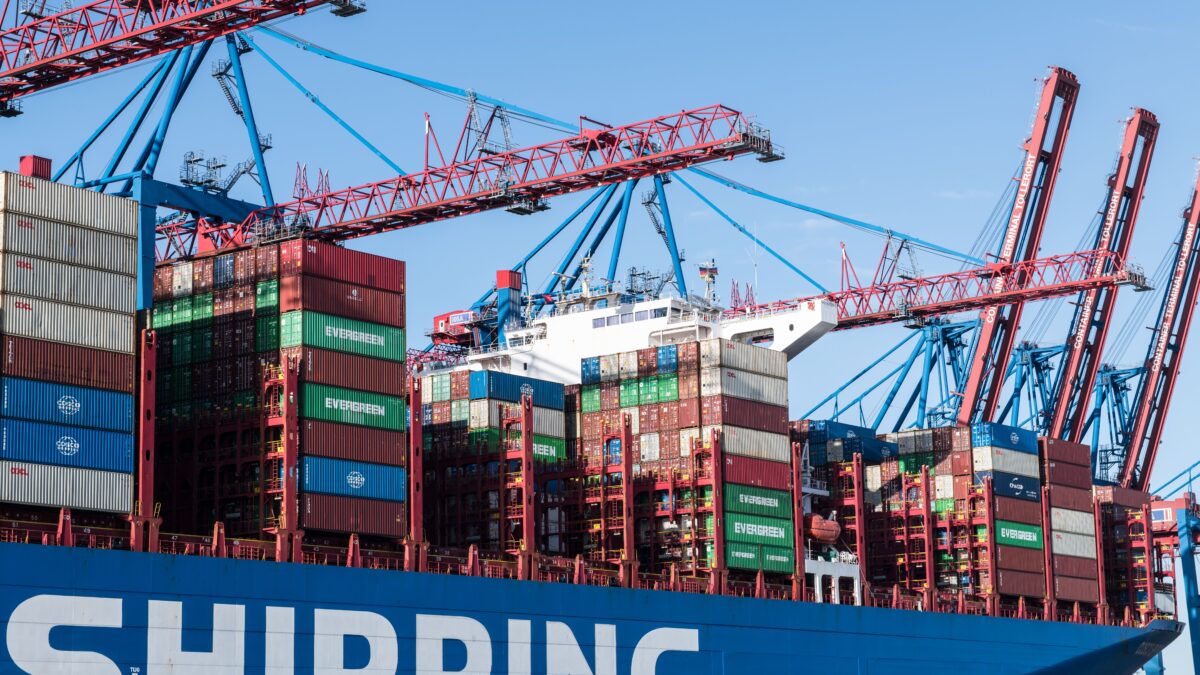

How port congestion, freight costs and delayed deliveries can move through supply chains and eventually affect the prices consumers pay.
A shipping disruption can begin far from the consumer who eventually feels its effects. A vessel may wait outside a congested port, take a longer route to avoid a dangerous passage or arrive after a factory has run short of an imported component. The initial problem is logistical. Its economic consequences can spread through freight charges, production schedules, inventories and retail prices.
The pass-through is neither automatic nor immediate. Shipping is only one part of the final cost of a product, and businesses respond in different ways. Some absorb higher transport costs; others change suppliers, delay orders or adjust prices. The impact depends on how long the disruption lasts and how exposed a product is to the affected route.
From a Delayed Vessel to a Higher Cost
Shipping disruptions can raise costs through several channels. A longer voyage may require more fuel and tie up a vessel for additional days. Port congestion can increase waiting time, while limited container or vessel availability can push freight rates higher. Businesses may also face extra insurance, storage, handling or inventory costs.
These expenses do not affect every product equally. A low-value, bulky item may be more sensitive to transport costs than a high-value product that ships in a small package. Perishable goods can face losses when delays disrupt temperature control or shorten their selling window. Manufacturers may incur costs when a delayed component holds up an entire production line.
The OECD’s 2025 analysis found that container shipping costs affect import prices for manufactured goods, although the estimated effect on core consumer inflation is smaller than the effect on import prices. The authors note that large shipping-cost shocks can still matter, particularly when disruptions persist. <Cite refs={[“turn499729search4″,”turn499729search13”]}/>
Why the Price Effect Takes Time
Freight charges do not always appear immediately in retail prices. Goods may have been ordered under earlier contracts, shipped at a previously agreed rate or stored in a warehouse before the disruption began.
Businesses can also use inventories to maintain sales while waiting for delayed shipments. That may soften the immediate effect on consumers, but it can leave firms with lower stock levels and higher replenishment costs later.
The reverse can happen when shipping conditions improve. Freight rates may fall before retailers reduce prices, because existing inventory was purchased at higher costs or because other expenses remain elevated.
A disruption can therefore affect prices over several months rather than in a single jump.
What the Research Says
A 2026 IMF working paper examined shipping delays using vessel-tracking data, port-level trade information and consumer-price data. It found that a 100-hour increase in shipping time was associated with a rise in consumer-goods inflation that peaked about five months later. The estimated peak was roughly 0.5 percentage points. <Cite refs={[“turn499729search0″,”turn499729search1”]}/>
That result is an estimate from a specific study of US import routes and the pandemic-era congestion episode. It should not be treated as a universal rule for every country, product or shipping disruption. The IMF paper also found that exposure varies across products and ports, which helps explain why the effect is uneven.
The OECD’s cross-country analysis points in the same broad direction: shipping-cost increases can feed into import prices and then consumer prices, but the size of the effect depends on the shock and the economy being studied. <Cite refs={[“turn499729search4”]}/>
Who Is Most Exposed?
Countries that depend heavily on imported food, fuel, manufactured goods or intermediate inputs can be more vulnerable to disruptions along key maritime routes. Smaller firms may also have less bargaining power with carriers and fewer options for rerouting shipments or holding extra inventory.
The UN Conference on Trade and Development has highlighted the exposure of small island developing states and least developed countries to maritime transport costs. Its 2024 maritime transport review found that disruptions at major chokepoints can raise transport costs and create risks for food security, especially where countries rely heavily on seaborne imports. <Cite refs={[“turn499729search14”]}/>
Exposure also varies within a country. Businesses that source from a single supplier or route may face a larger shock than those with multiple sourcing options. Consumers may see the effect first in products that depend on time-sensitive deliveries or imported components.
Why Businesses Do Not Always Pass Costs On
A rise in freight costs does not guarantee an equal increase in shelf prices. Firms decide whether to pass on costs based on competition, customer demand, margins and the expected duration of the disruption.
A retailer may absorb a temporary increase to protect market share. A manufacturer may negotiate with suppliers or change packaging to reduce shipping costs. Some businesses may pass on only part of the increase, while others may raise prices if they face repeated disruptions and cannot absorb the pressure.
The cost can also show up in ways other than prices. Firms may reduce product variety, delay expansion or cut other spending to protect margins. Consumers may experience fewer choices or longer waits even when the sticker price does not change.
What Policymakers and Businesses Can Monitor
Freight-rate indices, port waiting times, shipping schedules and delivery lead times can help identify pressure before it appears in consumer-price data. Import prices and producer prices can provide additional clues about whether higher transport costs are moving through the supply chain.
Businesses can reduce exposure by diversifying suppliers, reviewing inventory strategies and identifying alternative routes. These measures have costs: holding more stock ties up capital, while multiple suppliers may reduce economies of scale. The right response depends on the value of reliability relative to the cost of building resilience.
Policymakers face a similar trade-off. Port capacity, customs efficiency and reliable transport connections can reduce avoidable delays, but infrastructure takes time to build. Monetary policy cannot clear a congested port or create shipping capacity. It can, however, respond if a temporary supply shock begins to feed into broader and more persistent inflation.
Shipping disruptions matter because they can turn a local transport problem into a wider cost shock. Yet the final effect depends on the length of the delay, the goods involved, the availability of alternatives and the choices businesses make. Tracking those links—from vessel movements to import costs and then consumer prices—helps explain why the impact can be delayed, uneven and larger in some sectors than in others.
Samir Kapoor
Samir Kapoor covers the global economy, cross-border capital, growth signals and the institutions shaping economic change.