Why Supply Chain Security Is Now Economic Policy
Supply-chain security has become economic policy because disruptions now affect inflation, growth, corporate resilience and national power.

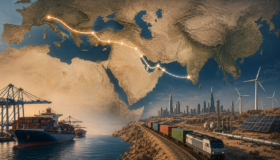
Supply chains used to be discussed in the language of logistics. The goal was to move goods cheaply, quickly and reliably. That language still matters, but it is no longer enough. Supply-chain security has become economic policy because disruptions now affect inflation, industrial output, public health, defence readiness and political stability. A port closure, chip shortage, energy shock or shipping-route disruption can move from operational inconvenience to national economic event.
The shift began before the pandemic but accelerated sharply after it. Companies had built production systems around efficiency, lean inventories and geographically concentrated suppliers. That model lowered costs in normal times. It also created fragility. When borders closed, factories stopped, containers were misplaced and demand shifted abruptly, many firms discovered that a low-cost supply chain could become expensive if it could not deliver.
Governments took the lesson further. If essential goods are produced in too few places, supply disruption becomes a strategic vulnerability. Medical equipment, food inputs, energy components, semiconductors, rare earths, defence parts and critical infrastructure equipment are no longer viewed only as commercial products. They are viewed as the physical base of economic resilience. This is why supply-chain policy now appears in national-security strategies, industrial plans and trade negotiations.
The economic effects are visible through inflation. When shipping costs rise, ports congest or key inputs become scarce, companies pass costs through the system. The shock may begin in freight, energy or components, but it can reach household prices. Central banks then face a difficult problem: monetary policy can cool demand, but it cannot instantly reopen a port, build a chip plant or diversify mineral supply. Supply-chain security is therefore a complement to macroeconomic stability.
Companies are responding with diversification, inventory buffers, supplier mapping and regional production. The old question was whether a supplier could deliver at the lowest price. The new question is whether it can deliver under stress. Firms increasingly examine political exposure, climate risk, transport routes, cyber resilience, labour conditions and financial stability. Procurement has become a strategic function, not just a cost centre.
The challenge is that resilience is not free. Holding more inventory ties up capital. Building duplicate suppliers raises complexity. Producing closer to the customer may increase labour or regulatory costs. Governments and companies must decide how much insurance they are willing to buy. The efficient frontier has moved: the cheapest system may not be the most valuable system if disruption risk is high.
For emerging economies, supply-chain security creates an opening. Countries with stable policy, strong ports, skilled labour and reliable energy can attract investment from firms seeking diversification. But relocation is not automatic. Investors need customs efficiency, legal certainty, supplier depth and infrastructure. Supply-chain realignment rewards countries that can combine geopolitical acceptability with operational competence.
For companies and investors, the practical lesson is to build a political-economy map around every important market. That map should identify suppliers, customers, financing sources, technology dependencies, regulatory permissions and public-sector relationships. Economic statecraft rarely arrives as a single dramatic measure. It usually appears through licensing rules, procurement preferences, customs enforcement, investment screening, bank compliance and changes in official language.
The stronger organisations will not treat these developments as temporary interruptions. They will make them part of strategy, treasury, legal review and market-entry planning. That does not mean retreating from global business. It means understanding that in sensitive sectors, commercial advantage can disappear if political access, technology permissions or trusted supply are lost. In this environment, resilience is not a slogan; it is a form of competitiveness.
The editorial test for any claim in this area is evidence. Before publication, every reference to a tariff, sanction, export-control rule, subsidy, corridor or investment-screening measure should be checked against official releases, legal texts or institutional reports. The argument can be analytical, but the factual base must remain precise.
That is why the article should be published with live source checks rather than as a generic opinion. The topic is evergreen, but the evidence around it changes through official releases, policy documents, market data and institutional reports. Economic Statesman should keep the analysis durable while updating any current examples before publication.
What to watch next
Watch strategic inventories, port investment, trade corridors, supplier-disclosure rules and critical-mineral partnerships. Also watch corporate language. When companies begin reporting resilience, redundancy and supplier concentration alongside margins, supply-chain security has become part of valuation. The world is not abandoning global supply chains. It is asking them to carry a new burden: not only efficiency, but resilience under political and physical stress.
Anika Sen
Anika Sen writes on export controls, supply-chain security, strategic manufacturing and the economics of technology policy.