
Tata Electronics Worker Deaths Put India’s iPhone Manufacturing Safety Under Scrutiny
Three contract workers died during maintenance at Tata Electronics’ Hosur facility, bringing industrial safety and contractor oversight into focus.
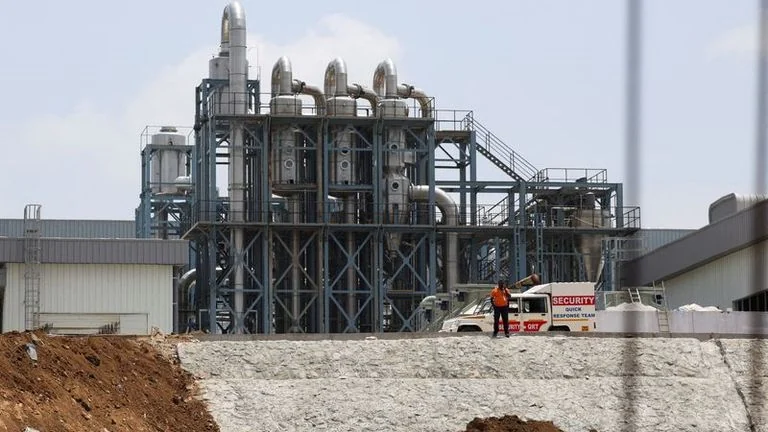

The expansion of electronics manufacturing in India is creating new opportunities for investment, employment and exports. But the deaths of three contract workers at a Tata Electronics facility in Tamil Nadu have brought a critical question back into focus: can industrial growth be sustained without stronger safeguards for the people working across factory operations and outsourced services?
The workers died on Monday during maintenance activity at an effluent treatment plant at Tata Electronics’ facility near Hosur, which manufactures components for Apple’s iPhones. According to district officials, they inhaled gas while inspecting an external nano-filtration tank. The exact cause of death remains subject to investigation and post-mortem findings.
The incident has prompted investigations by Tamil Nadu authorities, Tata Electronics and Apple. The state’s Industries Minister, Virudhai Magal Keerthana, said the matter would be thoroughly investigated and appropriate action taken based on the findings.
What Happened at the Hosur Facility
The three workers were carrying out cleaning and maintenance work associated with the facility’s effluent treatment plant. Preliminary accounts reported by local media indicate that one worker collapsed after exposure to gas while inspecting the tank. Two colleagues subsequently entered in an attempt to help and also collapsed.
The workers were employed through a contractor involved in maintenance work. District officials said the effluent treatment plant was operated by Nalco Water, a subsidiary of US-based Ecolab.
The incident raises questions about the procedures followed during work inside or around industrial tanks, where hazardous gases and oxygen-deficient environments can create serious risks. Such activities generally require strict controls, including atmospheric testing, appropriate protective equipment, trained supervision and emergency rescue arrangements.
However, the precise sequence of events and whether required safety procedures were followed must be established through the official investigation. The preliminary accounts should not be treated as final findings.
Tata Electronics and Nalco Water had not responded to Reuters’ requests for comment at the time of reporting. Apple is also expected to investigate the incident.
Why the Incident Matters to India’s Electronics Manufacturing Ambitions
India has been working to strengthen its position as an alternative manufacturing base for global electronics companies. Government incentives, expanding supplier networks and investments by major manufacturers have helped the country become increasingly important to Apple’s production strategy.
Tata Electronics and Foxconn are central to this expansion. Reuters has reported that Tata accounts for roughly 40% of iPhone assembly in India, with Foxconn handling much of the remainder. India now produces approximately a quarter of the world’s iPhones.
These developments represent a significant opportunity for domestic manufacturing. Large electronics facilities create demand for components, logistics, engineering, packaging, maintenance and other industrial services. They can also encourage suppliers to establish operations closer to major production centres.
But manufacturing competitiveness cannot be assessed only through production volumes, export figures or investment commitments. Workplace safety, labour standards, environmental compliance and the reliability of industrial operations are equally important to the long-term performance of manufacturing facilities.
The Hosur incident demonstrates why safety arrangements must extend beyond direct employees to include contract workers and third-party service providers performing essential industrial tasks.
Contract Labour and the Responsibility of Industrial Operators
Large manufacturing facilities depend on a network of contractors for activities such as equipment maintenance, waste treatment, cleaning, security and facility management. These services are essential to keeping production systems operational, but they can also expose workers to risks that require specialised training and supervision.
Responsibility becomes particularly important when contractors undertake hazardous work inside tanks, confined spaces or industrial treatment systems. Employers and facility operators need clear procedures governing authorisation, risk assessment, protective equipment, emergency response and coordination between different organisations.
A contractor-based employment arrangement should not result in weaker safety protections. Workers performing the same hazardous tasks require appropriate safeguards regardless of which company formally employs them.
The investigation into the Hosur deaths will therefore be important not only in determining what happened but also in identifying whether responsibilities were clearly assigned and whether safety controls were effective.
For India’s manufacturing sector, the broader issue is how to ensure that rapid industrial expansion is accompanied by consistent safety standards across the entire supply chain.
A Pattern of Operational Challenges at the Hosur Site
The latest incident comes after other operational challenges involving facilities at the Hosur site.
A fire at Tata Electronics’ component plant in September 2024 disrupted production for several days. In 2026, Tamil Nadu pollution-control authorities raised concerns over alleged wastewater contamination near the facility. Tata said it had addressed the issues raised by the authorities, and the matter did not proceed to a shutdown.
Reuters has also reported a ransomware incident involving an adjacent iPhone manufacturing facility that exposed sensitive supplier information and confidential product-related files.
These developments are different in nature and should not be treated as evidence of a single underlying failure. However, together they illustrate the range of operational, environmental, cybersecurity and workforce risks that can affect complex electronics manufacturing ecosystems.
As production capacity expands, companies must manage these risks through stronger internal controls, contractor oversight, regulatory compliance and transparent incident reporting.
No Immediate Production Disruption, but Wider Questions Remain
The deaths did not affect production at the Hosur facility because the plant was closed for the Deepavali holiday, according to sources cited by Reuters. The immediate manufacturing impact was therefore limited.
But the absence of production disruption does not reduce the significance of the incident. Global customers increasingly assess suppliers on more than delivery capacity and cost efficiency. Operational resilience also depends on responsible labour practices, safety systems and compliance across manufacturing operations.
For Apple, the investigation will be relevant to its supplier oversight and its broader effort to diversify production beyond China. For Tata Electronics, the findings could have implications for contractor management and safety procedures at its manufacturing facilities.
For policymakers, the case highlights the importance of effective enforcement and coordination between industrial safety authorities, factory operators and outsourced service providers.
Manufacturing Growth Must Include Worker Protection
India’s ambition to become a larger global electronics manufacturing hub will require sustained investment, reliable infrastructure, skilled labour and competitive production costs. It will also require factories to maintain high standards of workplace protection.
The investigation at Hosur should establish the circumstances surrounding the deaths, identify any failures and determine what corrective measures are necessary. Until those findings are available, conclusions about the specific cause or responsibility would be premature.
The larger lesson is already clear: industrial expansion cannot be measured only by the number of factories built, products assembled or exports shipped. Its long-term credibility also depends on whether workers across every layer of the manufacturing ecosystem can perform their jobs safely.
As India seeks a larger role in global supply chains, worker protection must be treated as a core part of industrial competitiveness rather than an obligation addressed after an accident.
Nikhil Varma
Nikhil Varma covers India’s growth model, emerging-market policy credibility, digital infrastructure and global capital links.


